Should Home Security Lights Be On All Night or Off? Costs and Trade-offs
Should outdoor security lights stay on all night, switch on with motion, or run dimmed? Yearly energy cost of each option with a 50 W LED floodlight, plus where each choice works best.
Key points
- A 50 W LED floodlight left on 12 hours a night uses about 219 kWh a year, roughly USD 33 at USD 0.15 per kWh; the same light on a motion sensor uses a small fraction of that.
- Replacing an old 500 W halogen floodlight with a 50 W LED cuts the all-night cost from about USD 329 to USD 33 a year in our retrofit calculator.
- Motion-activated light draws attention to movement and avoids lighting an empty yard all night; constant light suits shared spaces, drives and cameras that need steady light.
- A good compromise is dusk-to-dawn at low output with a motion boost to full power, which many LED floodlights and solar lights support.
It is one of the most common questions about outdoor lights: leave the security light on all night, or let a motion sensor switch it on only when someone is there? Both choices have supporters. The answer depends on the space, the camera system, the neighbours and the electricity bill. This guide puts numbers on the running cost with our calculator and sets out where each option works best.
The three options
| Option | How it works | Typical use |
|---|---|---|
| Always on (dusk to dawn) | Photocell or timer switches the light on at dusk and off at dawn | Shared drives, entrances, car parks, camera coverage |
| Motion-activated | Light stays off until a sensor detects movement, then runs for a set time | Private yards, side passages, back doors |
| Dimmed with motion boost | Low output all night, full output on motion | Most homes and small businesses as a compromise |
What each option costs to run
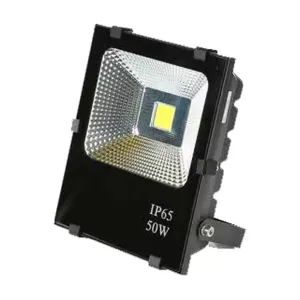
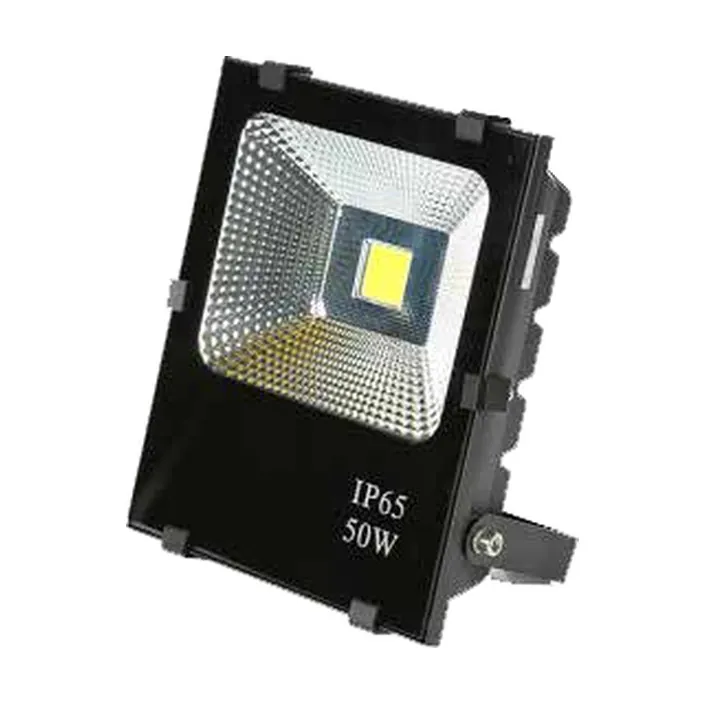
Take a 50 W LED floodlight, such as our TLZ30J050, which gives at least 5,000 lumens at its rated 100 lm/W.
Always on, 12 hours a night: 50 W × 12 h × 365 = 219 kWh a year. At USD 0.15 per kWh, about USD 33.
Motion only: if the light is triggered for a total of about one hour a night, the use is 50 W × 1 h × 365 = 18 kWh, about USD 2.70 a year. The sensor itself draws very little.
Dimmed to 20 % with motion boost: about 11 hours at 10 W plus 1 hour at 50 W = 160 Wh a night, 58 kWh a year, about USD 8.80.
Those are modest sums for one light. The difference becomes large with older lamps. In our LED retrofit savings calculator, an old 500 W halogen floodlight left on 12 hours a night against a 50 W LED on the same schedule (open the example):
- halogen: 2,190 kWh a year, about USD 329;
- LED: 219 kWh, about USD 33;
- saving: 1,971 kWh, about USD 296 a year, 90 %.
If you still have a halogen floodlight on all night, the replacement pays for itself quickly whichever control you choose.
When constant light is better
- Cameras: many cameras record better colour images with steady light than with sudden switching, which can confuse auto-exposure.
- Shared spaces: drives, stairways and car parks used by several households or customers.
- Places where people arrive at night: a steady light avoids walking into darkness while a sensor reacts.
- Areas with frequent false triggers: busy streets, trees moving in wind, or animals can make a motion light flash all night, which is more disturbing than constant light.
When motion is better
- Private yards and side passages where nobody should be at night. Light switching on makes movement obvious.
- Neighbours: a light that is off most of the night causes less light trespass. Aim the light down and shield it either way.
- Off-grid and solar lights: battery energy is limited; motion mode lets a small panel run a bright light. Our solar lights that stay on all night guide shows the energy balance.
Setting the sensor properly
Most complaints about motion lights come from settings, not the idea. Our security light sensor settings guide covers sensitivity, timer and lux threshold in detail. The short version:
- aim the sensor across the path people will walk, not straight at them;
- set the timer to one to three minutes;
- set the lux threshold so the sensor works only after dusk;
- keep the sensor away from heat sources such as vents.
Placement and aiming
Mount floodlights at about 3–5 m and tilt them down so the beam lands on the ground in front of the door or drive, not in neighbours’ windows or drivers’ eyes. A 120° beam covers a wide yard; a 90° beam throws further along a drive. Our guide to flood light mounting covers heights and angles.
Without mains power
If there is no cable at the spot, a battery or solar security light is the option. These are almost always run in motion mode because their energy is limited; see battery-operated security lights.
A simple decision rule
Ask two questions. First, does anyone legitimately use the space after dark, or does a camera need steady light there? If yes, keep it lit, at low output if possible. Second, would a light switching on be noticed by you or a neighbour? If yes, motion mode turns the light into an alarm as well as a lamp. Most homes end up with both: steady low light at the front entrance and drive, and motion lights at the side and back. Whatever you choose, an LED fitting on a photocell costs little enough that the decision can be made on comfort and security, not on the bill.
Buying for several properties
For estates, rental portfolios and small businesses, standardising on one LED floodlight model with a photocell and an optional motion sensor simplifies spares and settings. Tell us the number of points, mounting heights and the control you prefer, and we will propose a model and send the data sheet.
Sources
Frequently asked questions
Should I leave my outdoor security lights on all night?
It depends on the space. Constant light helps on shared drives, entrances used at night and areas covered by cameras. For a private yard, a motion sensor usually works better: it costs less, disturbs neighbours less and makes movement obvious.
How much does it cost to leave a security light on all night?
A 50 W LED floodlight on for 12 hours a night uses about 219 kWh a year. At USD 0.15 per kWh that is about USD 33. An old 500 W halogen floodlight on the same schedule costs about USD 329.
Do motion sensor lights deter burglars?
Sudden light draws attention to movement and makes people visible to neighbours and cameras. No light guarantees deterrence, but motion lights combine visibility with low running cost.
Can I have both constant and motion lighting?
Yes. Many LED and solar floodlights run at low output all night and switch to full output when motion is detected. That keeps the area visible and still saves most of the energy.