Battery Operated Security Lights: How Long the Batteries Really Last, and When Solar or Mains Is Better
How long a battery operated motion security light runs on AA, D or lithium cells, worked out by triggers per night, and how a solar wall light with our real panel and battery compares.
Key points
- Battery life depends on how often the light is triggered: a 6 W light on for 30 seconds 20 times a night uses about 1.1 Wh a night, including driver losses.
- On that pattern, four AA alkaline cells (about 8 Wh usable) last about a week, three D cells (about 40 Wh) about a month, and a 2-cell lithium pack (about 19 Wh) about two weeks per charge.
- With only 5 triggers a night the same batteries last roughly three to four times longer.
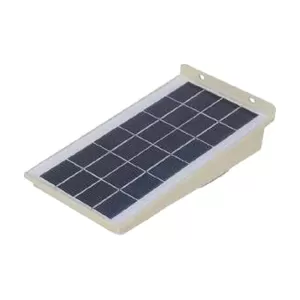
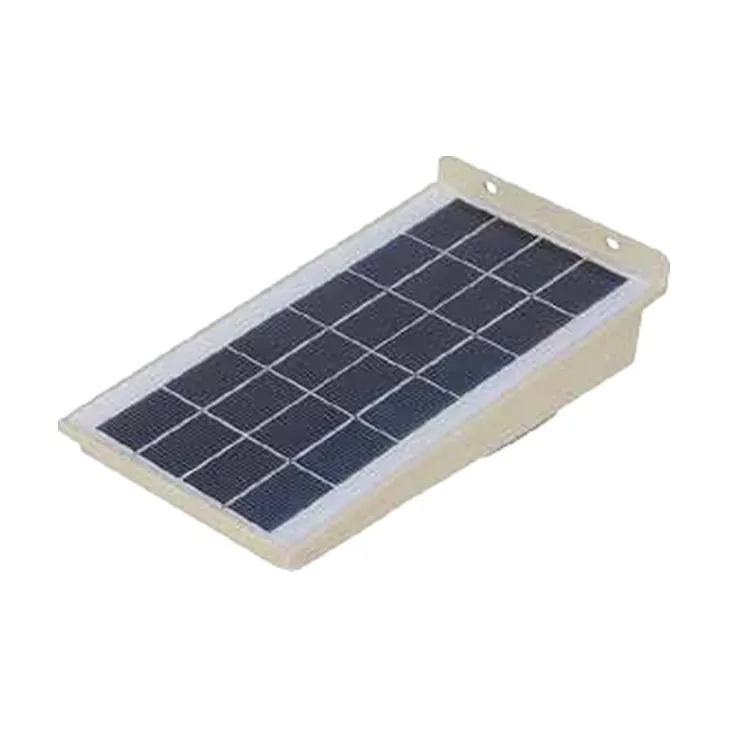
- Our SL3530J005 solar wall light (6.8 Wp panel, 29.6 Wh battery) harvests about 16.6 Wh on a June day in Johannesburg by PVGIS, enough to recharge every day for motion-triggered use.
- Battery lights suit sheds, gates and places with no sun and no cable; for nightly heavy use, solar or mains costs far less in cells and effort.
Battery operated security lights are popular because they need no electrician and no sunny spot: screw them to a wall, put the cells in, and they come on when someone walks past. The question buyers ask afterwards is always the same: why did the batteries go flat so soon? The answer is simple arithmetic. This guide works it through, then compares a solar wall light built with our own panel and battery.
What uses the energy
A motion security light has three loads:
- The LED, when triggered. A typical small light draws 3–10 W at full brightness.
- The driver, which wastes some energy turning battery voltage into LED current. We allow 10%.
- The sensor, which watches all night and day. A PIR sensor draws very little; we allow 0.05 Wh a day.
The LED dominates. What matters is how many times the light comes on and how long it stays on each time.
Energy per night, by number of triggers
Take a 6 W light with a 30-second on-time:
| Triggers per night | LED on-time | Energy incl. driver and sensor |
|---|---|---|
| 5 | 2.5 min | about 0.33 Wh |
| 10 | 5 min | about 0.61 Wh |
| 20 | 10 min | about 1.16 Wh |
| 50 | 25 min | about 2.83 Wh |
A busy back door, a path cats cross all night, or a sensor that picks up swaying branches can push a light into the 50-trigger row without anyone noticing.
How long the batteries last
Usable energy in cells depends on the load, temperature and brand. At the 1–6 W draws of a security light we used typical usable values:
| Battery | Usable energy (approx.) | 5 triggers/night | 20 triggers/night | 50 triggers/night |
|---|---|---|---|---|
| 4 × AA alkaline | 8 Wh | about 24 nights | about 7 nights | about 3 nights |
| 3 × D alkaline | 40 Wh | about 4 months | about 34 nights | about 14 nights |
| 2 × 18650 lithium (3.6 V, 3 Ah) | 19 Wh | about 8 weeks | about 16 nights | about 7 nights |
Cold weather cuts alkaline capacity further, so winter runtime is shorter just when nights are longer. The lesson: a battery light at a busy spot becomes a weekly chore, and a lot of spent cells.
How to make batteries last longer
- Shorten the on-time. 15 seconds instead of 30 halves the LED energy.
- Lower the sensitivity or re-aim the sensor away from roads, trees and neighbours’ paths. Our guide to security light sensor settings explains the dials.
- Choose the right coverage. A 270° sensor sees more and triggers more; for a single door, 120–180° is plenty. See 180°, 240° or 270° motion sensor lights.
- Use lithium rechargeables where the light accepts them, and keep a charged spare pack.
How solar compares, with our own wall light
Our SL3530J005 solar wall light has a 5 W LED, a 5.5 V 6.8 Wp panel and a 3.7 V 8 Ah lithium battery: 29.6 Wh, about 26.6 Wh usable at 90%.
We modelled it in our battery autonomy calculator as a security light: 1 hour at full power spread across triggers, and 11 hours at 10% as a dim marker light. That uses about 11.7 Wh a night. Using PVGIS monthly sun for a horizontal panel and a simple PWM charge efficiency of 60%:
| Place and month | Sun hours (PVGIS) | Daily harvest | Night use | Result |
|---|---|---|---|---|
| Johannesburg, June | 4.06 | 16.6 Wh | 11.7 Wh | Refills daily; about 2.9 nights in reserve with no sun |
| Cape Town, June | 2.40 | 9.8 Wh | 11.7 Wh | Slowly drains; drop the dim marker or shorten on-time |
Turn off the dim marker so the light is dark until triggered, and nightly use falls to about 5.6 Wh: comfortably inside even the Cape Town winter harvest. Compared with the battery table above, the solar light handles a busy door that would flatten four AA cells in a week.
Mains, solar or battery: which to choose
| Situation | Best choice | Why |
|---|---|---|
| Wall with sun and no cable | Solar | Recharges itself; no cells to buy |
| Busy door or drive, cable nearby | Mains | Unlimited triggers, highest brightness |
| Inside a shed or garage, no sun | Battery or split solar | Panel outside, lamp inside, joined by a cable |
| Shaded north wall, rare use | Battery | Few triggers, little energy needed |
| Temporary site or rented home | Battery | No fixing of cables, easy to remove |
For lighting a shed with a panel outside, see solar shed lights. For brighter coverage over a yard, our flood lights and motion sensor flood lights guide cover wired options.
For retailers and installers
If you sell security lights, ask suppliers for three numbers: LED watts, battery watt-hours and, for solar, real panel watts. With those you can tell a customer how long a light will run at their door. We supply solar wall lights and flood lights for retail and project use, with logo printing and retail packaging available for larger quantities; send us the market and quantity for a quotation.
Sources
Frequently asked questions
How long do batteries last in a motion sensor light?
It depends on the light's wattage and how often it triggers. For a 6 W light triggered 20 times a night for 30 seconds, four AA alkaline cells last about a week and three D cells about a month, by our calculation.
Are battery operated security lights bright enough?
Many give a few hundred lumens, enough for a doorway, path or shed entrance. Lighting a whole driveway or yard needs more power than small cells can supply for long.
Is solar better than battery for a security light?
Where the panel gets a few hours of direct sun, yes: the battery recharges every day and you never buy cells. Battery-only lights make sense in shaded spots, under eaves, or inside sheds and garages.
Can I use rechargeable batteries in a battery security light?
Usually yes, if the light accepts the lower voltage of Ni-MH cells (1.2 V instead of 1.5 V). Lithium packs that charge by USB are common in newer lights.