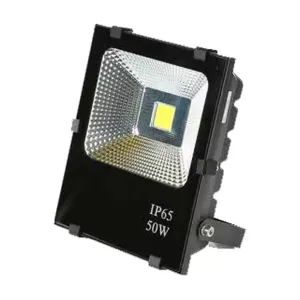
Motion Sensor Flood Light Bulbs: Built-In Sensor Bulbs, Socket Adapters or a New Fixture?
Motion sensor flood light bulbs explained: how sensor PAR bulbs work, where they fail, socket adapters, when a fixture is better, and running costs.
Key points
- A motion flood light bulb is a PAR or BR LED bulb with a PIR sensor in its face; it screws into an existing floodlight socket and needs no rewiring.
- A 15 W sensor bulb that runs 30 minutes a night uses about 2.7 kWh a year, against 66 kWh for the same bulb left on dusk to dawn and about 394 kWh for an old 90 W halogen flood.
- Sensor bulbs work best in open lampholders; inside enclosed or recessed fixtures the sensor is blocked and heat shortens the bulb's life.
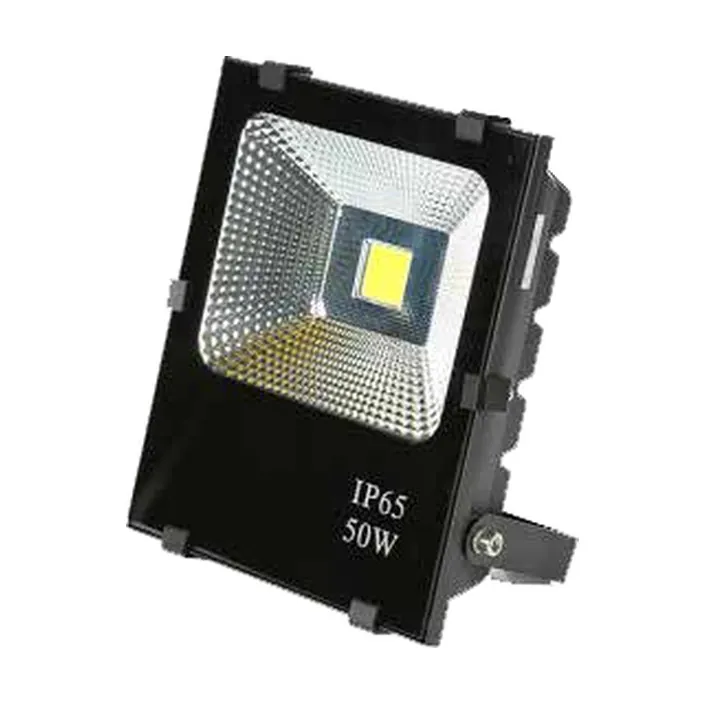
- For commercial buildings, a sealed floodlight such as our TLZ30J with a separate sensor gives better range, aiming and durability.
The fastest way to add motion sensing to an outdoor floodlight is to change the bulb. Motion sensor flood light bulbs screw into the same socket as a normal PAR bulb and switch themselves on when someone approaches. They are convenient for homes and small buildings. They also have limits that are worth knowing before buying a box of them for a commercial site.
How a motion sensor bulb works
A motion flood bulb combines three parts in one bulb:
- an LED light source behind a reflector lens, in a PAR30, PAR38 or BR shape;
- a passive infrared (PIR) sensor, usually in the centre of the lens, that detects body heat moving across its view;
- a photocell that keeps the bulb off in daylight.
When the wall switch is on and it is dark, the bulb waits. When the PIR sees movement, the bulb lights for a set time, often one to a few minutes, then switches off. Some models glow at low output and brighten on movement instead of switching fully off.
Where they work well
- Porch, garage and side-entrance floodlights with open, adjustable lampholders.
- Twin-head floodlight holders where one head can take a sensor bulb that, on some models, triggers only itself.
- Small yards and driveways where people walk across the sensor’s view.
For these jobs, a sensor bulb is cheap, quick and needs no electrician. Our guide to LED flood light bulbs covers bulb shapes and output.
Where they struggle
- Enclosed fixtures: the sensor cannot see through a glass or plastic cover.
- Recessed or deep housings: the sensor’s view is cut off at the sides.
- High mounting: sensors in bulbs are designed for porch heights; above about 4 m their range falls.
- Heat: the LED driver, the sensor and the LEDs all sit in a small sealed bulb. In an enclosed housing, heat builds up and shortens the life.
- Aiming conflict: the bulb must point where the light is needed, which may not be the best direction for detection. A separate sensor can be aimed independently.
The running cost compared
The main reason to fit a sensor bulb is the energy saving. Compare three cases at $0.15/kWh, with a dusk-to-dawn average of 12 hours a night:
| Case | Power | Hours on per year | Energy per year | Cost per year |
|---|---|---|---|---|
| Old halogen PAR38, dusk to dawn | 90 W | 4,380 | about 394 kWh | about $59 |
| LED PAR38, dusk to dawn | 15 W | 4,380 | about 66 kWh | about $9.90 |
| LED sensor PAR38, 30 minutes a night | 15 W | about 183 | about 2.7 kWh | about $0.41 |
The 30 minutes a night is an assumption for a typical home entrance; a busy yard will be higher. The table shows where the saving comes from: switching from halogen to LED saves the most, and the sensor then saves most of what is left. The tariff is an example; use your own.
Socket adapters: the middle option
Screw-in sensor adapters sit between the socket and any bulb. They let you keep a bulb you like and add a sensor. They make the assembly longer, which may not fit the holder, and they have the same aiming and range limits as sensor bulbs. They are a reasonable fix for a single light, less so for a building.
When a fixture with its own sensor is better
For commercial buildings, warehouses, farms and car parks, a sealed LED floodlight with a separate or integrated sensor is usually better:
- Range: dedicated sensors detect across much wider areas and from higher mounting.
- Aiming: the light and the sensor can each be pointed where they work best.
- Durability: a die-cast floodlight with a separate driver chamber runs cooler and is sealed against rain.
- Output: a 50 W floodlight gives several times the light of any screw-in bulb.
Our TLZ30J slim LED floodlight comes in 50, 100, 150 and 200 W, with more than 100 lm/W, IP65, die-cast aluminium and tempered glass, rated from −30 °C to +50 °C. Paired with a wall sensor, it covers the side of a warehouse that a sensor bulb could not. Our guide to motion sensor flood lights compares PIR and microwave sensors for fixtures, and 180° vs 270° sensors explains coverage angles.
Setting up a sensor bulb
- Leave the wall switch on. The bulb needs power to sense. Turning it off at the switch disables it.
- Aim across the path, not along it. PIR detects sideways movement best.
- Avoid heat and movement sources. Vents, car engines, swaying branches and passing traffic cause false triggers.
- Check other lights. A nearby lamp shining on the photocell can keep the bulb from working at night.
- Test at night, after the photocell has switched the bulb into night mode; testing in daylight often shows nothing.
Our article on security light sensor settings explains time, sensitivity and light-level dials on fixtures with separate sensors.
Safety and wet locations
Outdoor lampholders should have weatherproof seals around the bulb. A PAR38 bulb rated for wet locations can face rain when installed in an open holder with the bulb facing downwards. Bulbs facing upwards collect water in the holder; avoid that orientation.
For buyers and retailers
Retailers stocking sensor bulbs should check wet-location ratings, the PIR range at stated mounting height, and the hold time. Contractors fitting many buildings should compare total cost with fixture-based solutions, as above. For projects with more than a handful of lights, send us the site layout and we will suggest floodlights, sensors and wattages.
Sources
Frequently asked questions
Are there flood light bulbs with motion sensors built in?
Yes. They are usually PAR30 or PAR38 LED bulbs with a small PIR sensor in the centre of the lens and a light sensor so they only work at night. They fit standard E26/E27 floodlight sockets.
Why does my motion sensor bulb stay on or not turn on?
Common causes: the sensor faces a heat source or moving trees; the bulb sits in a lampholder that blocks its view; the wall switch is off; or the built-in light sensor sees light from another lamp. Re-aim the holder and check the switch.
Can I use a motion sensor bulb in an enclosed fixture?
Usually not. The sensor cannot see through the cover, and the enclosed space traps heat, which shortens LED life. Use a socket-mounted bulb only in open lampholders.
How far can a motion sensor bulb detect?
Typically several metres, less than a dedicated sensor. Range depends on mounting height and the direction people walk; PIR detects movement across its view better than straight towards it.