Solar Street Light for Home: Sizing for a Driveway, Yard or Compound, with Real Panel and Battery Numbers
Choosing a solar street light for a home driveway, yard or compound: lighting profiles, the panel and battery each profile needs, real model numbers, pole height and placement.
Key points
- For a home, the lighting profile matters more than the wattage: a 15 W light at full power for 5 hours and 30% for 7 hours needs about 118 Wh a night, a 40–60 Wp panel and about 20 Ah of 12.8 V lithium battery for two nights of reserve.
- With a motion-sensor profile (about 2 hours of full power and 10 hours at 20%), our 15 W all-in-one light with a 20 Wp panel balances its energy at about 5 sun hours a day by our calculation.
- Where winter sun is under 4 hours a day, a split light with a larger panel, such as 20 W with a 60 Wp panel, is the safer choice.
- Mount at 3–5 m for a driveway or gate and 5–7 m for a larger yard, with the panel facing the equator and clear of shade from 9:00 to 15:00.
A solar street light is a popular choice for homes with a long driveway, a gate far from the house, a farmyard or a walled compound. No trenching, no cable, no electricity bill. But a light that looks generous in a catalogue can fade by 10 pm in winter if the panel and battery are too small for the way it is used. This guide shows how to size a solar street light for a home, with numbers from our calculators and the real panels and batteries of our own models.
Start with how you want to use it
Three typical home profiles:
| Profile | What it does | Good for |
|---|---|---|
| Evening full, night dimmed | Full power for 5 hours after dusk, then 30% until dawn | Driveways and yards used in the evening |
| Motion sensor | 20% standby all night, full power when someone passes | Gates, side paths, security |
| All night full | 100% from dusk to dawn | Rarely needed at home; sized very large |
Motion sensing makes the biggest difference. Our guide to solar street light motion sensors explains how the sensor and standby level work.
What each profile needs
We ran a 15 W and a 30 W light through our solar street light calculator with a 90% driver, MPPT charging, lithium battery at 12.8 V and two nights of reserve:
| Light | Profile | Energy per night | Panel needed at 3 / 4 / 5 sun hours | Battery for 2 nights |
|---|---|---|---|---|
| 15 W | 5 h full + 7 h at 30% | 118 Wh | 60 / 50 / 40 Wp | about 263 Wh (21 Ah) |
| 15 W | 4 h full + 8 h at 20% | 93 Wh | 50 / 40 / 30 Wp | about 207 Wh (16 Ah) |
| 30 W | 5 h full + 7 h at 30% | 237 Wh | 120 / 100 / 80 Wp | about 526 Wh (41 Ah) |
“Sun hours” here means peak sun hours in the weakest month, which you can look up for your location in the EU’s free PVGIS tool. Tropical locations often have 4.5–5.5 in their worst month; northern Europe can drop below 1 in December.
How our models compare
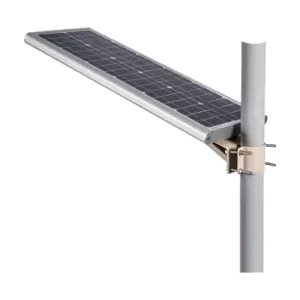
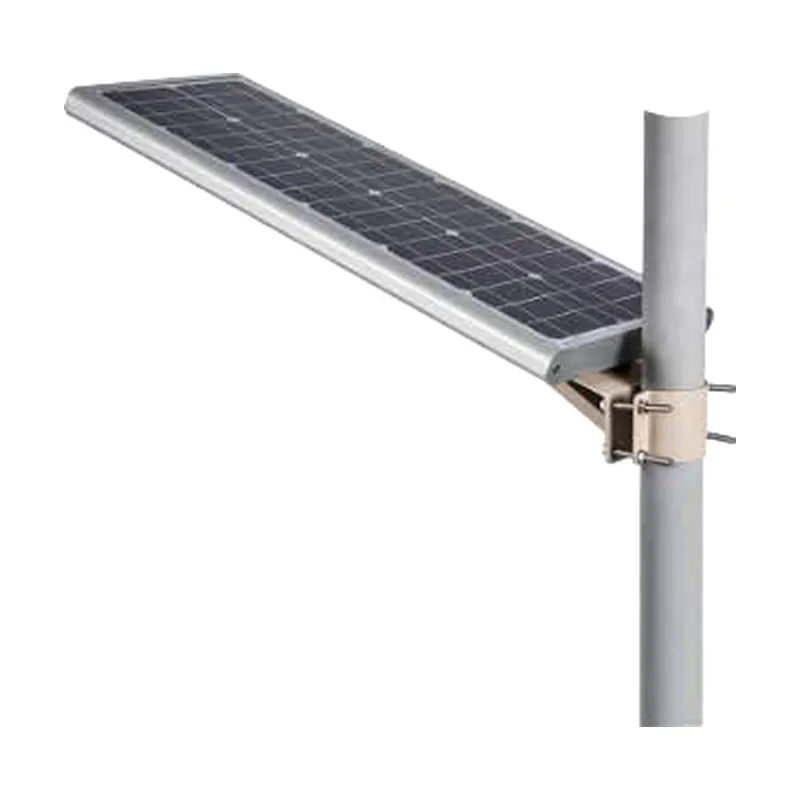
Our all-in-one solar street lights integrate panel, battery and LED in one head:
| Model | Power | Panel | Battery | Mounting height |
|---|---|---|---|---|
| SL3530C015 | 15 W | 20 Wp | 12.8 V / 9 Ah (about 104 Wh usable) | 3–5 m |
| SL5730C030 | 30 W | 45 Wp | 12.8 V / 18 Ah (about 207 Wh usable) | 5–7 m |
Comparing with the table: these compact heads are designed for motion-sensor profiles, not for long hours at full power. We checked them in our battery autonomy calculator with a motion profile equivalent to about 2 hours at full power and 10 hours at 20%:
| Model | Energy per night | Daily harvest at 4 / 5 sun hours | Balanced? |
|---|---|---|---|
| SL3530C015 | about 67 Wh | 58 / 72 Wh | Short at 4, balanced at 5 |
| SL5730C030 | about 133 Wh | 130 / 162 Wh | Just short at 4, balanced at 5 |
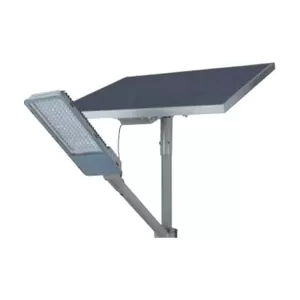
So in sunny regions (5 or more sun hours in the worst month) the all-in-one heads work well for a driveway or yard with motion sensing. In less sunny climates, or if you want the evening-full profile, choose a split system: our split solar street light SL4830G020 pairs a 20 W head with a 60 Wp panel and a 38 Ah battery, which covers a 5 h full + 7 h at 30% profile down to about 3.7 sun hours.
Pole height and placement
| Location | Mounting height | Typical light |
|---|---|---|
| Gate, short driveway | 3–5 m | 15–20 W |
| Long driveway (one every 20–25 m) | 4–5 m | 15–20 W |
| Yard, farm, compound | 5–7 m | 30–40 W |
| Wide compound or private road | 6–8 m | 40–60 W |
Placement matters as much as size:
- Face the panel towards the equator (south in the northern hemisphere, north in the southern) at roughly your latitude’s tilt.
- Avoid shade from 9:00 to 15:00. A tree branch across part of the panel can cut its output sharply. Our guide to solar street lights in shade shows how much.
- Keep the head clear of windows. Point the light at the drive, not the bedroom.
- Mind the wind. The panel adds wind area at the top of the pole; use a pole and base designed for it.
For a full private road with several lights, our private road solar street lights guide covers spacing.
Solar or grid for a home?
| Choose solar when | Choose grid when |
|---|---|
| The light is far from the house supply | A cable is already close |
| Trenching would cross paving or lawns | You need high output all night |
| Power cuts are common | The site is heavily shaded |
| You want no running cost | Winter sun is very short |
Batteries and maintenance
- Lithium iron phosphate (LFP) is the standard for quality solar street lights: it handles deep cycles and heat far better than lead-acid.
- Clean the panel every few months in dusty areas; dust can cost a noticeable share of output.
- Expect to replace the battery after several years; check that it is replaceable before you buy. Our solar street light battery replacement guide shows how.
Common mistakes
- Buying by the wattage label. A “300 W” solar light with a 15 W panel cannot run 300 W for more than minutes.
- Sizing for summer. Size for the worst month.
- Full power all night. It needs two to three times the panel of a dimmed profile.
- Shaded panels. Even partial shade can make a good light fail.
If you tell us your location, what you want to light and how many hours, we will check the panel and battery against your local solar data and suggest a model.
Sources
Frequently asked questions
What size solar street light do I need for my home?
For a driveway or gate, a 15–20 W light (about 1,500–2,000 lm) at 3–5 m is usually enough. For a larger yard or compound, 30–40 W at 5–7 m. Choose the panel and battery for your winter sun hours and the hours you want the light on.
Can a solar street light stay on all night at home?
Yes, if the panel and battery are sized for it. Running at full power all night needs a much larger panel; most home lights run at full power for the first hours, then dim, and brighten on motion, which halves the energy.
How long do home solar street lights last?
The LED and housing typically last many years; the battery is the part that wears. Lithium iron phosphate batteries commonly last several years before needing replacement, longer in mild climates.
Do solar street lights work in winter?
They work if sized for the weakest month. With fewer sun hours and longer nights, a light that is fine in summer can run short in December. Check the panel against the winter sun hours for your location.