
Solar Lights That Stay On All Night: What It Takes and How to Choose
Why many solar lights fade before dawn, the panel and battery sizes that keep them on all night, dimming modes that help, winter and cloudy-day performance, and how to compare lights honestly.
Key points
- A solar light stays on all night only if its battery stores enough energy for 10–14 hours and its panel can refill that battery each day.
- Most lights that fade by midnight have panels and batteries too small for their LED power, or are used in shade.
- Dimming after the first hours is the key: a light that runs bright for 4 hours and then at 20–30% can last until dawn on a modest battery.
- Compare battery watt-hours with the LED's real watts; if the battery cannot cover the night, the light cannot either.
“Stays on all night” is one of the most common claims on solar light packaging and one of the most common complaints in reviews. Some lights genuinely run from dusk to dawn; many fade by midnight or go dark after a cloudy day. The difference is not magic or brand, but simple arithmetic about energy.
The energy sum
A night is long: in winter at mid-latitudes it can be 14 hours, near the equator about 12. A light that should stay on all night needs:
- Battery energy (Wh) ≥ LED power × hours, with some margin
- Panel energy per day ≥ that same amount, so the battery is refilled
For example, a light with a real 2 W LED running 12 hours needs about 24 Wh a night. Its battery should store at least 30 Wh, and its panel must collect about 24–30 Wh a day. At 4 peak sun hours and about 60% system efficiency, that means a panel of roughly 10–12 Wp.
Many cheap lights have a 1–2 Wp panel and a 5–10 Wh battery but claim many watts of LED. They cannot stay on all night at full brightness; they either fade or switch off.
Dimming makes all-night lighting practical
Nobody needs full brightness at 3 am. A profile that runs bright after dusk and dims later stretches the battery:
- 100% for the first 3–4 hours, when people are around
- 20–30% until dawn, or until motion is detected
- Back to 100% for 30–60 seconds when someone passes
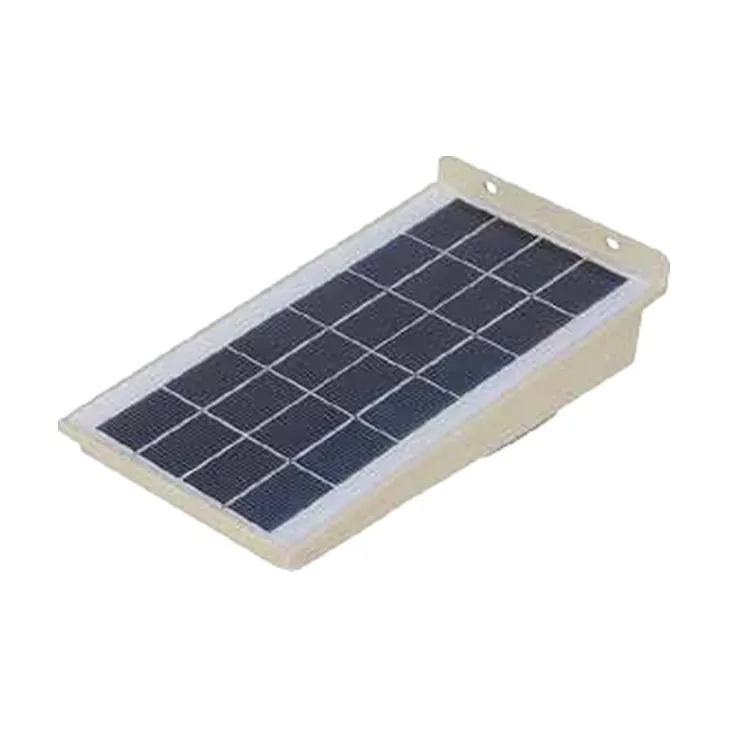
With this profile, the same 2 W light uses about 8 Wh in the first four hours and about 4 Wh for the remaining eight, so a 15–20 Wh battery and a smaller panel are enough. Our solar wall light, with a 6.8 Wp panel and a 3.7 V 8 Ah lithium battery (about 30 Wh), runs a 5 W LED in a bright-then-dim pattern for a full night after a sunny day.
Why lights fade before dawn
Too little sun. The panel must see direct sun for several hours. Shade from trees, walls, eaves or even a fence for part of the day can halve the charge. Lights placed under a porch or on a north-facing wall in the northern hemisphere rarely last the night.
Winter. Days are shorter and the sun is lower, so the panel collects less energy just when nights are longest. A light that runs all night in summer may stop at 10 pm in December.
Cloudy days. After a dull day, the battery starts the night half empty. Two or three dull days in a row and it may not light at all.
Ageing batteries. Ni-MH cells in small lights lose capacity within one or two years; lithium cells last longer, and LiFePO4 longest. A light that used to last all night and no longer does often just needs a new battery.
Dirty panels. Dust, pollen and bird droppings can cut charging by a third.
How to choose lights that really last
Look for numbers rather than adjectives:
- Panel size in Wp, and a physical size consistent with it
- Battery capacity in Wh (or Ah and voltage, so you can calculate)
- Real LED power and lumens, not “equivalent” watts
- Modes, especially bright-then-dim and motion sensing
- Battery chemistry: lithium, ideally LiFePO4, and replaceable
- IP65 or better for outdoor use
If a light claims hundreds of watts and all-night operation with a panel the size of a phone, the claim is not physically possible.
Placement for all-night runtime
- Put the panel where it gets direct sun from mid-morning to mid-afternoon
- Face it towards the equator and tilt it if possible
- Keep it away from other night lights that confuse the dusk sensor
- Clean it every month or two
- For shaded spots, choose lights with a separate panel on a cable
Our guide to solar powered garden lights covers placement for different types of garden light.
Checking a light you already own
To see whether a light can last the night, note its battery capacity and LED power, then use the battery autonomy calculator or the simple sum above. If the battery is too small, no setting will make it last; choose a dimmer mode or a larger light. If the numbers look fine but the light still fades, check shade, panel cleanliness and battery age.
Larger lights for paths, yards and roads
For yards, car parks and estate roads, small garden lights cannot provide enough light for long. All-in-one solar street lights have panels of 20–75 Wp and lithium batteries of 100–400 Wh, designed to light roads all night with dimming. Our all-in-one solar street lights run 6–8 hours of programmed lighting a night with 30–36 hours of stored operation, which carries them through cloudy spells.
Seasonal settings
A practical habit is to change modes with the seasons. In summer, a brighter profile works. In winter, switch to a more economical profile or motion-only mode, so the light keeps working through the long nights. Lights with remote controls make this easy; see solar street light remote control for typical modes.
What “all night” should mean
For buyers, a fair definition is: after a sunny day, the light gives useful light from dusk to dawn in its chosen mode, and after one cloudy day it still lasts most of the night. Ask suppliers for test data that shows this, at the latitude and season you care about.
Ordering for projects
For estates, resorts and public spaces, tell us the hours of light you want, your location and the mounting positions. We will check panel and battery sizes against local sun hours and propose lights and modes that stay on through the night.
Sources
Frequently asked questions
Why don't my solar lights stay on all night?
Usually the battery is too small for the LED power, the panel does not get enough direct sun to refill it, or the battery has aged. In winter and after cloudy days, runtime naturally falls. Moving the light into full sun and using a dimming mode often helps.
How long should solar lights stay on?
A good solar light should run from dusk to dawn after a sunny day, often 10–14 hours depending on season and latitude. Many achieve this by running bright for a few hours and then dimming.
What makes a solar light last all night?
A panel large enough to fully charge the battery in the available sun, a battery with enough watt-hours for the whole night at the chosen brightness, an efficient LED, and a controller that dims after the busy evening hours.