
Off-Grid Solar Powered Street Lights: How They Work, Sizing and Where They Make Sense
Off-grid solar powered street lights explained: how panel, battery, controller and LED work together without the grid, sizing for the worst month, autonomy, maintenance and typical off-grid uses.
Key points
- An off-grid solar street light is a complete power system on a pole: panel, battery, controller and LED, with no grid connection.
- It must collect enough energy on the worst day of the year and store enough for cloudy spells, usually 2–3 nights of autonomy.
- Off-grid lights suit villages, rural roads, estates, camps, farms, parks and sites where the grid is far or unreliable.
- Battery replacement every several years and panel cleaning are the main maintenance tasks.
Off-grid solar street lights bring light to places the grid does not reach, or reaches unreliably: villages, rural roads, new estates, farms, refugee camps, parks and remote facilities. Each light is its own small power station. This guide explains how they work and what makes them reliable.
How it works
- Solar panel converts sunlight to electricity during the day
- Charge controller manages charging, protects the battery and switches the light
- Battery, usually LiFePO4, stores the energy
- LED light runs at night on a programmed profile
At dusk, the controller senses the panel voltage falling and switches the light on. During the night, it follows a lighting profile, for example full brightness for the first hours, dimmed in the middle of the night, and often brighter again before dawn or when motion is detected. At dawn it switches off and charging begins.
Two main designs
- All-in-one: panel, battery, controller and LED in one unit on top of the pole; quick to install, suits paths, estates and village roads
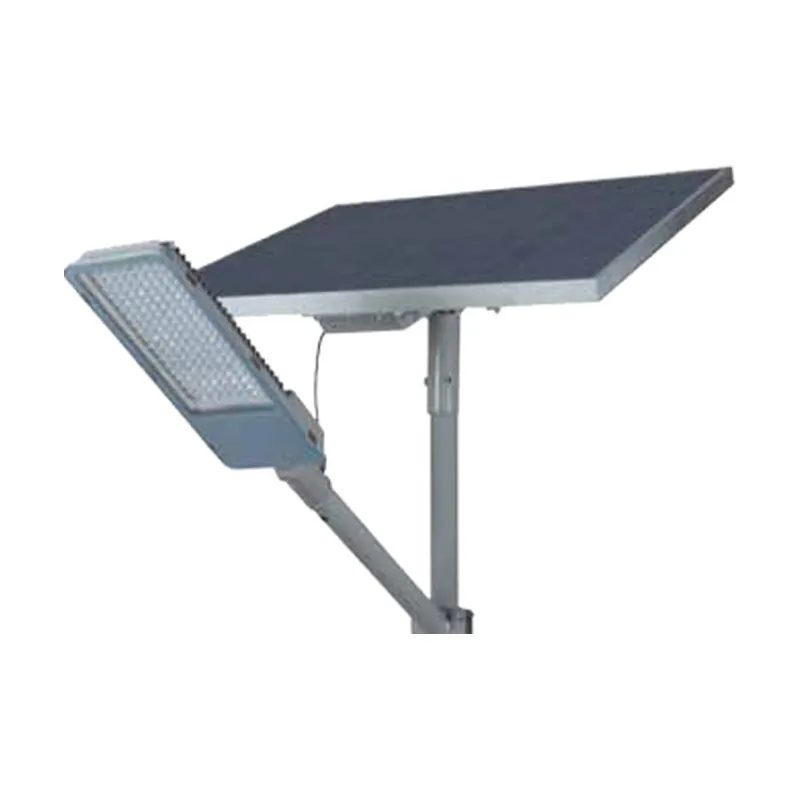
- Split: separate, larger panel and battery; suits higher poles, higher output and cloudier climates
See all-in-one vs split solar street lights.
Sizing for off-grid reliability
Because there is no grid backup, sizing is everything:
- Energy per night: LED power × hours at each profile level
- Panel: enough to collect that energy on the worst month’s sun hours, after losses
- Battery: enough usable capacity for the chosen autonomy, often 2–3 nights
- Controller: MPPT for better harvest in low light
Our solar street light calculator does this for your location, and how to calculate battery capacity explains the battery side step by step.
Autonomy
Autonomy is how many nights the light can run on a full battery without sun. In sunny climates, 2 nights may be enough; in monsoon and cloudy regions, 3–5. Smart controllers can dim automatically when the battery is low, keeping some light through long cloudy spells. See how many rainy days a solar street light can run.
Where off-grid solar street lights make sense
- Villages and rural roads without grid connection
- New estates and roads before the grid arrives
- Farms, plantations and mines
- Refugee and work camps
- Parks, paths and campuses where trenching would damage landscaping
- Regions with frequent power cuts, where solar keeps lights on
- Remote car parks, bus stops and signs
For a balanced view of when solar fits, see advantages and disadvantages of solar street lights.
Light levels and pole heights
| Application | Pole height | Typical LED power |
|---|---|---|
| Path, park | 3–5 m | 10–30 W |
| Village road, estate | 5–7 m | 20–50 W |
| Rural road, car park | 7–9 m | 40–80 W |
| Main road | 9–12 m | 60–120 W (split systems) |
LED power here is real LED power, not the inflated “label” wattage some suppliers use.
Installation for off-grid performance
- Face panels towards the equator, tilted roughly to latitude
- Avoid shade from trees and buildings at all times of the day and year
- Mount securely; panels catch wind
- Set the lighting profile for the site’s needs
- Test autonomy before handover
See how to install a solar street light.
Maintenance
- Clean panels every few months in dusty areas
- Check for new shading from growing trees
- Inspect fixings and cables yearly
- Replace batteries when capacity falls, typically every 5–8 years for LiFePO4
- Update controller settings if needs change
Security
Off-grid lights in remote areas can attract theft of panels and batteries. All-in-one designs, high mounting, anti-theft fasteners and community involvement reduce the risk.
Off-grid vs grid-tied solar
Off-grid lights work independently. Grid-tied or hybrid systems use the grid as backup or feed surplus energy back, but need a grid connection, which removes the main advantage in remote areas. For most rural and remote lighting, fully off-grid is simpler.
Cost over the life of the system
Off-grid lights cost more per light than grid LED fixtures, but avoid trenching, cabling, connection fees and electricity bills. Over 10–20 years, they are often cheaper overall where the grid is far away. The solar vs grid cost calculator compares the two for your project.
A worked example: a village road
Imagine a village road 6 m wide, to be lit with 6 m poles every 25 m, in a location with 4 peak sun hours in the worst month. A 30 W LED with a suitable road optic meets the lighting need. With a profile of 100% for 4 hours, 50% for 6 hours and 100% for 2 hours before dawn, the light uses about 30 × 4 + 15 × 6 + 30 × 2 = 270 Wh per night. Allowing for losses, the panel needs about 270 ÷ (4 × 0.75) ≈ 90 Wp, and for 2.5 nights of autonomy a battery of about 700 Wh usable. A good all-in-one light with real figures close to these will work reliably through the year; one labelled “200 W” with a 40 W panel will not.
Community involvement
In village projects, involving the community from the start helps: agreeing pole positions, explaining how the lights work and who to call when one fails, and sometimes training a local technician to clean panels and check lights. Lights that people feel are theirs are better protected and better reported when faults occur.
Our off-grid lights
We manufacture all-in-one solar street lights and split solar street lights for off-grid roads, villages and estates. Send us the location, road width, pole height and hours of light needed, and we will size a system for the worst month at your site.
Sources
Frequently asked questions
What is an off-grid solar street light?
A street light powered entirely by its own solar panel and battery, with no connection to the electricity grid. It charges by day and lights automatically at night.
How long can off-grid solar street lights run without sun?
Well-designed lights store enough energy for two to three nights, or more in cloudy climates. With dimming, they can stretch further during long cloudy spells.
Are off-grid solar street lights reliable?
Yes, when sized for the site's worst month, fitted with LiFePO4 batteries and a good controller, installed in full sun and maintained. Most failures come from undersized systems, shading or worn batteries.