
Solar Light Replacement Parts: Batteries, Panels, Controllers and LEDs Explained
Which parts of a solar light can be replaced: batteries, panels, controllers, LED boards, sensors, switches and lenses, how to find the failed part and when to replace the light.
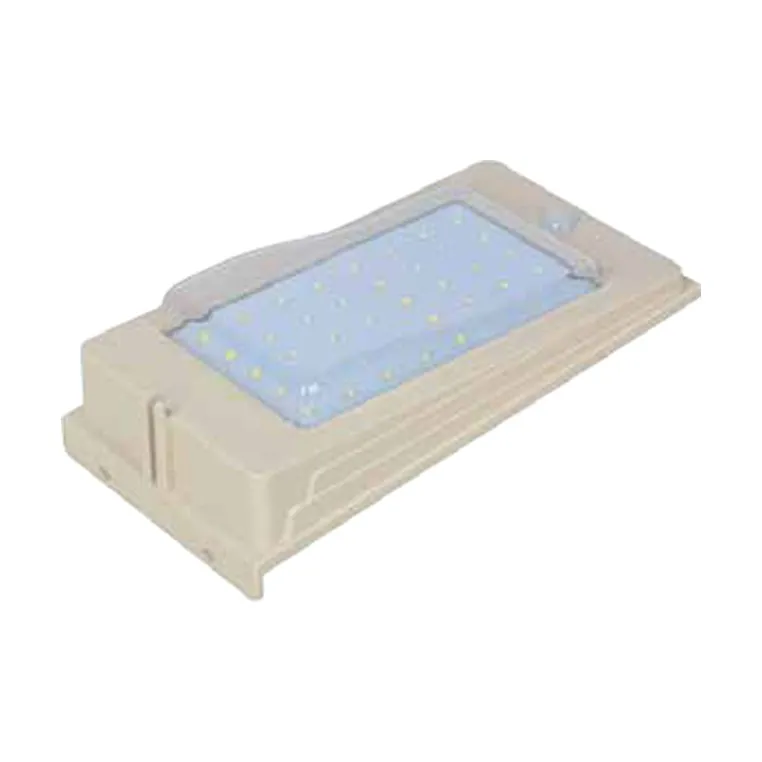
Key points
- The battery is the part that wears out first in almost every solar light; replacing it usually restores performance.
- Panels, controllers, LED boards, sensors and switches can also fail, and can be replaced in lights designed to be opened.
- Diagnose before buying parts: test the panel output, battery voltage and the light in a dark room or with the panel covered.
- In cheap sealed garden lights, replacing the whole light is often simpler; in street lights and good wall lights, parts are worth replacing.
When a solar light stops working, the instinct is to throw it away. Often only one part has failed, usually the battery, and a replacement brings the light back for a fraction of the cost of a new one. This guide explains which parts can be replaced, how to find the faulty one and when replacement is not worth it.
How a solar light is built
Every solar light, from a garden stake to a street light, has the same five parts:
- Solar panel: charges the battery by day
- Battery: stores the energy
- Controller: manages charging, switches the light at dusk and protects the battery
- LED board and driver: produces the light
- Housing: lens, gaskets, switch, sensor and mounting
Small garden lights put most of these on one small circuit board. Street lights and larger wall lights have separate, replaceable modules.
Batteries: the part that wears out
Batteries lose capacity with every charge cycle and with heat and cold. Typical life:
| Battery type | Where used | Typical life |
|---|---|---|
| NiMH AA/AAA | Garden and path lights | 1–2 years |
| NiCd | Older, cheap garden lights | 1–2 years |
| Li-ion (18650 packs) | Wall and flood lights | 2–3 years |
| LiFePO4 packs | Street lights, better wall lights | 5–8 years or more |
Signs of a tired battery: the light starts at dusk but fades after an hour or two, or only works after very sunny days.
When replacing:
- Match the chemistry (NiMH for NiMH, LiFePO4 for LiFePO4)
- Match the voltage (1.2 V per NiMH cell, 3.2 V per LiFePO4 cell, 3.7 V per Li-ion cell)
- Use equal or slightly higher capacity, within what the panel can charge
- For packs, match the connector and fit any battery management board
Never put alkaline batteries in a solar light; they are not rechargeable and can leak. Our guide to rechargeable batteries for solar lights covers garden light batteries in detail. For street lights, see how long solar street lights last for the factors that set battery life.
Solar panels
Panels rarely fail outright, but output can fall because of:
- Dirt, pollen and bird droppings
- Yellowed or cloudy plastic covers on cheap panels
- Cracked cells from impact or hail
- Corroded connections
Clean first. If output is still low, test it: in full sun, a 6 V garden panel should read close to its rated open-circuit voltage, and a street light panel should give voltage and current near its rating. Replace panels with the same voltage and similar or higher power, and the same mounting size.
Controllers
The controller decides when to charge, when to switch on and how bright to run. Faults include:
- Light on during the day (failed dusk sensing)
- Light never switches on although the battery is charged
- Battery not charging although the panel is good
- Wrong lighting profile after a reset
In street lights, controllers are separate modules and easy to swap. Settings such as lighting profile and battery type must match the light. For remote-programmable controllers, see solar street light remote control.
LED boards and drivers
LEDs themselves rarely fail, but boards can suffer from water, corrosion or a failed driver. In larger lights, the LED module is replaceable; in garden lights, it is part of the main board. Match power, voltage and size.
Sensors, switches and smaller parts
- Motion sensors: may fail or get covered by dirt or insects; replacement modules exist for many wall and street lights
- On/off switches: a common failure point in garden lights, where water gets in
- Lenses and covers: yellowed or cracked plastics can be replaced
- Gaskets and seals: replacing them prevents water damage
- Stakes, brackets and poles: easily replaced and often available as spares
How to diagnose a dead solar light
- Clean the panel and check for shade
- Check the switch is on
- Cover the panel (or put the light in a dark room) to see if it switches on
- Charge in full sun for one or two days
- Measure the battery voltage; low voltage after a sunny day points to a bad battery or charging fault
- Measure panel output in sun
- Look for water and corrosion inside
For street lights, our solar street light not working guide gives a step-by-step fault-finding process.
Repair or replace?
| Situation | Best option |
|---|---|
| Cheap garden light, sealed battery | Replace the light |
| Garden light with AA/AAA cells | Replace the batteries |
| Wall or flood light with accessible pack | Replace the pack |
| Street light, battery aged | Replace the battery |
| Street light, controller fault | Replace the controller |
| Any light with water damage throughout | Replace the light |
For street lights on poles, replacing a battery or controller costs far less than a new light, especially as the pole, foundation and wiring stay.
Buying lights that can be repaired
When choosing new solar lights, prefer models with:
- Standard battery sizes or documented packs
- Screws rather than glue
- Separate controller and LED modules
- A supplier that sells spare parts
- Clear specifications of battery chemistry, capacity and panel power
Our solar wall light and all-in-one solar street lights use LiFePO4 batteries and have documented specifications, which makes later replacement straightforward.
Safety
- Lithium batteries can be dangerous if damaged, short-circuited or overcharged; handle carefully and recycle properly
- Disconnect the battery before working on the controller or LED board
- Use correct tools and insulated gloves when working on street light packs at height
Recycling old parts
Old batteries, panels and electronic boards should go to proper recycling points, not household waste. Many countries require battery recycling by law.
Spares for projects
For municipal and commercial solar street light projects, we recommend keeping a small stock of spare batteries and controllers, often 1–2% of the installed quantity, so faults can be fixed on the next maintenance visit. Ask us for spare parts lists when ordering.
Sources
Frequently asked questions
What parts of a solar light can be replaced?
Batteries most often, and in better lights also the solar panel, charge controller, LED board, motion sensor, switch, lens, gaskets and mounting parts. Cheap sealed lights may only allow battery changes, if that.
Why does my solar light stop working after a year?
Usually the battery has lost capacity. Other common causes are a dirty or shaded panel, water inside the light, a failed switch or a faulty controller. Replacing the battery fixes most cases.
Can I put a bigger battery in a solar light?
Only of the same chemistry and voltage, and if it fits. A bigger battery helps only if the panel can fill it; a small panel cannot charge a much larger battery on a short day.