Bright Solar Path Lights: Why Stake Lights Fade by Midnight, and What a 1,000-Lumen Path Light Needs
How many lumens a solar pathway light can keep up through the night, worked out from panel watts and PVGIS sun hours, and what a genuinely bright 1,000-lumen solar path light needs.
Key points
- A solar path light can only give out the energy its panel collects; the lumen figure on the box is usually a peak that lasts minutes or a few hours, not all night.
- With PVGIS sun for a flat panel in a Johannesburg June (4.06 sun hours), a 1 W panel supports about 26 lumens all night for 10 hours, a 2 W panel about 53 and our 6.8 Wp wall-light panel about 179.
- In a Cape Town June (2.40 sun hours), the same panels support only about 60% of that.
- A genuinely bright path light giving 1,000 lumens for 10 hours needs about 89 Wh a night and, in our solar calculator, a panel of about 37 W in Johannesburg's June or 62 W in Cape Town's.
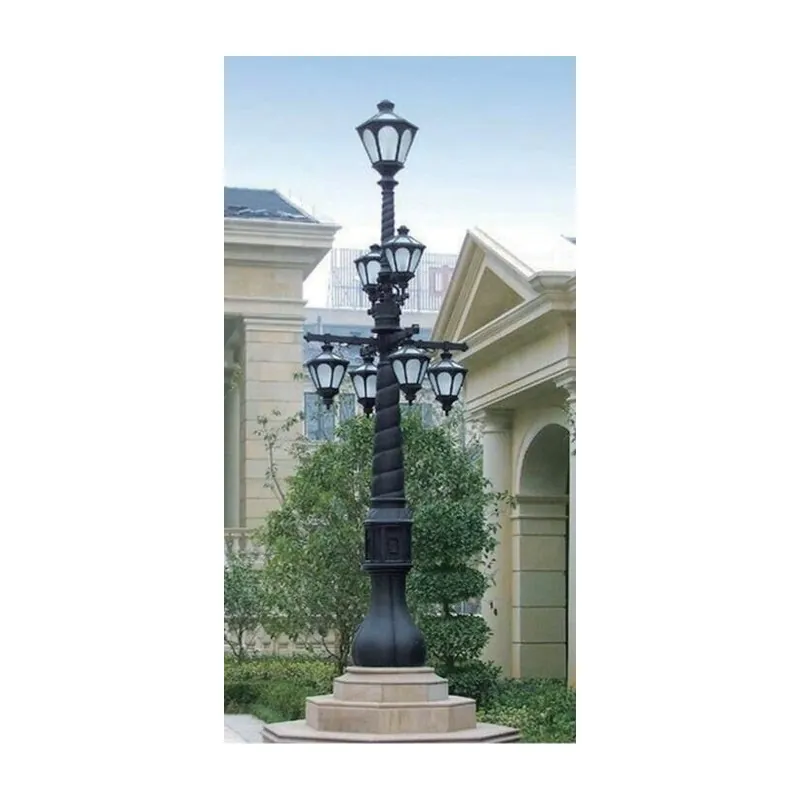
- For high lumens on a path, use a few solar pole lights with real panels, or mains bollards, rather than many tiny stake lights.
Search for solar pathway lights and you find boxes promising 200, 500 or even 1,000 lumens from a light the size of a coffee mug. Buyers, and the retailers who sell to them, then see the lights dim to a glow by midnight. Nothing is wrong with the LEDs. The panel simply cannot collect that much energy. This guide shows how to work out what a solar path light can really sustain, using PVGIS solar data and our own calculator. For larger solar street and area lights, the same reasoning is covered in high lumen solar lights; here we stay with the small panels on path, stake and bollard lights.
The rule: energy in equals light out
A solar light has a small energy budget each day:
Energy collected = panel watts × peak sun hours × charging efficiency.
Everything the light gives out at night comes from that. Lumens are just energy times the LED’s efficacy. So the panel, not the LED, sets the upper limit on brightness through the night.
We used:
- Sun hours from PVGIS for a flat (horizontal) panel, because most path-light panels sit flat on top of the light
- Charging efficiency of 60%, the value our calculator uses for simple PWM controllers found in small lights
- Driver efficiency of 90% and LED efficacy of 120 lm/W
- A 10-hour night at constant output
How many lumens each panel can keep up
| Panel | Johannesburg, June (4.06 h) | Nairobi, July (4.16 h) | Cape Town, June (2.40 h) |
|---|---|---|---|
| 0.5 W (typical small stake light) | about 13 lm | about 13 lm | about 8 lm |
| 1 W | about 26 lm | about 27 lm | about 16 lm |
| 2 W | about 53 lm | about 54 lm | about 31 lm |
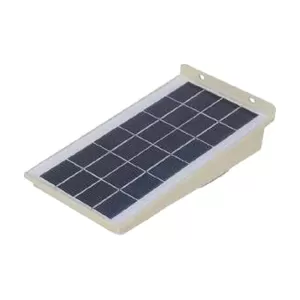
| 6.8 Wp (our SL3530J005 panel) | about 179 lm | about 183 lm | about 106 lm |
Even a large 2 W stake-light panel supports only about 50 lumens all night in a sunny winter. That is fine for marking a path edge, which needs little light, but nowhere near “high lumen”.
Our SL3530J005 solar wall light shows the same limit with real parts: its 6.8 Wp panel and 29.6 Wh battery run the 5 W LED at full power for a few hours, then dim for the rest of the night.
What a truly bright solar path light needs
Suppose you want 1,000 lumens all night, enough to light a wide path or a parking area from one fitting. At 125 lm/W that is an 8 W LED. We put it into our solar street light calculator:
| Item | Johannesburg, June | Cape Town, June |
|---|---|---|
| Energy per night | 89 Wh | 89 Wh |
| Panel needed | about 37 W | about 62 W |
| Battery for 1 night (LiFePO4) | about 99 Wh | about 99 Wh |
A 37–62 W panel covers roughly 0.2–0.3 square metres: the size used on small solar street and garden pole lights, not on a stake light. With an MPPT controller, at 72% efficiency, the panel would be about a sixth smaller. That is the honest answer to “high lumen solar pathway lights”: the high-lumen ones are poles.
Ways to get more light from a small panel
- Bright, then dim. Run full brightness for the first 3–4 hours when people use the path, then drop to 20–30%.
- Motion sensing. Stay dim until someone walks past, then go bright for 30 seconds.
- Fewer, larger lights. Three pole lights with real panels beat thirty tiny stakes for both light and maintenance.
- Face the sun. A panel that can be tilted towards the equator collects noticeably more in winter than a flat one.
- Keep panels clean. Dust and bird droppings can cut output sharply on tiny panels.
Metal, glass, copper or plastic?
Many search terms ask about metal, glass or copper path lights. The housing affects how long the light lasts outdoors and how it looks, not how bright it is. Stainless steel and aluminium resist knocks and UV better than thin plastic; glass diffusers stay clear longer than cheap acrylic. When comparing lights, always ask for three numbers: panel watts, battery watt-hours and LED watts. Our guide to solar light replacement parts explains what wears out first.
Spacing a path
| Purpose | Light per fitting | Typical spacing |
|---|---|---|
| Marking the edges | 10–30 lm | 2–3 m, alternating sides |
| Seeing the path surface | 100–300 lm | 3–5 m |
| Lighting a wide path or yard | 1,000 lm and up | Pole lights at 8–12 m |
For short garden paths, see pathway lighting and low profile pathway lights. For estates and parks, our LED garden light BG-TYO45 runs from 20 W to 80 W on 2.5–5 m poles and has a solar DC version; see also solar post lights.
For retailers and project buyers
If you sell path lights, quote panel watts and battery watt-hours on the box and let customers compare. For projects, send us the path length and the effect you want; we will size solar pole lights against PVGIS data for your site, or propose mains bollards where a cable is available.
Sources
Frequently asked questions
How many lumens is a good solar pathway light?
For marking a path, 10–50 lumens per light is enough. For lighting the path surface so you can see steps and obstacles, 100–300 lumens per light at closer spacing works well, but that needs a panel of several watts per light to last all night.
Why do high lumen solar path lights get dim after an hour?
Their panels are too small to supply the advertised lumens all night. The light starts bright, then the controller dims it to stretch the battery, or the battery simply runs low.
What size solar panel does a bright path light need?
About 37 W of panel in a sunny winter month for 1,000 lumens over a 10-hour night, by our calculation with PVGIS data, and more in cloudy climates. That is a pole-light panel, not a stake-light panel.
Are metal solar path lights brighter than plastic ones?
Not by themselves. Brightness depends on the panel, battery and LED, not the housing. Metal lasts longer outdoors and dissipates heat better, but check the panel watts and battery watt-hours.