Solar Garden Ball Lights: How Long They Glow, Why They Fade in Winter and What to Look For
How solar light balls for gardens work, how long they glow in winter and summer using PVGIS sun data for Cape Town, Johannesburg, Lagos and Manila, and what to check before buying.
Key points
- A solar ball light is a small panel, a rechargeable cell and a few LEDs inside a frosted or crackle-glass globe; its panel size decides how long it glows.
- By PVGIS, each watt of horizontal panel collects about 1.4 Wh on a June day in Cape Town but about 4.9 Wh in December, after typical small-light charging losses of 40 %.
- Our worked example: a ball with a 0.5 W panel and a 0.1 W LED load can run about 7 hours on a June night in Cape Town, and all night in Johannesburg, Lagos or Manila in their darkest months.
- Look for a replaceable battery, a separate on/off switch, and a stated panel size; balls with the panel hidden under a dome often charge poorly.
Solar ball lights are glowing globes that sit on the lawn, float in a pond or hang from a branch. They are decorative rather than practical, and they suffer from the same issue as most small solar lights: bright on a summer evening, faint and short-lived in winter. This guide explains how they work and uses real sun data to show how long they glow in different places and seasons, so you can choose sizes that meet your expectations.
What is inside a solar ball
| Part | Typical form | What it means for you |
|---|---|---|
| Globe | Frosted plastic, acrylic or crackle glass | Plastic is lighter and safer; glass looks better but can break or crack in frost |
| Panel | Small monocrystalline cell on the top or on a separate stake | Panel watts set the daily energy |
| Battery | 1.2 V NiMH or 3.2–3.7 V lithium | Capacity sets how long it can run; replaceable is better |
| LEDs | One to a few warm white or RGB chips | Lower power means longer glow |
| Controller | Light sensor, sometimes a timer or mode button | Turns on at dusk, off at dawn or after a set time |
Many balls hide the panel inside a dome on top, under a clear cap. That keeps rain out but loses some light. Balls with a separate panel on a stake can put the panel in the sun while the ball sits in the shade. Our solar powered garden lights guide explains the same parts in other garden lights.
How much sun each watt of panel collects
The energy a small solar light gets each day is roughly panel watts × peak sun hours × charging efficiency. For small lights with simple controllers, we use 60 % efficiency, the same figure our calculators use for PWM charging. Using PVGIS monthly data for a horizontal panel:
| Location | Darkest month | Sun hours | Wh per watt of panel | Brightest month | Sun hours | Wh per watt of panel |
|---|---|---|---|---|---|---|
| Cape Town | June | 2.40 | 1.44 | December | 8.24 | 4.94 |
| Johannesburg | June | 4.06 | 2.44 | November | 7.20 | 4.32 |
| Lagos | June | 4.03 | 2.42 | April | 5.93 | 3.56 |
| Manila | December | 3.70 | 2.22 | April | 6.31 | 3.79 |
| Nairobi | June | 4.05 | 2.43 | February | 7.08 | 4.25 |
Cape Town shows the biggest seasonal swing: a winter day gives less than a third of a summer day. Places near the equator change less, though rainy seasons still cut the harvest.
Worked example: a 0.5 W panel and a 0.1 W load
Take a ball with a 0.5 W panel whose LEDs draw 0.1 W. These are example sizes for the calculation, not a specific product. Daily energy is panel watts × Wh per watt; hours of glow are that energy divided by the load, up to a 12-hour night:
| Location, darkest month | Energy per day | Hours of glow |
|---|---|---|
| Cape Town, June | 0.72 Wh | about 7 h |
| Johannesburg, June | 1.22 Wh | 12 h (all night) |
| Lagos, June | 1.21 Wh | 12 h (all night) |
| Manila, December | 1.11 Wh | about 11 h |
| Nairobi, June | 1.21 Wh | 12 h (all night) |
The battery must hold at least one night’s energy to make use of it: 0.72–1.2 Wh here, which is a 1.2 V cell of about 600–1,000 mAh. A battery much smaller than that limits the glow even on sunny days. For the same method on larger lights, our battery autonomy calculator handles any panel, battery and load; our solar flood lights list their real panel and battery sizes on the solar flood light page.
Why your balls fade in winter
- Shorter, weaker days. As the table shows, winter harvest can drop to a third.
- Longer nights. The battery has to cover more hours.
- Low sun angle. Garden walls, fences and trees shade the panel for more of the day.
- Cold. Batteries deliver less energy when cold, and NiMH cells self-discharge.
- Ageing cells. Small NiMH cells lose capacity after a season or two. Our how to change the battery in a solar garden light guide shows how to replace them.
What to look for when buying
- Stated panel size or a separate panel. If the seller cannot say the panel watts, assume it is small.
- Replaceable battery of a standard size (AA or AAA NiMH, or 18650 lithium).
- On/off switch, so you can store balls in winter or turn them off for a few days to fully charge.
- IP rating: IP44 at least for lawns; IP65 or better for floating pond balls.
- Globe material: acrylic or PE for gardens with children or frost; glass for looks in sheltered places.
- Mode: warm white for a calm look, RGB for parties; see our colour-changing solar lights guide for how colour affects run time.
Placing solar balls
- Put the panel in full sun for at least five hours, especially in winter.
- Group balls of different sizes for a natural look: three or five work better than a straight line.
- Keep them away from security lights or street lights, whose light can stop the dusk sensor switching on.
- Wipe the panel every few weeks; pollen and dust cut charging noticeably.
For retailers and landscape projects
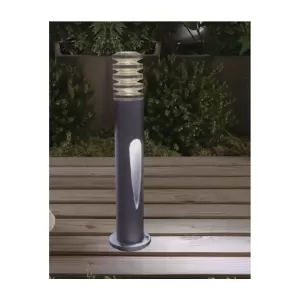
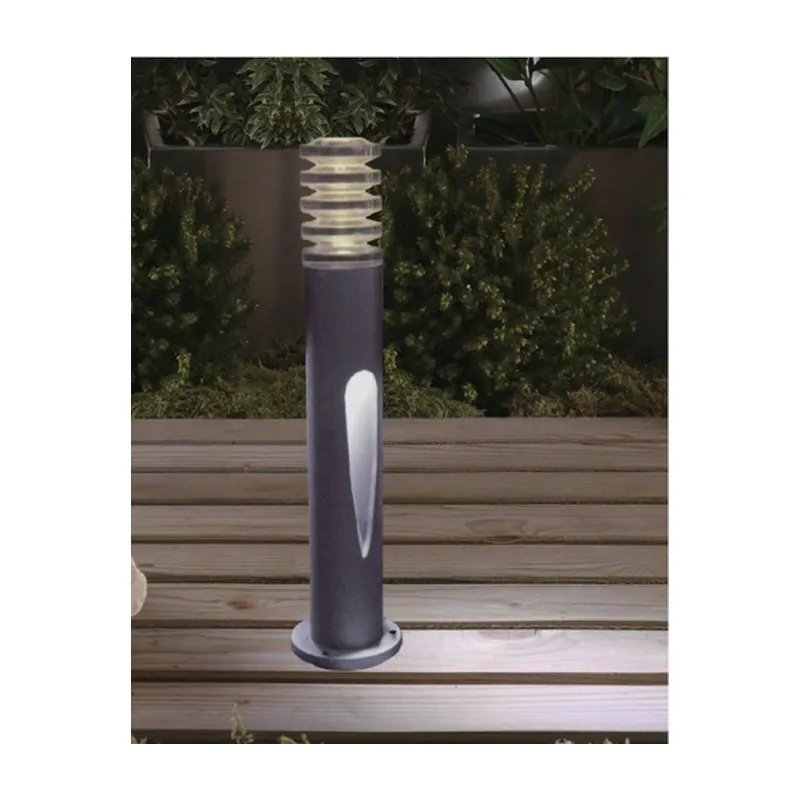
Solar balls are decoration. For path and garden lighting that must work every night of the year, a mains or larger solar light is more reliable. Our LED lawn light BG-CP and garden light BG-TYO45 cover lawns and garden paths. Our top-rated solar lights guide compares solar options for different jobs.
What to send us
For retail or project quantities, tell us the location (for PVGIS sun data), the hours you want the lights to glow and the look you want. We will tell you the panel and battery size needed and suggest suitable products.
Sources
Frequently asked questions
How long do solar garden ball lights stay on?
It depends on the panel and the season. A ball whose 0.5 W panel feeds a 0.1 W load can glow about 7 hours on a winter night in Cape Town, and close to all night in sunnier places or in summer.
Why do my solar balls only glow for an hour or two?
Common causes are shade on the panel, a dirty panel, a worn battery, or the short days of winter. Move the balls into full sun, clean the panel and replace the battery if it is more than a season or two old.
Can solar ball lights stay outside in winter?
Most can, if they are rated at least IP44 and the globe is not glass in a frost-prone place where water can collect and freeze. Switch them off and store them in very cold climates to protect the battery.
Do solar balls need direct sunlight?
Yes. They charge in daylight, but direct sun gives several times more energy than shade. A ball under a tree may never fully charge.