
Top Rated Solar Lights: How to Judge Ratings and Choose Lights That Perform
How to read ratings and reviews of solar lights, the specifications that predict real performance, why good-looking lights fail, and how to choose lights for yards, paths and projects.
Key points
- Star ratings mostly reflect the first few weeks of use; solar lights fail later, when batteries age and winter arrives.
- Panel watts, battery watt-hours, battery chemistry and real LED power predict performance better than reviews.
- Look for reviews written after several months, and for photos at night in the same season you care about.
- For projects, ask for test data and references rather than relying on online ratings.
Online, “top rated” solar lights often carry thousands of five-star reviews. Yet many buyers find their new lights dim or dark within a season. The reason is not dishonest reviews but timing: most people review a solar light in the first few weeks, when it is new and the weather is good. Solar lights reveal their quality months later.
What ratings measure, and what they miss
A typical review is written after a week or two. At that point the battery is new, the panel is clean and, often, it is summer. The light looks bright and runs for hours. Problems that appear later rarely show in the rating:
- Batteries that lose capacity after a few hundred cycles
- Runtime that collapses in winter
- Plastic housings that yellow and crack after one summer
- Seals that let water in after the first heavy rain
- Panels whose output falls as their coating clouds
A light with a 4.5-star average can therefore be a poor long-term buy, while a less-reviewed light with better components lasts for years.
How to read reviews better
- Filter for reviews written after several months. Look for words like “after a year” or “this winter”.
- Read the three-star reviews. They are often the most balanced.
- Look for night photos. Daylight photos show nothing useful about a light.
- Check the reviewer’s climate. A light that works in Arizona may not work in Scotland.
- Watch for changes. Sellers sometimes change components under the same listing; recent reviews matter most.
Specifications that predict performance
Specifications tell you what reviews cannot:
Panel power (Wp). The energy the light can collect each day. Small garden lights use 0.3–2 Wp; wall lights 3–10 Wp; street lights 20–150 Wp.
Battery capacity (Wh). Voltage times amp-hours. This is how much energy is stored for the night.
Battery chemistry. Lithium iron phosphate (LiFePO4) lasts longest and handles heat best; lithium-ion is common in small lights; Ni-MH is cheap but ages fast. See rechargeable batteries for solar lights.
Real LED power and lumens. Avoid listings that only give “equivalent” watts or huge lumen numbers that the panel and battery could never support.
IP rating. IP65 or better for outdoor use.
Housing material. Aluminium, stainless steel or UV-stabilised polycarbonate.
Replaceable battery and warranty. A light whose battery can be replaced is worth much more than one that must be thrown away.
A quick sanity check
Divide battery watt-hours by LED watts to see how many hours of full brightness the light can give. Then check whether the panel can refill the battery in a day: panel Wp × your peak sun hours × about 0.6. If either number is far below your needs, the light cannot perform as advertised, whatever its rating. Our battery autonomy calculator does this with your own figures.
Choosing by use
Garden paths and borders. Small stake lights with 0.5–1 Wp panels and lithium cells; many small lights look better than a few bright ones. See solar powered garden lights.
Yards, gates and walls. Wall or post lights with 5–10 Wp panels and dim-plus-motion modes.
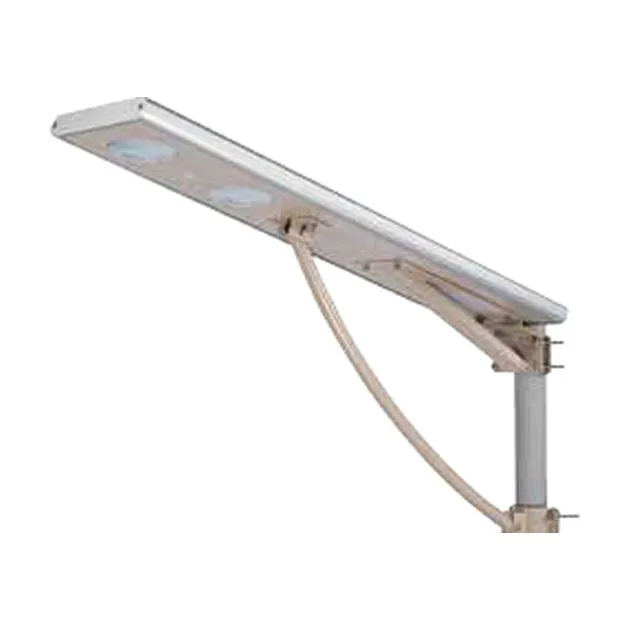
Driveways and car parks. Small all-in-one street lights with 20–75 Wp panels and LiFePO4 batteries, such as our all-in-one solar street lights.
Security. Floodlights with separate panels, motion sensing and clear real-world runtime.
Why project buyers do not rely on ratings
Developers, municipalities and contractors buying hundreds of lights cannot rely on consumer reviews. They ask for:
- Test reports for the exact model
- Battery and panel specifications in the datasheet
- Sample units to test on site through bad weather
- References from similar projects and climates
- Warranty terms in writing
Our guide on how to choose an LED street light manufacturer lists the questions to ask.
Common features of lights that last
Across many projects, long-lasting solar lights share the same traits: honest specifications, adequate panels for the climate, LiFePO4 or quality lithium batteries, sealed housings with breather valves, sensible dimming modes and replaceable parts. None of these appear in a star rating, but all of them show in year two.
Maintenance extends any light’s life
Even good lights need care: clean panels, clear plants that shade them, check seals and replace batteries on time. A well-maintained mid-range light often outlasts a neglected premium one.
Testing a light yourself
If you are choosing between a few models, buy one of each and test them side by side through a full month, ideally including some dull weather. Mount them in the same place, note what time each one dims or goes out, and check them again after a cloudy day. This simple test shows more than hundreds of online reviews, and it costs little compared with buying the wrong light for a whole garden, estate or car park.
Warranty as a quality signal
A supplier who offers a two- or three-year warranty on the battery, and explains how claims work, is signalling confidence in the product. Very short or vague warranties often go with weaker components.
For larger orders
If you are buying solar lights for an estate, resort, school or public space, tell us the location, uses and hours of light needed. We will propose lights with specifications sized for your climate and can send samples to test.
Sources
Frequently asked questions
What are the best rated solar lights?
Ratings change constantly and depend on the seller and season. Instead of a ranking, check panel size in watts, battery capacity in watt-hours, battery chemistry, real lumens, IP rating, warranty and long-term reviews. Lights that score well on these usually perform well.
Why do highly rated solar lights stop working?
Most reviews are written in the first weeks. Lights with small batteries, cheap cells or weak seals look fine at first, then fade in winter or fail after the first year. Long-term reviews reveal this.
How do I know if a solar light is good quality?
It states real specifications (panel Wp, battery Wh, LED watts and lumens), uses lithium or LiFePO4 batteries, has IP65 or better, uses metal or UV-stable housings, and comes with a warranty and replaceable battery.