
How to Choose an LED Street Light Manufacturer in China: A 12-Point Checklist
A practical checklist for importers, contractors and municipalities buying LED street lights or solar street lights from China: how to verify the company and certificates, what test reports to ask for, how to test samples, and which warranty terms matter.
Key points
- Check the legal name and 18-character credit code in China's National Enterprise Credit Information Publicity System.
- Ask which products are made in the supplier's own plant and which come from partner factories, and who carries the warranty.
- Ask for IES/LDT files, LM-80 data, driver datasheets and test reports for the exact model.
- Test samples, book a pre-shipment inspection, and write the full specification into the contract.
Most of the world’s LED street lights and solar street lights are made in China, and the range in quality is enormous. The same-looking 100 W light can cost US$30 or US$130, and the difference only shows after the first rainy season or the first lightning storm. Here is the checklist we would use if we were on the buyer’s side of the table.
A. Verify the company
1. Legal identity. Ask for the full legal name and the 18-character Unified Social Credit Code. Check them in the National Enterprise Credit Information Publicity System: registered address, date of establishment, registered capital, business scope and any administrative penalties. A company that cannot give you a legal name that matches its invoices is a red flag.
2. Who makes what. Ask which products are made in the supplier’s own plant and which come from partner factories. This is normal in the lighting industry; very few companies make every product themselves. What you need to know is who controls the quality, who tests before shipment and who carries the warranty.
3. Project history. Ask for references with project names, quantities and dates, ideally from projects similar to yours. A list you can check is worth more than a page of logos.
B. Check the paperwork
4. Certificates you can verify. Every certificate has a number and an issuing body. Check it on the issuer’s website or ask the issuer. Look at the model list on the certificate: a CE or CB certificate for model A says nothing about model B.
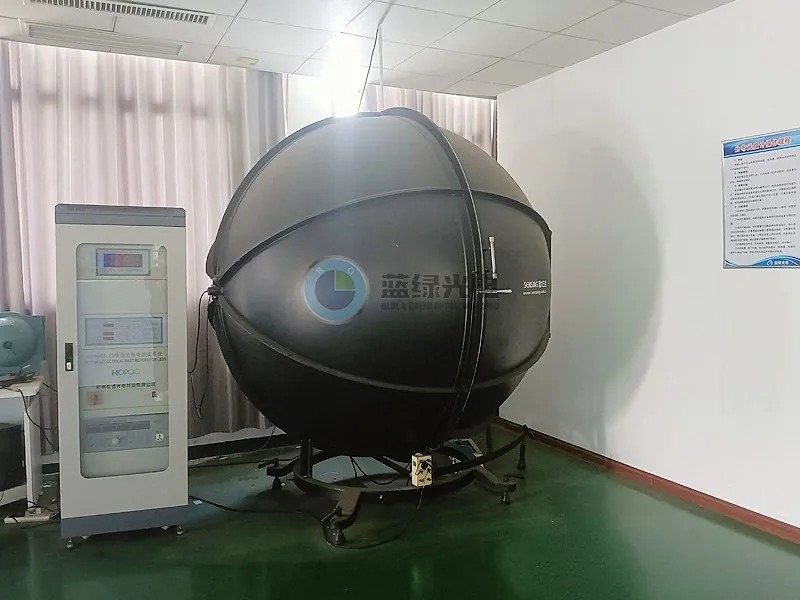
5. Photometric data. Ask for the IES or LDT file and the integrating-sphere report of the exact model and wattage. Without photometric files nobody can design the road, and claims such as “150 lm/W” cannot be checked.
6. LED and driver data. Ask for the LED brand and part number with its LM-80 report and TM-21 projection (lumen maintenance), and the driver brand and model with its datasheet. Many failures are driver failures.
7. Safety, EMC and surge. Test reports to IEC/EN 60598 (safety) and the relevant EMC standards, plus the surge protection level (10 kV or more for street lights).
C. Test before you buy in volume
8. Samples. Order samples of the exact configuration. Measure input power, check the light distribution on a wall or a test road, and run the samples for a few weeks. For solar lights, run them through a real cloudy week, not only a sunny day.
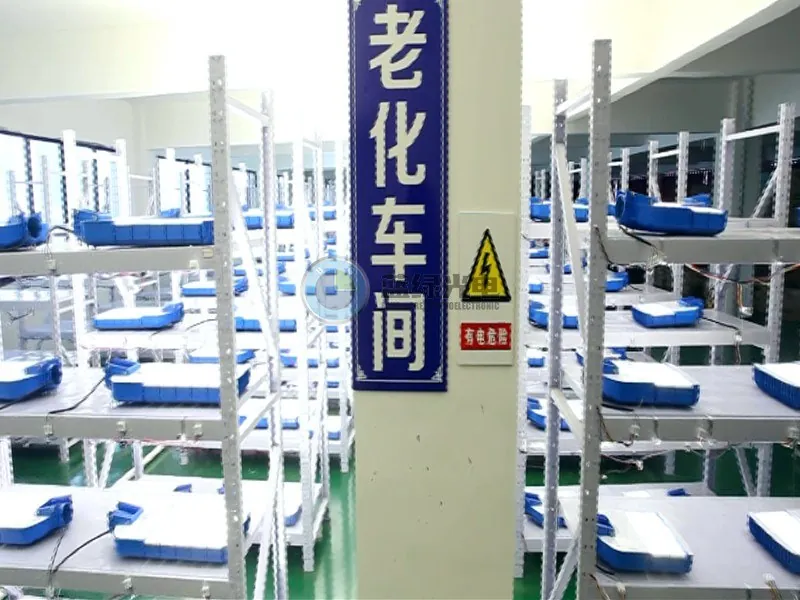
9. Inspection and aging. Ask how many hours each luminaire is aged before packing (24–72 hours is typical for street lights), and whether you can book a third-party pre-shipment inspection. A good supplier will welcome it.
D. Agree the commercial terms
10. Specification in the contract. Write wattage, lumen output, efficacy, CCT, CRI, IP, IK, surge level, driver brand and LED brand into the purchase order. “100 W street light” is not a specification.
11. Warranty that works. Three to five years is typical. Check what it covers (driver, LEDs, housing, surge damage), the failure rate that triggers replacement, and who pays freight and labour.
12. Spare parts and documentation. Ask for a percentage of spare drivers and surge protectors with the order, installation manuals in your language, and wiring diagrams.
E. Logistics, payment and timing
13. Incoterms. Be clear what the price includes. EXW (ex works) means you collect at the factory; FOB (free on board) means the supplier delivers onto the ship at a named Chinese port; CIF adds sea freight and insurance to your port; DDP means delivered with duties paid. Compare quotations on the same basis, and add local duties, port charges and inland transport yourself for FOB or CIF offers.
14. Shipping lithium batteries. Solar street lights contain lithium batteries, which are dangerous goods in transport (class 9). Batteries packed inside or with equipment are usually shipped under UN3481; spare batteries shipped alone fall under UN3480 and face stricter rules. The supplier must provide the UN38.3 test summary and the correct dangerous goods declaration. Air freight is much more restricted than sea freight, so plan samples and urgent spares accordingly.
15. Packing and loading. Ask for the carton size and the number of sets per container. Poles take much more space than lights: a 40 ft container of street lights alone holds far more sets than one with 8–10 m poles. If poles are sourced locally, the shipment and the cost change completely.
16. Payment terms. A deposit with the balance before shipment is common for first orders, often 30/70. For large projects, a letter of credit or payment against shipping documents protects both sides. Be wary of requests to pay a different company name or a personal account from the one on the contract.
17. Lead times. Samples are often ready in one to two weeks; production of standard models in three to five weeks, longer for custom optics, colours or poles; then sea freight, which varies widely by destination. Build the whole chain into the project programme, including inspection and customs clearance.
F. If you visit the factory
A visit, or a video tour if travel is not possible, tells you more than any brochure. Look for:
- Incoming inspection of LEDs, drivers and housings, with records
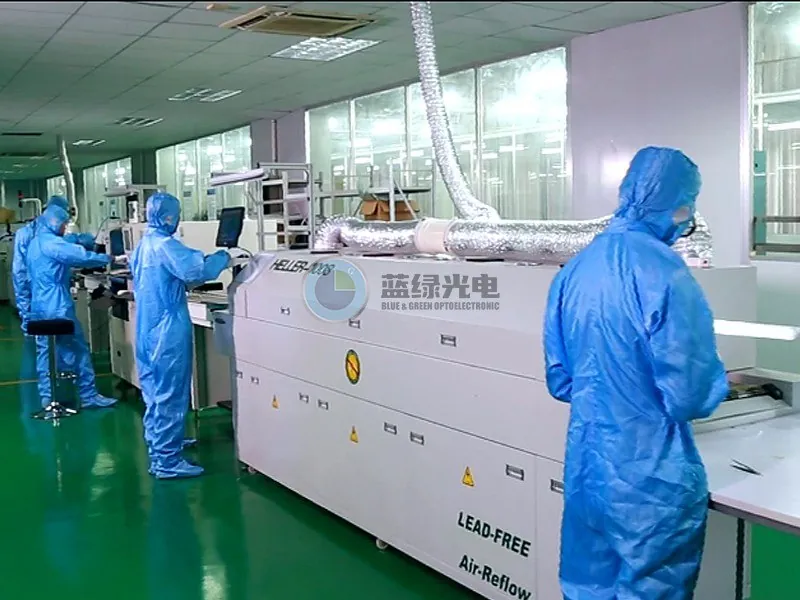
- SMT line for LED boards, and how boards are tested after placement
- Assembly with torque tools for seals and glands, not only hand tools
- Aging area with luminaires actually running, and records of failures found
- Test equipment: integrating sphere, goniophotometer or access to one, surge tester, IP test equipment, salt spray chamber
- Traceability: can a finished luminaire be traced back to its LED and driver batches?
Ask to see a nonconformance record: a factory that never finds a defect is either perfect or not looking.
Red flags in a quotation
Some warning signs show up before you ever see a sample:
- Lumens without a test report, or efficacy claims above what the LED and driver datasheets allow.
- A price far below the market for the stated wattage. The usual savings are in the LED bin, the driver and the amount of aluminium.
- “CE” with no certificate number, or a certificate whose model list does not include the product quoted.
- A wattage range with one price, which often means the luminaire is the same and only the label changes.
- No answer about the driver brand or surge protection.
- A warranty with no written terms.
None of these proves a supplier is bad, but each is a reason to ask more questions before paying a deposit.
How we answer this checklist
We think suppliers should be able to answer every point above, so here is how we do it:
- Legal identity: Hunan Blue & Green Optoelectronic Technology Co., Ltd., Unified Social Credit Code 91430300561743613Q, founded 2010, in the Xiangtan High-tech Zone, Hunan.
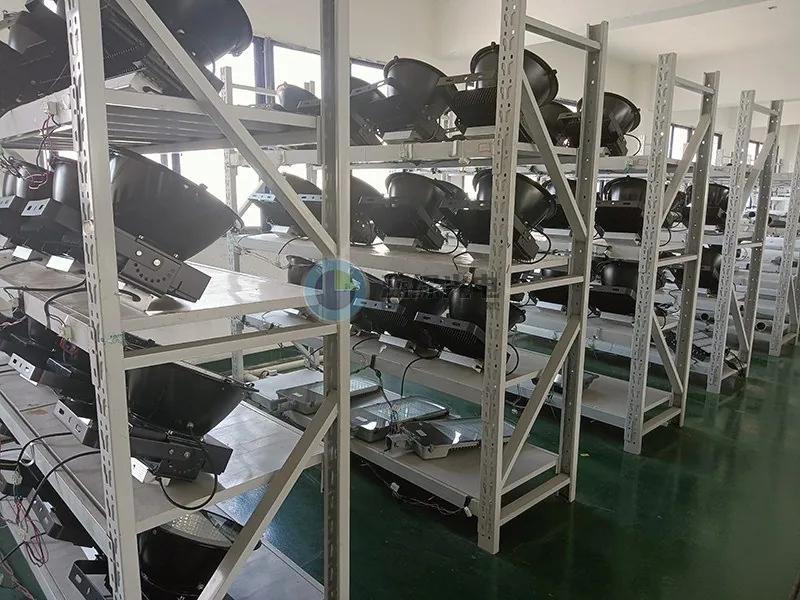
- Who makes what: road and industrial luminaires are assembled, aged and photometrically tested in our own 26,000 m² plant; landscape, commercial and some special lighting lines are made with our sister and long-term partner factories and checked under our QC. See our factory.
- Projects: a list of projects with clients, quantities and dates, and detailed project case studies.
- Certificates: all with numbers and verification notes on our certificates page.
If you want to run this checklist on us, send us your questions. We will answer each point in writing.
Sources
Frequently asked questions
How can I verify a Chinese lighting company?
Ask for the company's legal name and Unified Social Credit Code (18 characters) and check them in China's National Enterprise Credit Information Publicity System. Compare the registered address, founding date, registered capital and business scope with what the supplier tells you.
What test reports should I ask for?
At minimum: photometric test (IES or LDT file and integrating-sphere report) for the exact model, safety report to IEC/EN 60598, EMC report, LED lumen maintenance data (LM-80 with TM-21 projection) and the IP test report. For solar lights, battery cell datasheets and a full-system autonomy test.
How do I tell a factory from a trading company?
Ask for a video call walking through the production line, check whether the business licence covers manufacturing, ask for factory audit reports, and ask detailed questions about processes such as aging tests and SMT. Many good suppliers combine their own production with partner factories; what matters is who controls quality and who carries the warranty.
What warranty is normal for LED street lights?
Three to five years for the luminaire is common; five years for municipal projects. Read what the warranty covers (driver, LEDs, surge damage, labour), how failures are counted, and how replacements are shipped.