How Long Does a Solar Lantern Stay On at Night? Worked Numbers
How many hours a solar lantern really stays on depends on battery Wh, panel Wp and the light mode. Worked numbers for our 5 W solar wall light in three modes, from our battery calculator.
Key points
- A solar lantern's run time is battery energy divided by power: our SL3530J005 (3.7 V 8 Ah, 5 W) has about 26.6 Wh usable, enough for about 4.8 hours at full power.
- On a 4-hour sun day its 6.8 Wp panel puts back about 16.5 Wh, so full power all night is not sustainable; motion mode is how lanterns last until dawn.
- In motion mode (1 hour of full power spread over the night, 10 % the rest) it uses about 11.7 Wh a night and runs about 2.9 nights from full in our calculator.
- Check the battery Wh and panel Wp on the spec sheet, not just the lamp watts or a claimed 'all night' run time.
“How long will it stay on?” is the question every solar lantern buyer asks, and labels answer it in very different ways: “8 hours”, “dusk to dawn”, “up to 12 hours”. The honest answer depends on three numbers that are usually on the spec sheet: battery energy, panel size and the lighting mode. This guide shows how to work it out, using our own solar wall lantern as the example.
The simple formula
Run time (hours) = usable battery energy (Wh) ÷ power drawn (W)
Usable energy is battery voltage × capacity × the share that may be used, less driver losses. Then a second question decides whether it lasts more than one night: does the panel put back what the light used?
Example: our SL3530J005 solar wall light
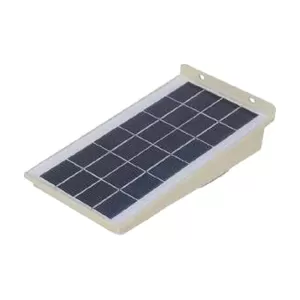
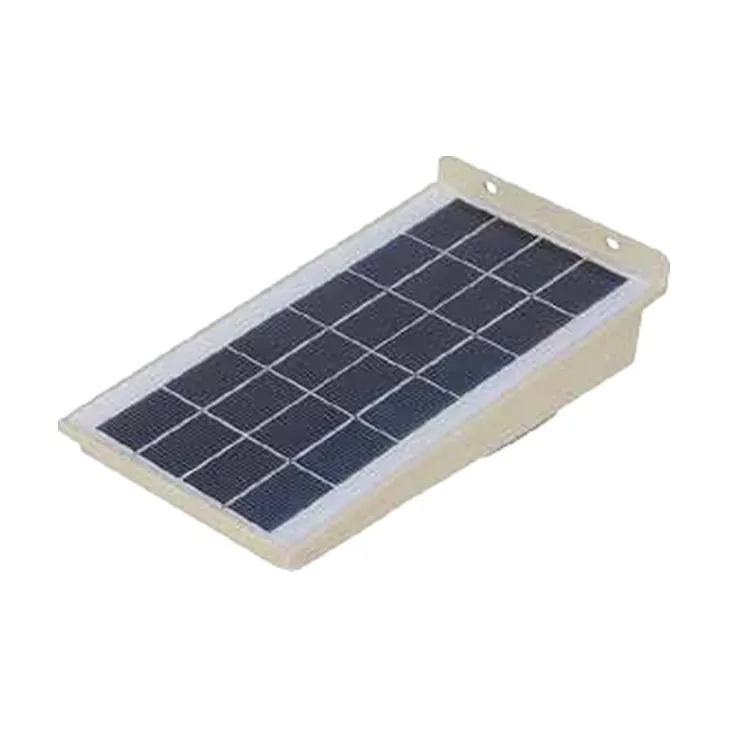
The SL3530J005 is a 5 W solar wall light:
| Spec | Value |
|---|---|
| Power | 5 W |
| Panel | 5.5 V / 6.8 Wp |
| Battery | Lithium, 3.7 V / 8 Ah (29.6 Wh) |
| Efficacy | > 100 lm/W |
| Lighting time | 6–8 h per night |
| Autonomy | 20–24 h of operation from a full battery |
| Mounting height | 3–5 m |
We ran it through our battery autonomy calculator with 4.05 peak sun hours, the June figure PVGIS gives for Nairobi, and a PWM controller.
Mode 1: full power all night
- usable battery: 26.6 Wh (90 % of 29.6 Wh);
- full power draw including driver losses: about 5.6 W;
- run time from full: about 4.8 hours;
- 12 hours at full power would need 66.7 Wh a night;
- the panel collects about 16.5 Wh on such a day.
So at full power the lantern goes dark before midnight, and the next day’s sun does not refill it. No small lantern is designed to run this way.
Mode 2: four hours full, then 30 %
- energy per night: 35.6 Wh;
- still about twice what the panel collects (open the example).
Better, but the battery still runs down day after day.
Mode 3: motion mode
The lantern runs at 10 % and jumps to full power when someone passes. Assume the triggers add up to one hour of full power over the night (open the example):
- energy per night: 11.7 Wh;
- the panel collects 16.5 Wh, so the battery refills on a clear day;
- from full, it runs about 2.9 nights with little or no sun.
This is how the lantern meets its rated 6–8 hours of lighting time and its 20–24 hours of operation from a full battery: dim most of the time, bright when needed. With Manila’s December figure of 3.70 peak sun hours the result is almost the same, about 2.8 nights.
What shortens run time
- Short winter days and low sun: the panel may collect half or less of its summer energy. See outdoor solar lights that work in winter.
- Shade: a panel under eaves, trees or on a north-facing wall (in the northern hemisphere) collects little.
- Dirty panel: dust and bird droppings cut charging noticeably.
- Busy locations: in motion mode, every trigger costs energy. A lantern at a busy gate uses more than one at a quiet back door.
- Aged battery: capacity falls over the years, faster in heat. Our rechargeable batteries for solar lights guide covers replacement.
How to make a lantern last longer
- Mount it where the panel sees the most sun, ideally facing the equator and clear of shade from late morning to mid-afternoon.
- Use motion mode where the area is not used all night.
- Clean the panel every few months.
- Charge it fully before first use: see charging solar lights for the first time.
- Choose a larger lantern if you need steady light all night.
Lanterns vs larger solar lights
A wall lantern with a 6.8 Wp panel is designed for entrances, gates and garden walls, where a few hundred lumens and a bright burst on motion are enough. If you need steady light on a drive or car park all night, the energy budget is in a different class. A 20 W post-top light running four hours at full power and eight at 30 % needs about 142 Wh a night, a 50 Wp panel and a battery of nearly 500 Wh in a sunny climate’s worst month. That is the difference between a lantern and a small solar street light, and it is why the two should not be compared on lamp watts alone.
Reading a lantern spec sheet
Ignore “dusk to dawn” claims that come without numbers. Look for:
- battery voltage and Ah, so you can calculate Wh;
- panel Wp;
- LED power and lumens;
- the default mode and what “lighting time” means in that mode.
With those four, the formula and our calculator give a realistic answer for your site. Our solar wall lanterns guide covers styles, mounting and materials.
Buying in volume
For hotels, estates and retailers buying many lanterns, ask for the battery Wh, panel Wp and default mode in writing, and test a sample through a winter week at your site. Send us your location and the hours you need, and we will run the numbers for our models before you order.
Sources
Frequently asked questions
How long do solar lanterns stay on at night?
Most decorative solar lanterns run 6–10 hours after a sunny day at low brightness. Brighter lanterns with motion sensors stay on all night by running dim and boosting on movement. Run time at full brightness is usually only a few hours.
Why does my solar lantern turn off after a few hours?
The battery did not charge fully (short or cloudy days, shade, dirty panel) or the battery has aged. In winter, a lantern may collect only a third of its summer energy.
Can a solar lantern stay on all night at full brightness?
Only if its panel and battery are sized for it. For a 5 W lantern that would mean about 67 Wh a night, roughly four times what our 6.8 Wp lantern panel collects on a 4-hour sun day.
How long does a solar lantern battery last before replacement?
Lithium cells in solar lights typically keep useful capacity for a few years, depending on heat and depth of discharge. Our SL3530J005 has a three-year system design life.