
Solar Wall Lanterns: Classic Looks, Real Light and Where They Work
How solar wall lanterns compare with wired coach lights: how much light they give, panel placement, modes, materials, mounting heights by doors and gates, and when to choose wired.
Key points
- Solar wall lanterns copy the look of traditional coach lights but carry their own panel and battery, so no wiring is needed.
- Most give 50–400 lumens: enough to mark a door, gate or pillar, less than a typical wired porch light.
- The panel is usually on top of the lantern; it must see direct sun, which rules out covered porches and shaded walls.
- Choose metal or UV-stable housings, warm white light, a lithium battery and a dusk-to-dawn or dim-plus-motion mode.
Coach lanterns beside a front door or on gate pillars are a classic look. Solar versions keep the look and remove the hardest part of installation: running a cable through the wall. For gates, garden walls, sheds and outbuildings far from power, they are often the simplest choice. They also have limits that buyers should understand before ordering.
What a solar wall lantern is
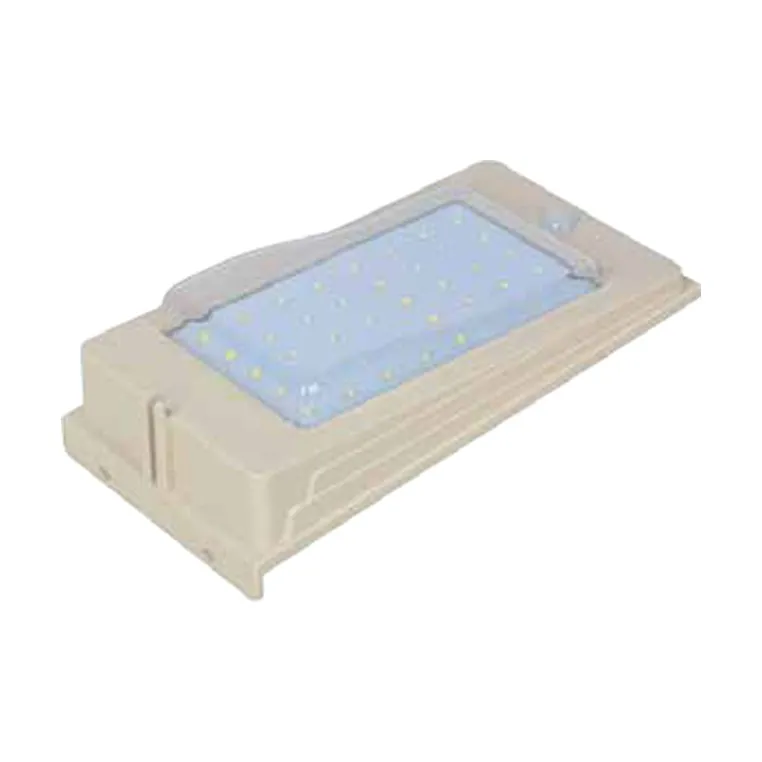
A solar wall lantern has the shape of a traditional lantern, with glass or clear panels, a frame and a cap. Inside are an LED source, often styled to look like a candle or a filament bulb, a small lithium battery and a controller. The solar panel is usually built into the top of the lantern, sometimes on a separate mount connected by a cable.
How much light to expect
Small decorative lanterns give 20–80 lumens: a glow that marks a gate or wall. Better models give 150–400 lumens, enough to light a doorstep and show the edge of steps. A typical wired porch light with a 60 W equivalent LED gives about 800 lumens.
The limit is the panel. A lantern-top panel is small, often 1–3 Wp. On a sunny day it collects a few watt-hours, enough to run a few watts of LED for several hours. That is why the best solar lanterns run bright for the first part of the evening and dim later, or stay dim until someone approaches.
Where solar lanterns work
They work well:
- On gate pillars and garden walls with open sky above
- On sheds, stables and garages away from mains power
- On walls facing the sun for most of the day
- In rentals where drilling for cables is not allowed
They work poorly:
- Under covered porches and deep eaves
- On walls in shade for most of the day
- Beside bright street lights, which can stop the dusk sensor from switching on
For walls without sun, a solar wall light with a separate panel placed on a sunny roof or fence is the better option. Our guide to solar powered outdoor wall lights explains panel and battery sizes in more detail.
Modes that make sense
- Dusk to dawn, low: a steady glow all night, good for marking gates
- Bright then dim: bright for a few hours after dusk, then low until dawn
- Dim plus motion: a soft glow that brightens when someone approaches, good for doors
- Flicker or candle effect: decorative, uses little energy
If a lantern must stay lit until morning, check its battery and panel against the night length, as described in solar lights that stay on all night.
Mounting heights
Beside a front door, lanterns are usually mounted so the middle of the lantern is about 1.7–2 m above the step, or roughly level with the top of the door frame. On gate pillars, they sit on top caps or on the face of the pillar. Two lanterns either side of a door or gate look balanced; one is fine for side doors and sheds.
Materials
The lantern is on show, so materials matter:
- Cast or extruded aluminium with powder coat lasts longest
- Stainless steel suits coastal homes but can show water marks
- UV-stabilised plastic is light and cheap but can fade
- Glass panels look best; clear or seeded glass suits filament-style LEDs
- Stainless fixings avoid rust streaks on walls
Check the ingress rating: IP44 is a minimum for walls under eaves, IP65 for exposed walls.
Colour
Warm white light around 2200–3000K matches the traditional look. Cool white makes classic lanterns look out of place. Some lanterns offer an amber or candle-like setting that suits heritage homes.
Battery and maintenance
Lanterns usually use lithium-ion or LiFePO4 cells. Choose a model where the battery can be replaced without breaking the housing. Wipe the panel every few months, clean the glass inside and out, and check seals after storms.
Comparing with wired coach lights
Wired lanterns give more light, run every night regardless of weather and can be controlled with switches, timers and sensors. They need a cable and an electrician. For main entrances used every evening, wired lights are usually better. For gates, outbuildings and walls far from power, solar lanterns are a practical alternative.
Larger solar lights for entrances
For estate entrances, car park gates and commercial premises, small lanterns are not enough. Solar wall lights with larger panels, such as our 5 W solar wall light with a 6.8 Wp panel and 3.7 V 8 Ah lithium battery, give useful light at 3–5 m, and post-top lights on 2.5–5 m poles suit driveways and paths.
Buying checklist
- Real lumens and LED watts, not “equivalent” figures
- Panel size in Wp and position
- Battery chemistry and capacity, and whether it is replaceable
- Modes, especially dim-plus-motion
- Housing material and IP rating
- Warm colour temperature
Projects
For hotels, residential developments and estates that want a consistent traditional look, we can suggest solar or mains lanterns, post-tops and wall lights in matching styles. Send us photos of the facades, the number of positions and whether power is available.
Sources
Frequently asked questions
Are solar wall lanterns bright enough for a front door?
They are bright enough to mark the door and light the step, typically 50–400 lumens. If you need light for reading keys or for a security camera, a wired porch light or a larger solar wall light with a separate panel works better.
Where should a solar wall lantern be mounted?
Where its panel gets several hours of direct sun, usually on a south, east or west facing wall in the northern hemisphere, at about 1.7–2 m beside doors or on gate pillars. Avoid covered porches and walls under deep eaves.
How long do solar wall lanterns last?
The housing can last many years if it is metal or UV-stable plastic. The battery usually needs replacing after two to five years depending on cell type and climate; choose a model with a replaceable battery.