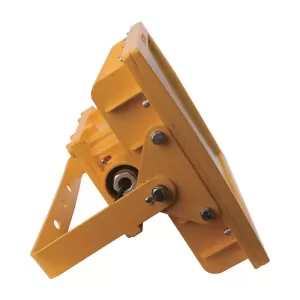
Explosion-Proof Work Lights, Linear Lights and Drop Lights for Hazardous Areas
How to choose explosion-proof portable work lights, linear fixtures and drop lights for tanks, vessels, paint booths and process areas: protection types, batteries, cables, mounting and certificates.
Key points
- Portable work lights and drop lights in hazardous areas must be certified for the zone as complete units, including batteries, cables and plugs.
- Explosion-proof linear lights replace fluorescent fittings in corridors, pipe racks, paint booths and process areas.
- Tank and vessel entry lights are often low-voltage and certified for Zone 1 or Zone 0, with isolating transformers outside the hazardous area.
- Check the marking on the light, the certificate and the zone drawing match before use.
Fixed lighting covers most of a hazardous area, but maintenance, inspection and tank entry need light where fixed fittings cannot reach. Portable work lights, drop lights and linear fittings fill those gaps. Each must be certified for the hazardous zone like any other electrical equipment.
Types of light
Portable work lights are hand-held or on stands, battery powered or corded. They are used during maintenance, shutdowns and inspections.
Drop lights (hand lamps) hang on a cable and are lowered into tanks, vessels, pits and confined spaces.
Explosion-proof linear lights are fixed long fittings for corridors, pipe racks, paint booths and areas that once used fluorescent tubes.
Floodlights on stands light larger work areas during turnarounds.
Protection types
Portable lights often use different protection methods from fixed fittings:
- Intrinsic safety (Ex i) for small, low-power torches and headlamps
- Flameproof (Ex d) or increased safety (Ex e) housings for larger work lights
- Encapsulation (Ex m) for electronics and battery packs
For an overview of these types, see intrinsically safe vs explosion-proof.
Batteries and charging
Battery-powered work lights must use the battery specified in their certificate. Replacing it with another battery, even of the same size, can invalidate the protection. Charging normally takes place outside the hazardous area, unless the charger is certified for the zone. Lithium batteries must be protected against damage; a cracked housing should take the light out of service.
Cables and plugs
Corded lights need cables suitable for the environment, often oil- and chemical-resistant, and plugs and sockets certified for the zone. Drop lights for tank entry are often low voltage, typically 12 V or 24 V, fed from an isolating transformer outside the hazardous area, which also limits shock risk in wet, conductive spaces.
Linear explosion-proof lights
Linear fittings replace fluorescent fixtures in:
- Paint booths and spray rooms (see explosion-proof lighting for paint booths)
- Pipe racks and process walkways
- Pump rooms and compressor houses
- Battery rooms and chemical stores
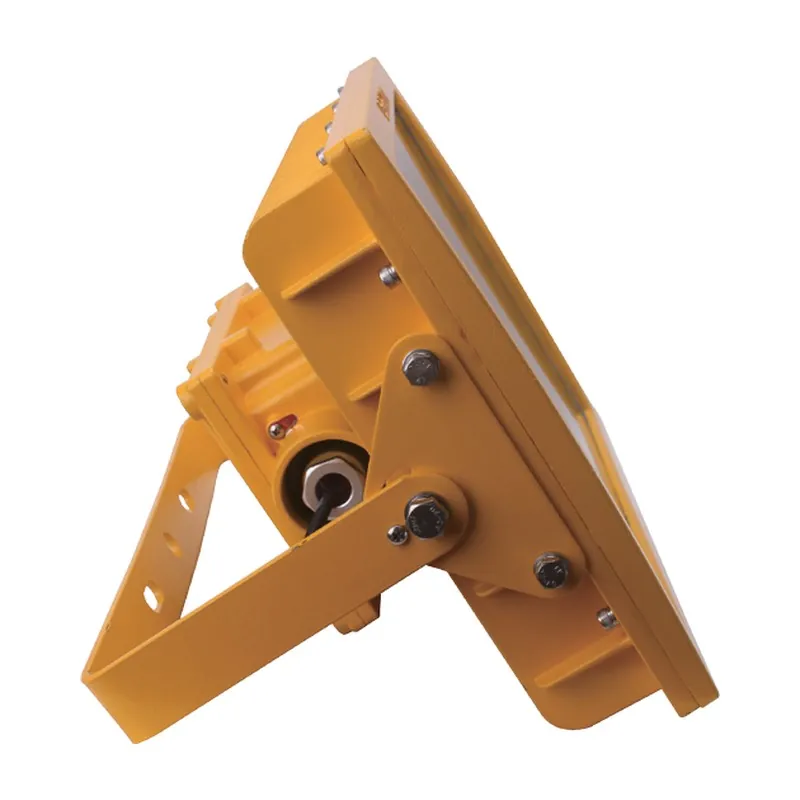
They give even light along walkways and are often easier to mount on structures than round fittings. For general lighting in hazardous areas we also supply round and flood types, such as the ExF explosion-proof LED light (50–150 W, Ex d IIB T6 Gb, IP67) and the BED series certified under GB 3836 in our own name.
Choosing the right rating
- Zone: Zone 1 or Zone 2 for gas, Zone 21 or 22 for dust; tank interiors may be Zone 0
- Gas group: IIA, IIB or IIC, depending on the substances
- Temperature class: below the ignition temperature of the substances
- Ambient temperature: within the light’s rated range
- Market certificate: IECEx, ATEX, national scheme or North American listing
For the ratings system, see explosion-proof light ratings explained.
Light output and beam
- Hand lamps: a few hundred lumens, wide beam for inspection
- Portable work lights: 1,000–5,000 lumens, wide or adjustable beam
- Stand-mounted floods: 5,000–20,000 lumens for large areas
- Linear fittings: 2,000–6,000 lumens per metre-class fixture
Colour rendering matters for inspection of welds, coatings and corrosion; choose Ra 80 or higher where possible.
Ruggedness
Portable lights get dropped, kicked and splashed. Look for impact-resistant lenses, rubber protection, IP66 or IP67, and stainless or protected fasteners. Damaged lights must be withdrawn: a cracked flameproof housing no longer protects.
Inspection and records
Hazardous-area equipment needs regular inspection under IEC 60079-17 and site rules:
- Visual checks before each use for portable lights
- Periodic detailed inspections
- Records of serial numbers, certificates and inspections
- Withdrawal of any light with damage, missing parts or unknown history
Common mistakes
- Using a standard LED work light “just for a few minutes” in a hazardous area
- Charging batteries inside the zone
- Replacing batteries or lamps with uncertified parts
- Taking a Zone 2 light into Zone 1 or Zone 0
- Using mains-voltage drop lights inside metal tanks
Certificates
For the BED series we hold the certificate in our own name. For other explosion-proof models, the certificate is supplied with the quotation. Portable lights supplied through partner factories come with their own certificates; always check the marking against your zone drawing.
Planning lighting for shutdowns and turnarounds
During plant shutdowns, many contractors work inside vessels, columns and tanks at the same time. Plan portable lighting in advance: how many hand lamps, work lights and stand floods are needed, where transformers and charging stations will be placed outside the hazardous area, and who inspects the equipment each day. Keep a register of every portable light issued, with its certificate and inspection date, and collect them all at the end of each shift. This avoids uncertified lights entering the zone and makes sure damaged lights are withdrawn quickly.
Lighting levels for inspection
Inspections of welds, coatings and corrosion need good light on the surface, often several hundred lux, with good colour rendering. Hand lamps provide the close light, while stand floods give general light so people can move safely. Avoid glare in confined spaces by aiming lights at surfaces rather than at people.
Ordering
Send the zone classification, gas group, temperature class and how the lights will be used: fixed, portable, tank entry or stand-mounted. We will propose suitable lights and confirm their certification.
Sources
Frequently asked questions
What is an explosion-proof work light?
A portable light certified for use in a hazardous area. It may be battery powered or corded, and its housing, battery, switch and any plug are designed so they cannot ignite flammable gas or dust in the zone it is rated for.
Can I use a normal LED work light in a hazardous area?
No. Standard work lights, even sealed IP65 ones, are not certified to prevent ignition. Only lights marked and certified for the zone, gas group and temperature class may be used there.
What is an explosion-proof drop light?
A hand lamp on a cable, used for inspection inside tanks, vessels and pits in hazardous areas. It is usually low voltage, fed through an isolating transformer located outside the hazardous area, and certified for the zone.