
Explosion Proof Lighting for Paint Booths and Spray Rooms
What lighting a paint booth or spray room needs: hazardous zones inside and around the booth, explosion proof and sealed luminaires, light levels and colour rendering for inspecting finishes, and the certification differences between regions.
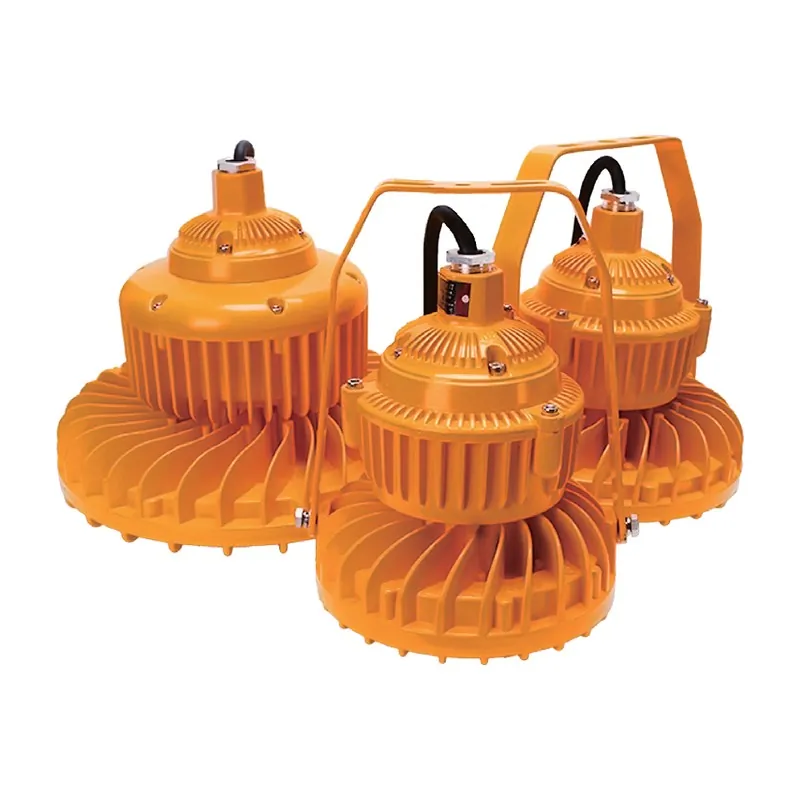
Key points
- Inside a spray booth, solvent vapour is present in normal operation, so luminaires there must be certified for the hazardous area; the zone around openings is usually hazardous too.
- Many booths light the interior through sealed glass panels from outside the hazardous area, which simplifies maintenance.
- Finish inspection needs high light levels (often 750–1,000 lx or more) and good colour rendering (Ra 80–90+).
- Certification must match the country: ATEX/IECEx in many markets, UL/NFPA-based Class I Division 1 in the US. Our explosion proof lights are certified under China's GB 3836.
A paint booth combines two demands that pull in different directions: it is a hazardous area full of solvent vapour, and it is a workplace where people need excellent light to see the quality of a finish. This guide explains how the two are reconciled.
Why a paint booth is a hazardous area
During spraying, flammable solvent vapour and fine paint mist fill the booth. Under the IEC zone system, the interior is typically Zone 1 (explosive atmosphere likely in normal operation), with Zone 2 extending around doors, openings and the exhaust. Under the North American system it is usually Class I Division 1 inside and Division 2 nearby; in the US, NFPA 33 covers spray application. The booth manufacturer and the local authority set the exact classification. For the meaning of the markings, see explosion proof lighting explained.
Two ways to light a booth
1. Luminaires outside the hazardous area, shining through sealed glass panels. Many modern booths have light fittings mounted on the roof or walls outside the booth, behind fixed, sealed, heat-treated glass. The luminaires themselves are not in the hazardous atmosphere, so they can be serviced without entering it and do not need to be explosion proof, if the local code permits this arrangement. The glass must stay clean; overspray on the panels is the most common cause of a booth getting darker over time.
2. Certified explosion proof luminaires inside the booth. Where lights must sit inside the hazardous area, for example in older booths, spray rooms without glass panels, mixing rooms and paint stores, they must be certified for the zone, gas group and temperature class. Solvents used in paint shops usually fall in gas groups IIA and IIB, but check the safety data sheets.
Light for inspecting a finish
The second job is quality. Defects such as orange peel, runs, dust inclusions and colour mismatch only show under strong, even light with good colour rendering:
- Light level: many shops design for 750–1,000 lx or more on the work, more than general workshops.
- Vertical light: the sides of a vehicle or part need light from the walls as well as the ceiling.
- Colour rendering: Ra 80 at minimum, Ra 90+ for colour matching.
- Colour temperature: around 5,000–6,500 K is common for daylight-like matching; keep it consistent across the booth.
- Uniformity and glare: many smaller sources or linear fixtures along the walls give fewer reflections and shadows than a few large ones.
Worked example: a car spray booth
A typical car refinishing booth is about 7 m long, 4 m wide and 2.7 m high inside (28 m² of floor). Target: about 1,000 lx on the vehicle. With the lumen method:
Lumens needed = target lux × area ÷ (utilisation factor × maintenance factor)
- Light-coloured walls help, but light passing through glass panels and overspray film losses push the factors down: say a utilisation factor of 0.5 and a maintenance factor of 0.7
- Lumens needed ≈ 1,000 × 28 ÷ (0.5 × 0.7) ≈ 80,000 lm
- With linear LED luminaires of about 5,000 lm each, roughly 16 luminaires
Where they go matters as much as how many:
- Roof panels in two rows along the length, angled slightly towards the vehicle, light the roof, bonnet and boot.
- Upper wall or corner panels angled down light the doors and sides.
- Lower wall lights (often in the side walls at sill height) light rocker panels and wheel arches, which are the most common places for missed defects.
A photometric calculation with the actual luminaires and glass confirms the result; ask for vertical illuminance on the vehicle sides, not only the floor average.
Converting a booth from fluorescent to LED
Many booths still have fluorescent tubes in sealed light boxes. LED conversion is attractive: more light, better colour consistency, no flicker and no tube changes. How to do it safely depends on where the luminaires are:
- Luminaires outside the hazardous area, behind sealed glass: replacing the light boxes or tubes with LED is a normal electrical job, as long as the glass panels and their seals stay intact and the booth’s classification does not change. Do not cut new openings into the booth.
- Luminaires inside the hazardous area: a certified luminaire may only be modified as its certificate allows. Fitting LED tubes into a certified fluorescent Ex fitting usually voids the certification, unless the manufacturer offers a certified conversion. Replace the whole luminaire with a certified LED one.
When in doubt, ask the booth manufacturer and the person responsible for the site’s hazardous area classification before buying.
Certification by market
This is where buyers must be careful:
| Market | Typical requirement |
|---|---|
| European Union | ATEX-certified equipment for the zone |
| Many other countries | IECEx or national schemes aligned with IEC 60079 |
| United States, Canada | UL or CSA listing for Class I Division 1/2, NFPA 33 for spray areas |
| China | GB 3836 (aligned with IEC 60079) |
Our BED explosion proof series is certified under China’s GB 3836 (certificate ZJEx23.0914, Ex db eb mb IIC T4 Gb / Ex tb IIIC T130 °C Db). It is not a UL or ATEX listing. For projects that require ATEX, IECEx or UL, tell us at the inquiry stage so we can confirm what can be supplied, rather than assuming equivalence.
Around the booth
- Paint mixing rooms and stores: hazardous areas in their own right; certified luminaires inside.
- Exhaust plenums and filters: no luminaires in the airflow.
- Drying and baking zones: check the luminaire’s temperature rating against the oven temperature.
- Preparation and sanding areas: dust, not vapour, so IP65 sealed fixtures are usually enough unless classified otherwise.
Maintenance
- Clean booth glass panels and luminaire covers regularly; overspray cuts light output quickly.
- Inspect explosion proof luminaires for damaged seals, missing bolts and modified cable glands; a flameproof enclosure is only safe if it is intact.
- Keep a register of certified equipment and its certificates.
- Replace failed LED luminaires inside the hazardous area with the same certified model, or an equivalent certified for the same zone, gas group and temperature class.
A simple routine works well for most shops:
| Interval | Task |
|---|---|
| Daily, before spraying | All lights on; no cracked or missing glass panels |
| Weekly | Wipe overspray from glass panels; check for damaged protective film |
| Every 3–6 months | Replace protective films on the glass if used; check light levels with a lux meter at fixed points |
| Every year | Inspect explosion proof luminaires and cable glands under the site’s inspection procedure |
Recording the lux readings at the same points over time shows when cleaning or replacement is due, before painters notice the defects.
Our explosion proof lighting range covers 10 W emergency lights to 600 W floodlights. Send us the booth classification, solvent types and required certification, and we will advise what fits.
Sources
Frequently asked questions
Do paint booths need explosion proof lights?
Luminaires inside a spray booth, or in the hazardous area around its openings, must be suitable for that hazardous area: certified explosion proof or otherwise approved for the zone or division. Luminaires outside the hazardous area that light the booth through fixed, sealed glass panels do not need to be explosion proof themselves, if the local code allows that arrangement.
How much light does a paint booth need?
Enough to see defects in the finish: many shops design for 750–1,000 lx or more on the vehicle or part, with vertical light on the sides, and use luminaires with a colour rendering index of 80–90 or higher.
What zone is a paint booth?
Under the IEC zone system the inside of a spray booth during spraying is typically Zone 1, with Zone 2 around openings and the exhaust. Under the US system the interior is usually Class I Division 1. The exact classification is set by the booth design and the local code.