Emergency Light Switch: Key Test Switches, Switched Live and Maintained Mode Explained
What an emergency light switch does: key test switches, why emergency units need an unswitched live, how a wall switch controls a maintained light, and the battery energy behind 90 and 120 minutes.
Key points
- An emergency light watches a permanent (unswitched) live: when that supply disappears, it switches to battery. If you feed it from the room's light switch, it will run on battery every time someone switches off.
- A key test switch, often a fishtail key, breaks the permanent live to simulate a mains failure without cutting the normal lighting.
- Maintained lights take a second, switched live so the lamp can be turned on and off normally, while the unswitched live keeps the battery charged and decides when to go to emergency.
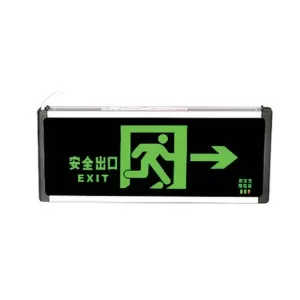
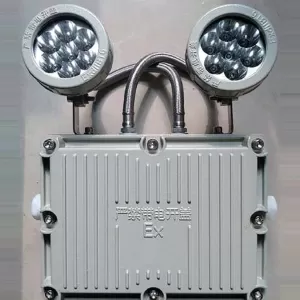
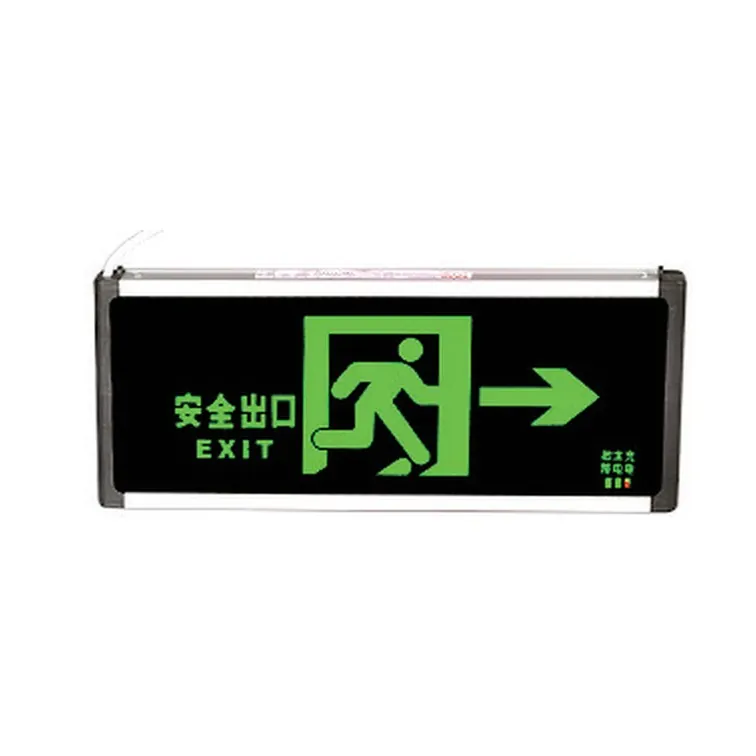
- Our BG-XFYJ exit sign runs at least 90 minutes on 3 or 5 W and our BG-FBYJ10A explosion-proof emergency light 2 hours on 10 W: about 4.5 Wh and 20 Wh delivered to the LEDs.
“Emergency light switch” can mean three different things: the key switch used to test emergency lighting, the wall switch that controls a maintained fitting in normal use, or, in many fault reports, a wiring mistake that makes the emergency light run on battery every evening. This guide explains how an emergency light decides when to switch on, how each kind of switch fits in, and the battery energy behind the duration on the label.
How an emergency light decides to switch on
A self-contained emergency light has a charger, a battery, LEDs and a sensing circuit. The sensing circuit watches one supply: the permanent live, also called the unswitched live. While that supply is present, the unit charges its battery. When it disappears, the unit switches to battery and lights up. Our BG-XFYJ exit sign does this in under 2 seconds.
The permanent live must come from the same final circuit as the normal lighting in that area, taken before any local switch. That way, if the lighting circuit’s breaker trips or its fuse blows, the emergency lights in that area come on, which is exactly when people need them.
The most common mistake: feeding from a switched live
If the emergency light’s supply is taken from the switched side of the room’s light switch, the unit cannot tell the difference between “someone switched the lights off” and “the power failed”. The result:
- The emergency light comes on every time the room lights are switched off.
- It runs the battery down overnight, every night.
- The battery wears out in months instead of years, and may be flat when there is a real failure.
The fix is to connect the unit’s permanent live to the unswitched side of the circuit. If you see a charge indicator that goes out whenever the room is switched off, this is almost always the cause. Our emergency light test button not working article covers the other charging faults.
Key test switches
Emergency lights must be tested regularly: BS 5266-1 calls for a short monthly test and an annual full-duration test, and NFPA 101 sets a 30-second monthly test and an annual 90-minute test. To do that without switching off the normal lighting, installers fit a key test switch in the permanent live feed to each group of emergency lights.
- Turning the key breaks the permanent live, so the emergency lights go to battery.
- The normal lighting, fed through the same circuit but not through the key switch, stays on.
- A key (often the fishtail type) stops the public from operating it.
One key switch usually serves the emergency lights on one lighting circuit. Label each switch with the area it tests. Our emergency light testing guide sets out what to record.
Maintained, non-maintained and the wall switch
| Mode | Lamp in normal use | Lamp in mains failure | Supplies needed |
|---|---|---|---|
| Non-maintained | Off | On, from battery | Permanent live only |
| Maintained | On (all the time or when switched) | On, from battery | Permanent live, plus switched live if the lamp is to be switched |
| Sustained (combined) | A separate mains lamp is on | Emergency lamp on, from battery | Permanent live, plus supply to the mains lamp |
A maintained fitting is useful where the light should normally be on, such as exit signs in cinemas, or where an ordinary fitting doubles as an emergency light. If the client wants to switch it off at night, a second, switched live is connected to the lamp’s control terminal. The wall switch then controls the lamp in normal use, while the permanent live still decides when to go to emergency. Exit signs are commonly maintained so that the route is always visible. Our emergency light types article compares the modes.
Battery energy behind the duration
The rated duration (typically 1 or 3 hours under EN standards, 90 minutes under US codes) comes from the battery’s stored energy. Using our product specs:
| Product | LED power in emergency | Rated duration | Energy to the LEDs | Battery energy at 85 % conversion |
|---|---|---|---|---|
| BG-XFYJ03A exit sign | 3 W | ≥ 90 min | 4.5 Wh | about 5.3 Wh |
| BG-XFYJ05A exit sign | 5 W | ≥ 90 min | 7.5 Wh | about 8.8 Wh |
| BG-FBYJ10A explosion-proof emergency light | 10 W | 2 h | 20 Wh | about 23.5 Wh |
The 85 % conversion figure is our assumption for the battery-to-LED driver; the datasheet’s tested duration is what counts. The BG-XFYJ needs up to 24 hours to recharge, which is why the annual full-duration test should not be run just before the building is occupied. The BG-FBYJ10A is marked Ex d IIC T4 for hazardous areas; we provide its certificate with the quotation.
The calculation also shows why a unit wired to a switched live fails: discharging even part of the battery every night and recharging it every day puts it through hundreds of cycles a year that it was never designed for.
Central battery systems and switches
In larger buildings, emergency lights may run from a central battery in a plant room. There, the sensing is done by relays on each lighting circuit, and testing is done from the central panel or by remote test switches. The principle is the same: the emergency supply must come on when the normal lighting circuit fails, not when a local switch is operated.
Hazardous areas
In Zone 1 and Zone 2 areas, the test switch itself must be suitable for the area, or be located outside it. Our hazardous area light switches article covers the options, and our explosion-proof emergency exit lights guide covers the fittings.
Wiring checklist
- Permanent live from the local lighting circuit, before the room switch.
- Key test switch in the permanent live, labelled with its area.
- Switched live to the lamp control terminal, only for maintained fittings that must be switched.
- Neutral and earth from the same circuit.
- Charge indicator visible and checked at handover.
What to send us
The building type, the escape routes and areas to cover, the required duration (1 h, 90 min, 3 h), maintained or non-maintained, and any hazardous areas. We will suggest the fittings and confirm their durations and certificates.
Sources
Frequently asked questions
Do emergency lights need a switch?
They do not need a normal on/off switch. They need a permanent supply from the lighting circuit, before any local switch, and preferably a key test switch so they can be tested without turning off the room lighting.
What is a fishtail key switch?
A key-operated switch, named after the shape of its key, that interrupts the permanent supply to emergency lights for testing. Using a key stops the public from switching the emergency lighting off.
Why does my emergency light come on when I switch the lights off?
Its permanent live has been taken from the switched side of the light switch. The unit sees the switch-off as a mains failure and runs on battery. Rewire it to an unswitched live from the same circuit.
Can a maintained emergency light be switched off?
Its lamp can, if it is wired with a switched live. The emergency function still works because the unit monitors the unswitched live and lights up on battery when that fails.