Building Facade Lighting: Wall Washers, Linear Outlines, Floodlights and How Much Light a Facade Needs
How to light a building facade: wall washing, grazing, outline and pixel lighting, how bright a facade should be, a worked wall washer estimate for a 30 × 20 m facade, and controls.
Key points
- Four main techniques: wall washing for even light, grazing for texture, linear outlines for edges, and point sources or pixels for patterns and media facades.
- How bright a facade should be depends on its surroundings: a few cd/m² in dark areas, around 10 cd/m² or more in bright city centres.
- A rough estimate: 36 W per metre of wall washer at 80 lm/W along the base of a 20 m high facade gives in the order of 80–90 lux on the wall.
- Low-voltage linear fittings need power supplies and DMX control planned from the start; access for maintenance is the most common oversight.
Facade lighting turns a building into a landmark at night. Done well, it shows the architecture, makes a street feel safer and draws attention to a hotel, office or public building. Done badly, it wastes energy, glares into windows and lights the sky. This guide covers the main techniques, how bright a facade should be, a worked estimate with our own fittings, and the practical details that are often forgotten.
Four techniques
| Technique | How it works | Best for |
|---|---|---|
| Wall washing | Linear or flood fittings set back from the wall, wide beam | Smooth, even light over flat facades |
| Grazing | Fittings close to the wall, narrow beam aimed along it | Texture: stone, brick, ribbed panels |
| Outline (linear contour) | Linear lights along edges, eaves and window frames | Defining the building’s shape |
| Point sources and pixels | Individual dots, often RGB, controlled as a screen | Patterns, animation, media facades |
Up-and-down wall lights, which put a beam above and below a fitting on the wall, add rhythm to lower floors and entrances.
Which fittings for which technique
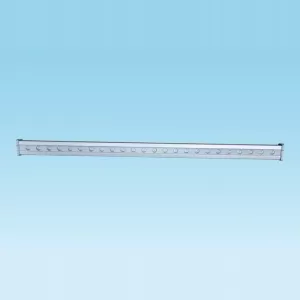
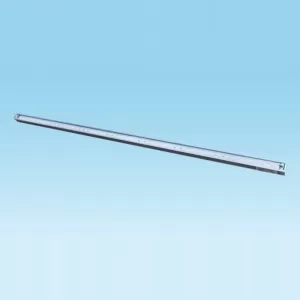
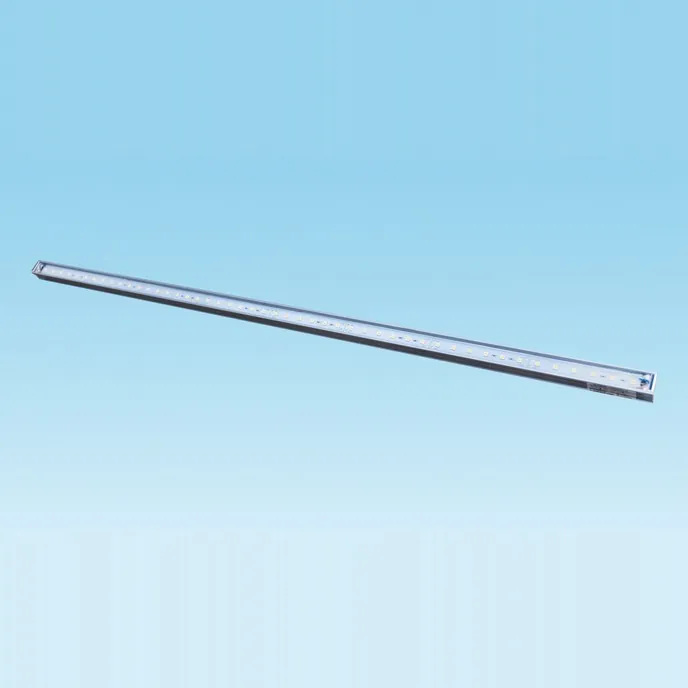
- Wall washing and grazing: our BG-XQF linear wall washer is 12–36 W in 600 or 1000 mm lengths, DC 24 V, with 10° × 45° or 10° × 60° optics, white (2700–6500 K) or RGB/RGBW with DMX512, and IP67 potted or IP68 versions. The narrow 10° axis throws light up a tall wall; the wide axis spreads it along.
- Outlines: the BG-XTT linear facade light, 5–12 W in 500 or 1000 mm, DC 24 V, white or RGB/RGBW, IP65, outlines eaves, parapets and billboards.
- Pixels: the BG-DGL point source, 3–9 W, Ø80–150 mm, builds dot-matrix pictures on facades, bridges and curtain walls.
- Floodlights and spots: compact projectors with 15°–120° optics light columns, towers and features from the ground or neighbouring buildings.
How bright should a facade be?
The right level depends on how bright the surroundings are. A facade that looks dramatic in a dark suburb can look dull in a bright city centre, and a facade bright enough for a city centre can look garish in a quiet street. CIE guidance on floodlighting gives typical luminances in the order of:
| Surroundings | Typical facade luminance |
|---|---|
| Dark (suburban, rural) | about 4 cd/m² |
| Medium | about 6 cd/m² |
| Bright (city centre) | about 12 cd/m² |
To turn luminance into illuminance on the wall, divide by the surface reflectance and multiply by π. For a mid-grey facade with 40% reflectance, 6 cd/m² needs about 6 × π ÷ 0.4 ≈ 47 lux; for a dark facade with 20% reflectance, twice as much. Light, smooth facades need far less light than dark, rough ones.
Worked estimate: a 30 × 20 m facade
Take an office facade 30 m wide and 20 m high, washed from the base with a continuous row of 36 W wall washers (1 m each) at 80 lm/W:
- Row length 30 m, so 30 fittings, 1.08 kW in total.
- Light per metre of row: 36 W × 80 lm/W ≈ 2,880 lm.
- If about 60% of that light lands on the wall above, spread over 20 m of height, the average is roughly 2,880 × 0.6 ÷ 20 ≈ 85 lux.
That is plenty for a mid-reflectance facade in medium surroundings, and more than needed for a light-coloured one. In practice, the bottom of the wall will be brighter than the top, so for tall facades designers often add a second row at mid-height or use narrower optics. Lower wattages, or dimming, can bring the level down to the target. A full design checks this with photometric files and renderings.
Practical details that are often missed
- Power supplies. Low-voltage DC fittings need drivers within a limited cable distance. Plan where they go, how they are ventilated and how they are reached.
- Control. RGB and pixel schemes need DMX512 or similar, with addressing planned before installation. White schemes can use a timer and photocell.
- Access. Fittings on a tall facade are expensive to reach. Choose long-life products and record every position.
- Waterproofing. Cable entries and connectors fail before fittings do. Use the right IP rating for the position: IP65 under eaves, IP67–IP68 where water collects.
- Fixing to the facade. Agree fixing methods with the facade engineer so cladding and waterproofing are not damaged.
Obtrusive light and late hours
Facade lighting should light the building, not the sky or neighbours’ bedrooms:
- aim fittings at the wall and keep beams within the building outline, especially near the top;
- avoid uplighting beyond the roofline;
- use a schedule: full scheme in the evening, reduced or off after a set hour;
- check local rules; many cities limit facade lighting after midnight.
Related lighting
Bridges use the same fittings and principles for their architectural lighting; see bridge lighting. For colour-changing floodlights on facades and landmarks, see our RGB flood lights guide, and for interior wall washing, wall washer downlights.
Summary
Choose the technique by what you want to show: washing for smooth walls, grazing for texture, outlines for shape and pixels for patterns. Set the brightness by the surroundings and the facade’s reflectance; in our example, a row of 36 W wall washers along a 30 m base gives roughly 85 lux on a 20 m facade. Plan power, control, access and late-night dimming from the start.
Sources
Frequently asked questions
What lights are used to light up a building facade?
Linear wall washers, linear outline lights, compact floodlights and spotlights, point source pixels, and up-and-down wall lights. Most schemes combine two or three of these.
What is the difference between wall washing and wall grazing?
Wall washing places fittings some distance from the wall to give smooth, even light that hides texture. Grazing places them close to the wall with a narrow beam aimed along it, which emphasises texture such as stone or brick.
Do facade lights need DMX control?
Only for colour changing, scenes or animation. White static schemes can run on a simple timer or photocell. RGB and pixel schemes need DMX512 or a similar control system.
How do you avoid light pollution with facade lighting?
Aim light at the building rather than past it, use narrow optics near the top, avoid uplighting beyond the roofline, and switch off or dim late at night.