Solar Street Light HS Code: Classifying Complete Lights, Panels, Batteries and Poles
The HS code for solar lights is 9405.41 under HS 2022: street, garden, wall and flood lights alike. Which lights fall elsewhere, how separate panels and batteries are coded, and shipping rules.
Key points
- Since HS 2022, complete solar street lights designed solely for LEDs fall under subheading 9405.41: photovoltaic lamps and lighting fittings. Before 2022 they were usually entered under 9405.40.
- Only the first six digits are international. National tariff lines (8 to 10 digits), duty rates and any exemptions for solar products differ by country; confirm with your customs broker.
- When parts ship separately, they may be classified separately: panels under 8541.43, lithium batteries under 8507.60, lead-acid batteries under 8507.20, steel poles commonly under 7308.90.
- Every battery in our all-in-one series is above 100 Wh (115 Wh to 422 Wh), so the lights ship as Class 9 dangerous goods under UN3481, with the battery test summary and safety data sheet.
Customs classification is a small line on the invoice that can delay a container for weeks. Solar street lights are a classic grey area: they combine a luminaire, a solar panel, a battery and sometimes a steel pole, and each part has its own heading in the Harmonized System. This guide explains how complete lights and separately shipped parts are usually classified, and the battery shipping rules that come with them.
This is general guidance from an exporter’s point of view, not a binding ruling. Your customs authority, or a binding tariff information decision, has the final word.
Quick answer: the HS code for solar lights
9405.41 is the six-digit HS 2022 subheading for photovoltaic lamps and lighting fittings designed for use solely with LED light sources. It applies to most fixed solar lights, not only street lights:
| Solar product | Usual six-digit code (HS 2022) | Notes |
|---|---|---|
| Solar street light, all-in-one or split, complete set | 9405.41 | See the parts table below if shipped in pieces |
| Solar garden, pathway, bollard and lawn lights | 9405.41 | Fixed outdoor fittings with their own panel |
| Solar wall lights and security lights | 9405.41 | Including motion-sensor versions |
| Solar floodlights with a separate panel | 9405.41 | Panel and lamp shipped together as one set |
| Solar string or fairy lights of a kind used for Christmas trees | Often 9405.31 | Classified as lighting sets, whatever the power source |
| Portable solar lanterns and torches with a built-in battery | Often 8513.10 | Portable lamps with their own energy source; rulings differ |
| Illuminated solar signs and house numbers | Often 9405.61 | Illuminated signs and name plates |
The first four rows cover what most importers of outdoor solar lighting buy. The last three are where rulings differ between countries, so ask your broker for a ruling before the first order. The older code 9405.40, still printed by some suppliers, was replaced on 1 January 2022. The next edition of the nomenclature, HS 2027, is scheduled to take effect on 1 January 2027; when your country publishes its 2027 tariff, check whether any of these lines have moved.
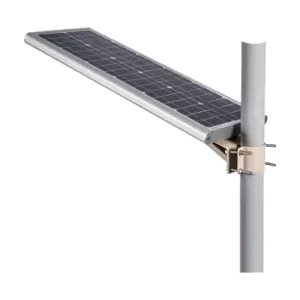
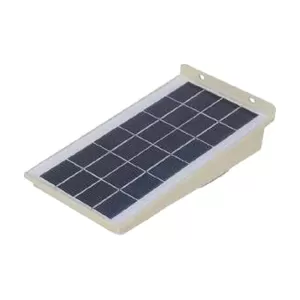
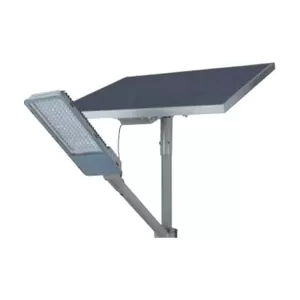
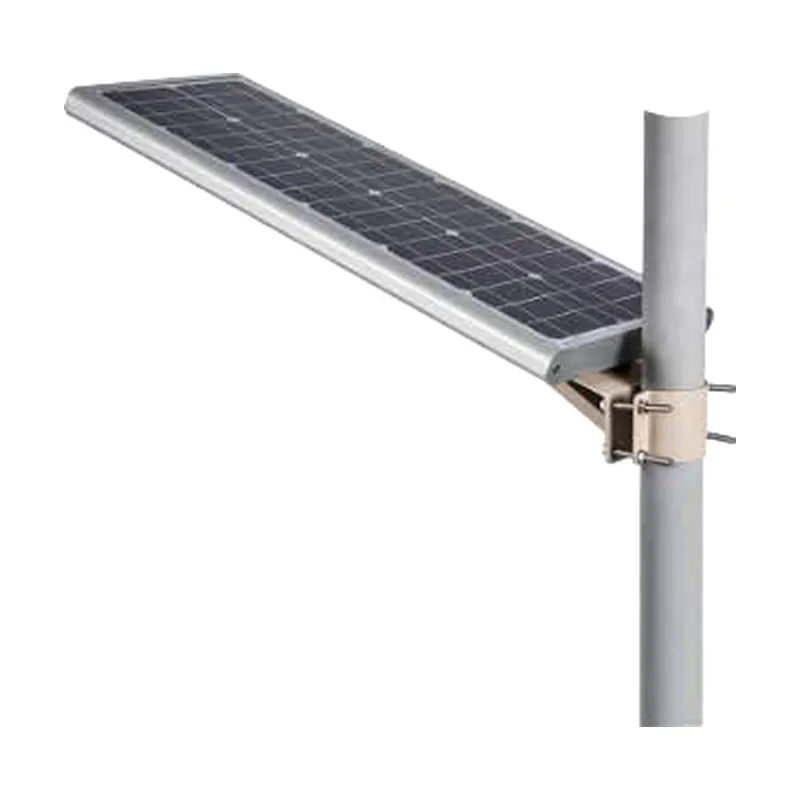
For our own range: the all-in-one SL series and the split SL4830G are complete solar street lights (9405.41), and our SL3530J005 solar wall light is a fixed photovoltaic LED fitting in the same subheading. We print the code you confirm with your broker on the invoice.
The complete light: 9405.41
The 2022 edition of the Harmonized System, in force since 1 January 2022, split heading 9405 (lamps and lighting fittings) by light source and added a separate line for solar products:
| Subheading | Description (shortened) |
|---|---|
| 9405.41 | Other electric lamps and lighting fittings: photovoltaic, designed for use solely with LED light sources |
| 9405.42 | Other, designed for use solely with LED light sources |
| 9405.49 | Other |
| 9405.99 | Parts of lamps and lighting fittings (other than glass and plastics) |
A complete solar street light, all-in-one or split, with an LED source and its own solar panel fits 9405.41. A mains-powered LED street light falls under 9405.42. Before 2022, both were usually entered under 9405.40, and some suppliers still print the old code. Ask for the current one on the commercial invoice and packing list.
National digits
Only the first six digits are shared worldwide. Each country or customs union adds its own:
- the EU Combined Nomenclature uses 8 digits, with TARIC adding more;
- the United States uses 10-digit HTS numbers;
- ASEAN, the African customs unions, India and others each have their own extensions.
Duty rates, VAT treatment and any exemptions for renewable energy products attach to these national lines. Some countries exempt solar lighting only with a certificate from an energy ministry. Check with your broker before you sign the contract, because the landed cost depends on it.
When parts ship separately
Split systems and large projects often ship parts in different containers or at different times. Customs may then classify each part on its own:
| Part | Common heading | Notes |
|---|---|---|
| Lamp head (LED luminaire) | 9405.42 or 9405.41 | Depends on whether customs treat it as part of a solar set |
| Solar panel | 8541.43 | Photovoltaic cells assembled in modules or panels (HS 2022) |
| Lithium battery | 8507.60 | Lithium-ion accumulators, including LFP |
| Lead-acid battery | 8507.20 | Other lead-acid accumulators |
| Controller | Often 8504.40 or 9032.89 | Customs views differ; ask your broker |
| Steel pole | Commonly 7308.90 | Structures and parts of structures of iron or steel |
| Brackets, fixings | Varies | Often classified with the pole or the luminaire |
The General Interpretative Rules allow a complete set, presented together, to be classified as the article it forms. To use this, ship the parts in the same consignment, describe them as complete solar street light sets on the invoice, and list the contents per set on the packing list. Our solar street light components guide explains what each part does, which helps when customs ask.
Battery shipping rules
Lithium batteries are regulated as dangerous goods in transport, whatever the HS code:
- UN3480: lithium-ion batteries shipped on their own.
- UN3481: lithium-ion batteries contained in equipment or packed with it.
Both are Class 9. Batteries above 100 Wh face the full dangerous goods requirements: labelling, documentation and a declaration to the carrier. The battery type must have passed the UN 38.3 tests, and the forwarder will ask for the test summary and a safety data sheet.
Here is where our own range sits, with energy calculated as voltage × capacity:
| Model | Battery | Energy |
|---|---|---|
| SL3530C015 (15 W) | 12.8 V, 9 Ah LFP | about 115 Wh |
| SL5730C030 (30 W) | 12.8 V, 18 Ah LFP | about 230 Wh |
| SL6830C045 (45 W) | 12.8 V, 22 Ah LFP | about 282 Wh |
| SL6830C060 (60 W) | 12.8 V, 33 Ah LFP | about 422 Wh |
All four are above 100 Wh, so each light ships as dangerous goods under UN3481. The split solar street light SL4830G uses 12 V lead-acid batteries of 38–100 Ah as standard; sealed lead-acid batteries are handled under separate provisions, and your forwarder will confirm what applies. Book with a forwarder used to Class 9 cargo, and allow time for the declaration.
Documents the importer should expect
- Commercial invoice with the HS code, a clear description (“solar LED street light, complete set, with lithium battery”) and the value per set.
- Packing list with the contents of each carton and the number of sets.
- Battery UN 38.3 test summary and safety data sheet.
- Dangerous goods declaration for the sea or air carrier.
- Certificate of origin, if a trade agreement gives preferential duty.
- Any product certificates your country requires for import, which differ by market.
Container planning
Batteries and panels change how a container is loaded. Panels are flat and heavy; poles are long; lamp heads are bulky but light. Our street light container loading guide gives carton volumes and set counts per container for typical products, which is the first step in estimating freight per set.
Common mistakes
- Using the pre-2022 code on a new invoice, which can trigger queries.
- Splitting a set across consignments without saying so, so that customs classify each part on its own, sometimes at a higher rate.
- Describing the goods vaguely (“lighting parts”), which invites inspection.
- Booking freight before the battery documents are ready, causing rollovers.
Ordering
Tell us your destination country, whether you need complete sets or separate parts, and your preferred shipping mode. We will put the HS codes you confirm with your broker on the invoice, prepare the packing list per set, and give the battery documents to your forwarder. For a price overview of the systems themselves, see solar street light price.
Sources
Frequently asked questions
What is the HS code for solar lights?
Under HS 2022, fixed solar lights with LED sources, such as street, garden, wall and flood lights, are classified under 9405.41 (photovoltaic lamps and lighting fittings, designed for use solely with LED light sources). Your country adds further digits. Portable lamps with their own battery and decorative string lights may fall under other headings.
What was the HS code before 2022?
Most countries used 9405.40, other electric lamps and lighting fittings. Some old documents and supplier invoices still show it; ask for the current code on the commercial invoice.
Is a solar panel shipped with the light classified separately?
If the light is presented as one complete set in the same shipment, customs usually classify it as the complete luminaire. If panels arrive separately or in a different consignment, they are often classified under 8541.43. Customs decide case by case.
Are solar street lights dangerous goods for shipping?
Lights with lithium batteries are Class 9 dangerous goods: UN3481 when the battery is inside or packed with the light. Lead-acid batteries follow different rules. Your forwarder needs the battery documents before booking.
Does the HS code affect import duty on solar lights?
Yes. Some countries exempt or reduce duty on solar products, sometimes only for certain HS lines or with a certificate. Check your national tariff and any solar incentive schemes.