LED Classroom Lighting: How Many Fixtures per Room, Layout and What Drives the Price
How many LED fixtures a classroom needs, worked out with our lighting calculator for a 9 × 7.2 m room at 300 and 500 lux, plus board lighting, glare, flicker and what drives the price.
Key points
- A 9 × 7.2 m classroom with a 3.2 m ceiling needs 12 of our 36 W, 90 lm/W classroom lights in a 4 × 3 grid for an average of about 300 lux, in our calculator.
- For 500 lux (evening or adult classes), the same room needs 20 fixtures in a 5 × 4 grid, 11.1 W per m².
- The board needs its own asymmetric light: our 36 W blackboard light gives 2,800 lm with a 30° asymmetric beam.
- Price per classroom is driven by fixture count, glare and flicker performance, CRI, controls and installation, not just the price of one panel.
Classroom lighting is usually bought by the room: a school wants to know what it costs to relight Building B, not what one panel costs. That makes the first question “how many fixtures per classroom?”, and the answer depends on the room, the target lux and the fixture. This guide works through a typical classroom with our calculator and our own classroom fittings, and then looks at what really moves the price.
Step 1: The lux target
| Space | EN 12464-1 | GB 7793 (China) |
|---|---|---|
| Classroom, primary and secondary | 300 lx, UGR ≤ 19, Ra ≥ 80 | 300 lx average on desks |
| Evening classes, adult education | 500 lx, UGR ≤ 19, Ra ≥ 80 | — |
| Board (vertical) | 500 lx | 500 lx average on the blackboard |
Uniformity matters as much as the average: a room that averages 300 lux with dark corners fails the students at the back. Grids with even spacing, set by the calculator, take care of that.
Step 2: Fixtures per classroom, calculated
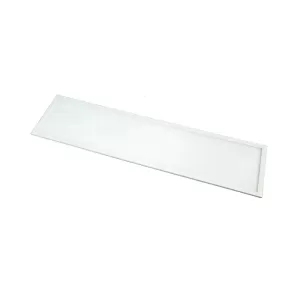
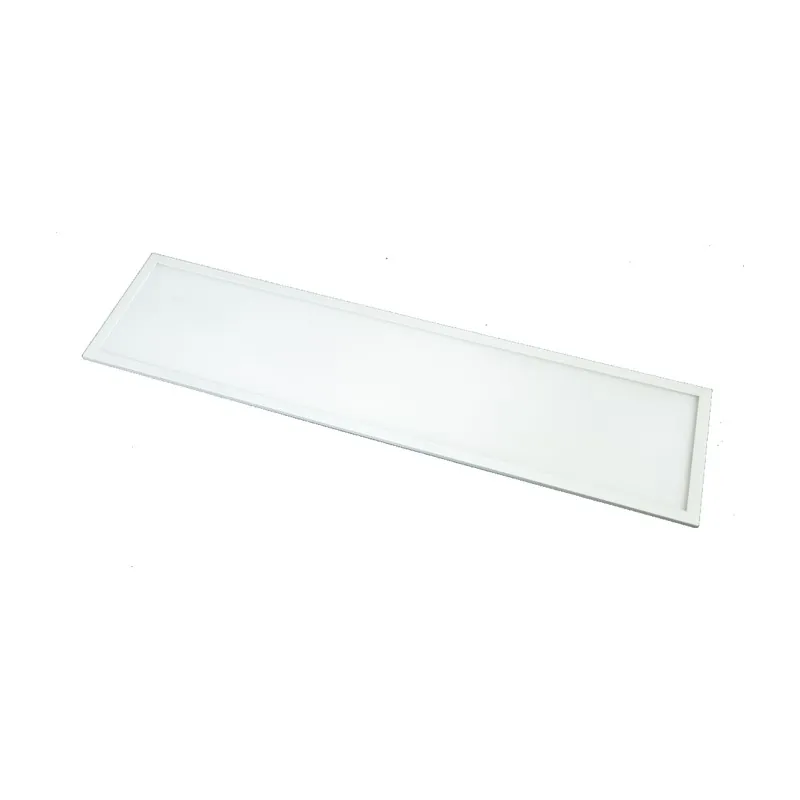
Our example room is a common size: 9 m × 7.2 m, 3.2 m ceiling, desks at 0.75 m, light ceiling and walls. The fixture is our 36 W LED classroom light: 1200 × 300 mm, 90 lm/W, so about 3,240 lm each, with a wide distribution. In our lighting calculator, with a maintenance factor of 0.8:
| Target | Fixtures | Grid | Spacing | Average lux | Load | W per m² |
|---|---|---|---|---|---|---|
| 300 lx | 12 | 4 × 3 | 2.25 × 2.4 m | about 300 | 432 W | 6.7 |
| 500 lx | 20 | 5 × 4 | 1.8 × 1.8 m | about 500 | 720 W | 11.1 |
Open the 300 lux example. The calculator uses the lumen method with a room index of about 1.6 and a utilisation factor of about 0.63 for this room. Try a dark-floored room (set reflectance to dark) and see the count rise.
Run your own rooms rather than copying a count: a 7 × 6 m tutorial room and a 12 × 9 m lecture room give very different answers.
Step 3: Orientation and rows
- Run the fixtures parallel to the windows and to the main line of sight, so students looking at the board do not see the bright end of every panel.
- Switch the row nearest the windows separately. On bright days it can stay off; with a daylight sensor it can dim automatically.
- Keep the first row back from the board so that it does not cast light into the teacher’s eyes or reflect off the board.
Step 4: Board lighting
The general lights are aimed down; the board is vertical, so it needs its own light. A board light is mounted on the ceiling about 0.6–1 m in front of the board with an asymmetric beam that throws light onto the board surface without shining into students’ eyes or reflecting back.
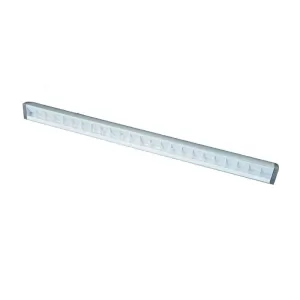
Our 36 W LED blackboard light gives 2,800 lm through a PMMA lens with a 30° asymmetric beam, UGR below 16 and flicker below 1%. Boards of 3.5–4.5 m width typically use two; wider boards three. The number and position are checked in the photometric calculation, together with the 500 lux vertical target.
Step 5: Quality figures that matter in a classroom
| Figure | What to ask for | Our classroom light |
|---|---|---|
| Glare (UGR) | ≤ 19 required; lower is more comfortable | < 16 |
| Flicker | As low as possible; < 3% is a common target | < 1% |
| Colour rendering | Ra ≥ 80 required | Ra > 90 |
| Colour consistency | ≤ 3 SDCM so panels match | < 3 SDCM |
| Colour temperature | 4000–5000 K is common for schools | 4000 K or 5000 K |
| Power factor | > 0.9 | > 0.95 |
These are the figures that separate a classroom light from a general office panel. They cost a little more, and they are what inspectors and parents increasingly check. For more on colour temperature choices, see our colour temperature chart.
What drives the price of LED classroom lighting
When schools ask for “classroom lighting prices”, the useful comparison is the cost per classroom:
Cost per room = fixtures × (fixture price + installation) + board lights + controls
What moves it:
- Fixture count. It is set by the lux target, the room and the efficacy. A 90 lm/W fixture needs fewer units than a 70 lm/W one; a 500 lux target needs two thirds more than 300 lux.
- Optical quality. Low-glare diffusers or micro-prismatic optics (UGR < 16–19), high CRI and low-flicker drivers cost more than a basic panel, and they are the reason to buy a classroom light at all.
- Mounting. Recessed into a grid ceiling is quickest; suspended on wires or rods takes longer and needs fixings into the slab.
- Board lights. Usually two per classroom; easy to forget in a budget.
- Controls. A separate window row switch is cheap; daylight and occupancy sensors cost more but save energy in rooms used only part of the day. See commercial lighting control systems.
- Quantity and repetition. A school relighting 40 identical classrooms buys and installs far more efficiently than one room at a time.
We do not publish a fixed price because the count and the options decide it. Send us the room sizes and the number of rooms, and we return a per-room layout and a quotation.
Running cost per classroom
At 432 W for the 300 lux layout, a classroom used about 1,600 hours a year (200 school days × 8 hours) uses about 690 kWh a year, about USD 104 at USD 0.15/kWh. An older layout of 12 twin-tube T8 fluorescent fittings at about 80 W each with magnetic ballasts drew close to 960 W, more than twice as much. Window-row switching and occupancy sensing cut the LED figure further. For converting existing tube fittings, our LED fluorescent tube replacement guide covers the options, and for offices and staff rooms see office lighting fixtures.
A checklist for a school tender
- Room schedule with sizes and ceiling heights
- Target lux on desks and on the board, uniformity and UGR
- Fixture type, lumens, efficacy, CRI, flicker and colour tolerance
- Board lights: number per room and beam type
- Switching and sensors
- Photometric calculation for each room type
- Warranty and spare parts
Our classroom lighting range includes the classroom light, the blackboard light and a low-glare office panel for staff rooms, all at 4000 K or 5000 K.
Sources
Frequently asked questions
How many LED lights do I need for a classroom?
For a typical 9 × 7.2 m classroom with a 3.2 m ceiling, about 12 fixtures of 36 W at 90 lm/W give 300 lux average. For 500 lux, about 20. Larger rooms, darker surfaces or lower efficacy need more; run your room in our calculator.
What lux level is required in a classroom?
EN 12464-1 asks for 300 lux in primary and secondary classrooms, 500 lux for evening classes and adult education, and 500 lux on the board. China's GB 7793 also asks for 300 lux on desks and 500 lux on the blackboard.
How much do LED classroom lights cost?
It depends on the fixture count, optical quality and controls. Compare the cost per classroom, not per fixture: number of fixtures × (fixture + installation) + board lights + controls. A cheaper panel with higher glare or flicker may need replacing or fail an inspection.
Why do classroom lights need low flicker and low glare?
Students look at the board, screens and books for hours. Visible or invisible flicker and glare from bright panels contribute to eye strain and headaches. Look for UGR below 19 (ours is below 16) and flicker below a few percent.