LED Batten Lights for Garages, Car Parks and Commercial Spaces: Layout and Selection
Car park and parking garage LED batten fittings: what to specify (IP65, IK, diffuser, sensor), how far apart to mount them at 2.8–3 m, and battens counted for two car park decks.
Key points
- A car park batten fitting should be IP65, impact-resistant (IK08 or better), with an opal or prismatic PC diffuser and a microwave sensor; mount it across or along the driving aisle, between down-stand beams.
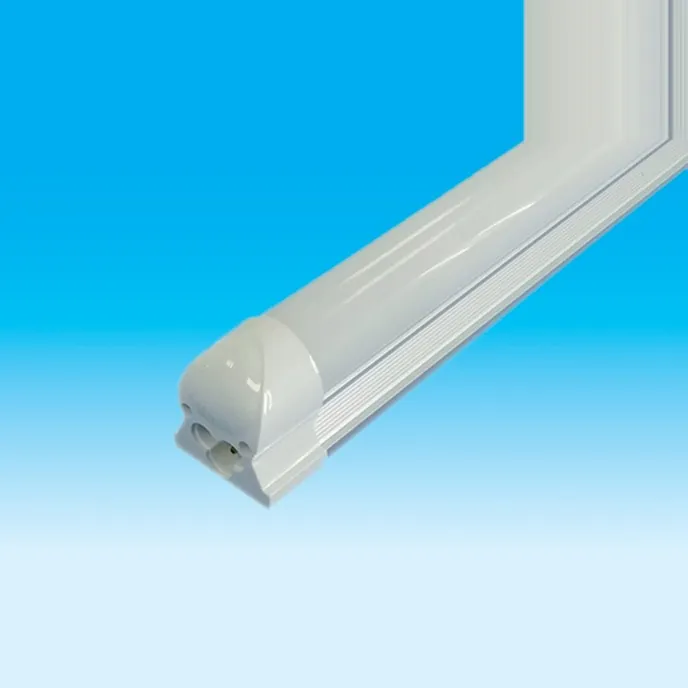
- An LED batten is a complete linear fitting with the LEDs and driver built in; it replaces a fluorescent batten without a separate tube, starter or ballast.
- In our calculator, a 30 × 20 m parking garage with a 3 m ceiling needs 48 single 18 W battens for 75 lux, at only 1.44 W/m².
- At low ceilings the spacing limit, not the lumens, decides: twin 36 W battens would need 35 fittings for spacing and give 112 lux, more light and more energy than required.
- For garages and car parks choose IP65 battens with an opal or prismatic diffuser, and add occupancy sensors: most garage areas are empty most of the time.
The batten is the workhorse of back-of-house lighting: parking garages, plant rooms, stores, workshops, stairwells and corridors. LED battens have replaced fluorescent fittings in most new projects because they are simple to install and need almost no maintenance. This guide covers what a batten is, how many a typical space needs, how to lay them out at low ceilings, and what to specify.
Car park batten fittings: what to specify
If you are choosing a batten fitting for a car park or parking garage, these are the points that decide whether it lasts:
| Requirement | Why | What to ask for |
|---|---|---|
| IP65 | Car parks are washed, damp and full of exhaust deposits | IP65 on the complete fitting, including the cable entry |
| Impact resistance | Vehicles with roof boxes, vans and cleaning machines hit low fittings | IK08 or better, polycarbonate diffuser, not acrylic or glass |
| Diffuser | Bare LEDs at 2.4–3 m dazzle drivers coming in from daylight | Opal or prismatic, so the source looks even |
| Length and output | Fewer, longer fittings cut installation time | 1200 mm at about 1,600–2,000 lm, or 1500 mm for wider spacing |
| Sensor | Most aisles are empty most of the time | Microwave sensor with dimming (not on/off), linked per aisle |
| Emergency | Escape routes need light during a power cut | Integral emergency pack, 1 or 3 hours, with test facility |
| Mounting | Down-stand beams and ducts block light | Fixing points that allow mounting between beams, or suspension kits |
Where to mount them. In most decks, battens run in lines along the driving aisles, either over the aisle centre or over the ends of the bays. That puts light on the aisle, on the front of parked cars and on people walking between them. Avoid placing battens directly over the middle of the bays, where parked vans shade the floor and the aisle stays darker.
Second worked example. An open-plan deck of 50 × 16 m with a 2.8 m soffit, grey concrete, 75 lux on the floor, single 18 W battens at 90 lm/W: our calculator gives 70 battens in a 14 × 5 grid at 3.6 × 3.2 m, about 85 lux and 1.6 W/m². The count is set by the spacing limit at this low height, as in the larger example below. In a real deck the five lines follow the two driving aisles and the bay ends rather than a strict grid.
For home and workshop garages, where the question is usually how many twin battens to fit, our separate guide answers how many LED battens for a garage with single, double and workshop examples.
Batten, tube or strip: the terms
- LED batten — a complete fitting: body, LED board, driver and diffuser in one unit, connected directly to the mains.
- LED tube — a lamp shaped like a fluorescent T8 tube, fitted into an existing batten or troffer, sometimes with the old ballast bypassed.
- LED strip — flexible tape with LEDs, used for decorative or cove lighting, not general lighting.
Our BG-RG LED T8 tube and batten range covers both forms: 9 W at 600 mm and 16–18 W at 1200 mm, 90 lm/W, with a 180° beam. The 18 W 1200 mm version gives about 1,620 lumens. For the difference between tube types and wiring, see our guides to LED tube and strip lights and wiring LED tubes without a ballast.
How many battens: a parking garage
A basement parking garage of 30 × 20 m with a 3 m ceiling, battens mounted on the soffit, medium reflectance (grey concrete). EN 12464-1 gives 75 lux for parking areas, with higher levels at entrances, ramps and pay stations. We ran it through our lighting calculator, using a wide beam and the floor as the working plane:
| Option | Battens | Grid | Spacing | Average lux | Load | W/m² |
|---|---|---|---|---|---|---|
| Single 18 W (1,620 lm) | 48 | 8 × 6 | 3.75 × 3.33 m | 77 | 864 W | 1.44 |
| Twin 36 W (3,240 lm) | 35 | 7 × 5 | 4.3 × 4.0 m | 112 | 1,260 W | 2.10 |
On paper, twin battens should need half as many fittings: the lumen method asks for only 24. But at a 3 m ceiling with a wide beam, the calculator’s maximum spacing is 4.5 m, so the grid needs at least 35 positions. With twin battens, the garage ends up 50% brighter than required and uses 46% more power. Single battens at closer spacing are the better design.
This is the same effect we described for high bays in our guide to the distance between high bay lights: when the ceiling is low, spacing sets the count and the lowest wattage that meets the lux wins.
Layout tips for car parks
- Run battens across the parking bays, along the driving aisles, or in lines over the bay ends. Light from the aisle side helps drivers see between parked cars.
- Light the walls and columns. Bright vertical surfaces make a garage feel safer and help cameras.
- Give ramps and entrances more light to ease the transition from daylight. Many designs double the level at entrances.
- Avoid beams and ducts. Down-stand beams cast long shadows; place battens between them, not just on a neat grid.
Our article on parking garage lighting covers light levels, sensors and open-deck levels in more detail.
How many battens: a home or workshop garage
A 6 × 6 m workshop garage with a 2.7 m ceiling, bench height 0.8 m, light walls, needing 300 lux for practical work:
- 9 twin 36 W battens in a 3 × 3 grid at 2 m spacing, about 400 lux and 9 W/m², in our calculator
For a hobby garage, run one switched circuit for general light and a second for the bench rows, so you light only what you use. If the ceiling is high, as in a pole barn, compare battens with low bays; see LED shop lights vs high bay lights.
Converting from fluorescent
Most fluorescent batten installations can be converted in three ways:
- Replace the fitting with an LED batten on the same fixing points and supply. The cleanest result, no ballast left behind.
- Fit LED tubes in the existing batten, bypassing or keeping the ballast as the tube requires. Cheaper per point, but the old body, lampholders and wiring stay in service.
- Hybrid — tubes now, battens when the old bodies fail.
A 1200 mm twin fluorescent batten with a magnetic ballast often draws 80–90 W; a twin LED batten gives similar light for 32–36 W. Our LED fluorescent tube replacement guide compares the routes.
What to specify
| Item | Car park / garage | Indoor dry areas |
|---|---|---|
| IP rating | IP65 | IP20–IP40 |
| Diffuser | Opal or prismatic, impact-resistant PC | Opal |
| Efficacy | 90 lm/W or better (luminaire) | 90 lm/W or better |
| Colour temperature | 4000–6000 K | 3000–4000 K |
| Colour rendering | Ra 70–80 | Ra 80 |
| Emergency option | Integral battery pack for escape routes | As required |
| Controls | Microwave occupancy sensor with dimming | Switching or sensors |
Sensors save the most. A garage aisle may be occupied only a few minutes an hour. Microwave sensors that dim battens to 10–20% when no one is present and bring them to full when a car or person enters typically cut energy by more than half without making the garage feel dark.
Emergency lighting. Escape routes in garages need emergency lighting. Battens with an integral battery are convenient; check the duration (usually 1 or 3 hours) and the test arrangements.
Common mistakes
- Choosing wattage first. Start from lux, area and ceiling height; the calculator or a lumen method gives the count.
- Using IP20 fittings in a garage. Moisture and exhaust deposits shorten life and can be a safety issue.
- Lighting only the floor. Dark ceilings and walls make spaces look gloomy even at the right lux.
- One switch for everything. Zone the circuits so areas can be dimmed or switched separately.
Send us a plan of the garage or building with ceiling heights, and we will return a batten layout with counts, spacing and load, plus the sensor zoning.
Sources
Frequently asked questions
What is the best batten fitting for a parking garage?
An IP65 LED batten of 1200 or 1500 mm with an impact-resistant opal or prismatic diffuser, around 90 lm/W or better, 4000–6000 K, and a microwave occupancy sensor that dims to 10–20 % when the aisle is empty. Battens with an integral emergency pack cover escape routes.
What is an LED batten light?
A long, slim surface-mounted fitting, usually 600, 1200 or 1500 mm, with the LED board and driver built into the body. It replaces the classic fluorescent batten and needs only a mains connection; there is no tube to change.
How many LED battens do I need for a garage?
Use the lumen method or a calculator. For a 30 × 20 m parking garage with a 3 m ceiling at 75 lux, our calculator gives 48 single 18 W battens of 1200 mm (1,620 lm each) in an 8 × 6 grid. A small home workshop of 6 × 6 m at 300 lux needs about 9 twin 36 W battens.
Are LED tubes or LED battens better for a garage?
Battens are simpler for new installations and avoid wiring mistakes with tubes. LED tubes make sense when you keep existing fluorescent fittings and want to change only the lamp. For damp or dusty garages, an IP65 batten is better than tubes in old open fittings.
What IP rating should a car park batten have?
IP65 for car parks, which are cleaned with water, exposed to vehicle exhaust and often damp. Indoor dry stores and offices can use IP20–IP40 battens.