
Parking Garage and Garage Lighting: LED Fixtures, Light Levels and Sensors
How to light parking garages and garages with LED: light levels for parking, ramps and entrances, vapour-tight linear fittings and ceiling lights, layouts between beams, sensors and energy savings.
Key points
- EN 12464-1 sets 75 lux for parking areas and lanes in car parks, and 300 lux by day for entrance and exit ramps, so drivers' eyes can adapt.
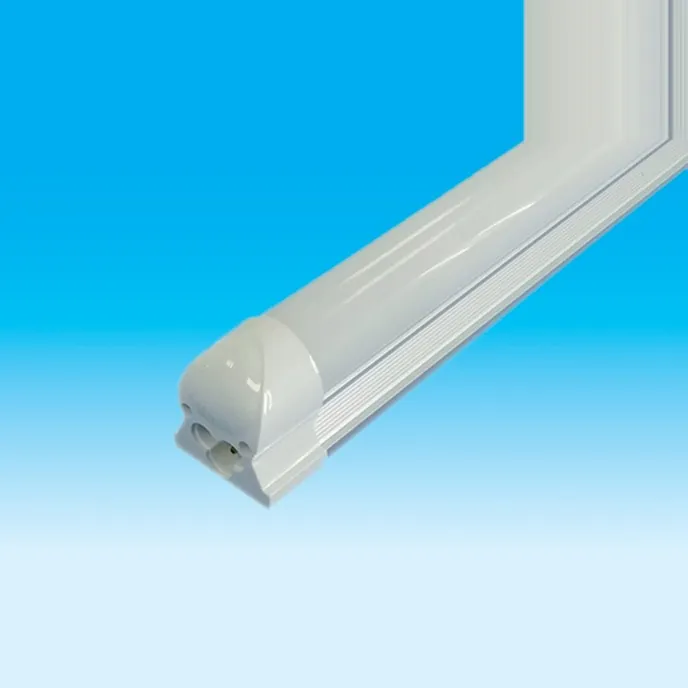
- Linear vapour-tight fittings in lines along driving aisles are the most common layout; low-profile ceiling fittings suit low ceilings and beams.
- Garages run 24 hours, so occupancy-based dimming typically saves 40–70% on top of the LED upgrade.
- For home and workshop garages, 300–500 lux on work benches with 4000K light works well.
Parking garages are lit day and night, all year. That makes them one of the best places to save energy with LED and controls, and one of the places where poor lighting is felt most: dark corners, glare at ramps, and grey concrete that swallows light.
Light levels for parking garages
From EN 12464-1 (car parks):
| Area | Maintained illuminance |
|---|---|
| Traffic lanes and parking areas | 75 lux |
| Entrance and exit ramps (day) | 300 lux |
| Entrance and exit ramps (night) | 75 lux |
| Pay stations and ticket offices | 300 lux |
North American practice (IES) uses lower horizontal values but adds requirements for vertical light and uniformity, which help people recognise faces and see cars. Many owners now light above minimum values for security and to make the garage feel safe.
The entrance needs most light by day because drivers come from bright daylight; without it, the garage looks black for a few seconds. At night, the entrance should drop back to the inside level.
Fixture types
| Fixture | Use | Notes |
|---|---|---|
| Vapour-tight linear (IP65) | Driving aisles, parking bays | Most common; dust and moisture resistant |
| Low-profile garage canopy | Low ceilings, between beams | Wide distribution, 360° light |
| LED tubes in battens | Budget upgrades, dry garages | Simple retrofit |
| Ceiling lights | Stairs, lift lobbies | Comfortable for people |
| Exit and emergency lights | Escape routes | Required by code |
For dry areas, existing battens can take LED T8 tubes as a low-cost retrofit. For stairs and lobbies, ceiling lights give softer light. Escape routes need exit signs and emergency lighting.
Layout
- Lines along driving aisles: fittings in continuous or spaced lines down the centre of each aisle light the lane and the fronts of the parked cars
- Between beams: where beams divide the ceiling, place fittings in each bay so beams do not cast shadows
- Spacing: typically 3–5 m along the line for 2,500–4,000 lm fittings at ceiling heights of 2.4–3 m
- Ramps: extra fittings for the daytime level, switched or dimmed by a photocell
- Walls and columns: painting them white raises light levels and makes the garage feel safer at the same energy
A rough guide: 75 lux over 1,000 m² with fittings of 3,600 lm, a utilisation factor of about 0.5 (dark concrete) and maintenance factor 0.8 needs about 75 × 1,000 ÷ (3,600 × 0.5 × 0.8) ≈ 52 fittings. Light-coloured surfaces can cut that by a quarter.
Sensors and dimming
Garages are empty most of the time, even when the car park is busy. Typical control strategy:
- Background level of 10–30% when no one is present
- Full level when a car or person is detected, in that zone and the next
- Hold time of a few minutes
- Ramps and entrances: photocell-controlled day and night levels
Microwave sensors detect moving cars well and work through fitting covers. In many projects, this saves 40–70% on top of the LED upgrade.
Energy example
A garage with 200 fluorescent battens of 2 × 36 W (about 80 W each with ballast) running 24 hours:
- Old: 200 × 80 W × 8,760 h ≈ 140,000 kWh a year
- LED at 36 W: 200 × 36 W × 8,760 h ≈ 63,000 kWh
- LED with sensors at about 40% average: about 25,000 kWh
At US$0.15/kWh, that is about US$17,000 a year saved compared with the old system. Check your own numbers with the LED retrofit savings calculator.
Environment
- Moisture and condensation: open garages and lower levels can be damp; IP65 fittings are safer
- Exhaust and dust: sealed fittings stay cleaner
- Temperature: open garages in cold climates need drivers rated for low temperatures
- Impact: fittings low on ramps and near barriers should be robust (IK08 or higher)
Home and workshop garages
For a home garage, the aim is to see the car, the bench and the floor:
| Garage | Suggested lighting |
|---|---|
| Single car, 3 × 6 m | 2 linear fittings of 4,000–5,000 lm |
| Double car, 6 × 6 m | 3–4 linear fittings |
| Workshop bench | Extra light of 300–500 lux on the bench |
Place fittings to the sides of the car rather than directly above it, so light reaches the doors and floor. 4000K light with Ra 80 or higher is comfortable for work. For tall workshops above about 4–5 m, small high bay lights are better.
Open-deck and rooftop levels
Open decks and rooftop levels of multi-storey car parks are lit like outdoor car parks: area lights or floodlights on short poles at 4–6 m, or wall-mounted fittings on parapets. They see sun, rain and wind, so use IP65 or IP66 outdoor fittings with surge protection. Keep light off neighbouring buildings with full cutoff optics, and use a photocell so they switch with daylight rather than with the indoor levels.
Maintenance
- Clean fittings once a year in dusty garages
- Check sensors after any change in layout
- Test emergency lighting monthly and annually as local rules require
- Keep spare fittings of the same type for consistent colour
What to send for a quotation
Floor plans with ceiling heights and beam layout, the levels and ramps, the hours of use and whether you want sensors. We will propose fittings, a layout and the expected light levels and savings.
Sources
Frequently asked questions
How many lux does a parking garage need?
EN 12464-1 gives 75 lux for parking areas and traffic lanes, 300 lux by day and 75 lux at night for entrance and exit ramps, and 300 lux at pay stations. Some local codes and owners set higher values for security.
What are the best lights for a parking garage?
Vapour-tight LED linear fittings (IP65) with good efficacy and wide distribution, or low-profile LED garage canopy fittings, combined with motion sensors that dim lights when bays are empty.
What light fixture is best for a home garage?
LED linear fittings or LED tubes of 4,000–6,000 lumens each, at 4000K, arranged so that the bench and both sides of the car are lit. Two to four fittings suit a typical single or double garage.