Landscape Lighting Control Systems: Timers, Photocells, Smart Transformers and What Each Saves
Timers, photocells, astronomical clocks, Wi-Fi transformers and zones for garden lighting, with yearly energy for dusk-to-dawn, five-hour and three-hour schedules.
Key points
- The control decides the hours, and the hours decide most of the running cost and how many years the fittings last.
- In our retrofit calculator, 20 LED landscape fittings of 4 W plus 10% transformer loss (88 W) use about 385 kWh a year on dusk-to-dawn, 161 kWh on dusk plus 5 hours, and 96 kWh on dusk plus 3 hours.
- At $0.15–0.30 per kWh, that is about $58–116 a year dusk-to-dawn against $24–48 for a five-hour schedule.
- A fitting rated for 50,000 hours lasts about 11 years on dusk-to-dawn, 27 years on dusk plus 5 hours.
- A photocell plus a run-time timer, or an astronomical clock, is the simplest reliable control; zones and smart transformers add flexibility for larger gardens and estates.
A landscape lighting system is only as good as the way it is switched. Lights that come on too late, stay on until dawn for no one, or go off when someone forgets the switch spoil the effect and waste energy. This guide explains the control options, from a simple timer to app-controlled transformers and zones, and shows with our calculator how much the schedule changes the running cost and fitting life.
The control options
| Control | How it works | Good for | Watch out for |
|---|---|---|---|
| Mechanical timer | Pins set on and off times | Small systems, low cost | Drift with the seasons; reset after power cuts |
| Digital timer | Programmed times, battery backup | Small and medium systems | Must be adjusted as sunset moves |
| Photocell | Switches on at dusk, off at dawn | Security and path lights | All-night running unless combined with a timer |
| Photocell + run timer | On at dusk, off after a set number of hours | Most gardens | Placement of the sensor |
| Astronomical clock | Calculates sunset for the location and date | Sites without a good sensor position | Needs correct location and time setting |
| Smart (Wi-Fi/Bluetooth) transformer | App schedules, zones, sometimes dimming | Larger homes, estates | Network failures; app support over the years |
| Motion sensor | On or brighter when someone is near | Paths, side passages, car parks | Can trigger on animals and wind |
Our article on the photocell for outdoor lights explains how dusk sensors work and where to mount them.
What the schedule does to the energy
We took a typical medium garden: 20 LED landscape fittings of 4 W, 80 W in all, plus about 10% loss in the transformer, so 88 W. We entered the hours in our LED retrofit savings calculator, which works out the yearly energy for any load and schedule.
| Schedule | Hours a year | Energy a year | At $0.15/kWh | At $0.30/kWh | Years to 50,000 h |
|---|---|---|---|---|---|
| Dusk to dawn (about 12 h a night on average) | 4,380 | 385 kWh | $58 | $116 | 11.4 |
| Dusk + 5 hours | 1,825 | 161 kWh | $24 | $48 | 27.4 |
| Dusk + 3 hours | 1,095 | 96 kWh | $14 | $29 | 45.7 |
The difference between dusk-to-dawn and a five-hour schedule is more than half the energy and more than doubles the number of years before the fittings reach a 50,000-hour rating. For a hotel or campus with hundreds of fittings, multiply accordingly.
Zones: different hours for different lights
Not every light needs the same hours. A common split:
- Safety zone: steps, paths, entrances. On at dusk, possibly all night or dimmed after midnight.
- Feature zone: trees, walls, water features, sculptures. On at dusk, off at 11 pm or midnight.
- Event zone: terraces, lawns, party lighting. Switched manually or by app when in use.
With three zones, a site keeps its paths safe while the feature lighting, usually the largest load, runs only in the evening. Our landscape lighting plan shows a full layout split into layers.
Smart transformers and apps
Wi-Fi and Bluetooth transformers let owners change schedules and zones from a phone, and some dim the lights or change colour. Before choosing one:
- Check the fallback. If the router or the maker’s cloud service fails, does the transformer keep its last schedule? It should.
- Check range. Transformers are often at the far end of a garden, beyond a reliable Wi-Fi signal.
- Check support over the years. An app that stops being updated can leave a system stuck. A standard timer or astronomical clock as backup is a sensible precaution.
- Check the rating. The transformer’s VA must suit the total fitting load with a margin; our guide to LED landscape lighting kits with transformer explains sizing.
Switch the mains side
On low-voltage systems, the control should switch the transformer’s mains supply, not just the 12 V side. A transformer left energised all day still has some no-load loss, and switching the primary side removes it. Most landscape transformers with a built-in timer or photocell already do this.
Dimming
Dimming adds a second saving on top of the schedule. Feature lights at 70% often look better than at full power, and paths dimmed to 30–50% after midnight still feel safe. For low-voltage systems, check that the fittings and transformer support the dimming method; for mains fittings, the driver must match the dimmer type (phase-cut, 0–10 V or DALI).
Controls for estates, hotels and parks
Larger sites usually move to:
- Astronomical clocks in the distribution board, one channel per zone
- Lighting control systems (DALI or similar) for architectural and facade lighting
- Integration with building management, so the landscape follows events and opening hours
- Solar areas with their own controllers, programmed with a profile, as in our article on solar panel sizing for landscape lighting
For tree lighting from above, our guide to landscape downlighting and moonlighting shows how to keep light levels low, which reduces the load the controls have to switch.
Fittings that suit controlled systems
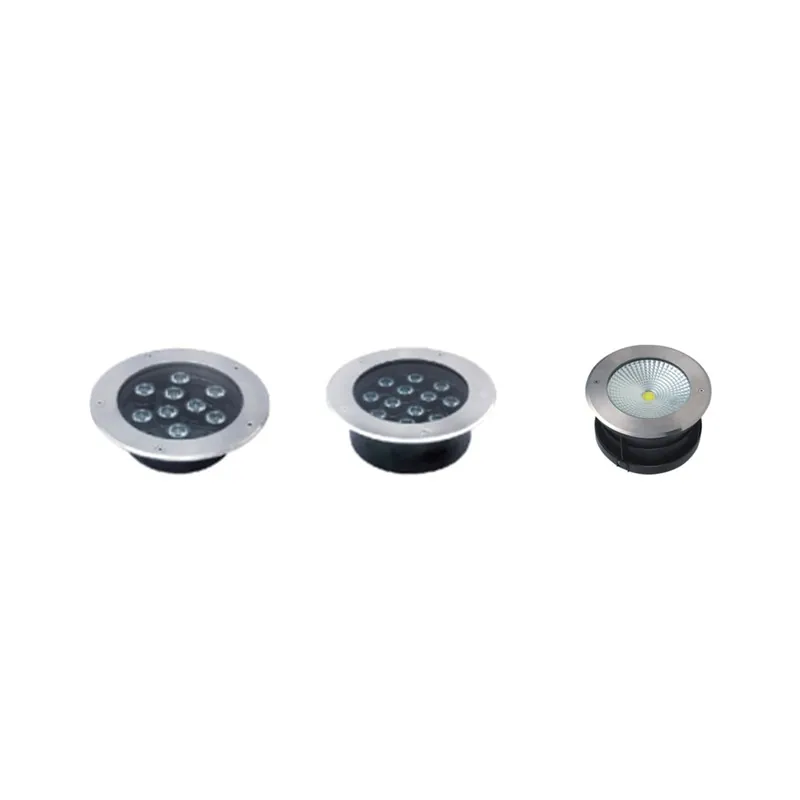
LED fittings switch instantly, can be dimmed and do not mind frequent switching, so they suit every control above. Our LED in-ground uplight runs from 3 W to 36 W with 15°, 25° or 60° optics for trees and walls on mains circuits.
Setting up a schedule
- List each group of lights and why it is there: safety, feature or event.
- Give each group its hours; be strict with feature lighting.
- Choose the control: photocell plus timer, astronomical clock, or smart transformer.
- Put the photocell where it sees the sky but not the lights.
- Check the first week and adjust times as sunset changes.
For landscape contractors and estate managers
Send us the fitting list, the zones and the hours you need. We will run the energy figures for each schedule and suggest fittings and controls that keep the look while cutting the hours.
Sources
Frequently asked questions
What is the best way to control landscape lighting?
For most gardens, a photocell to switch on at dusk combined with a timer to switch off after a set number of hours. Astronomical clocks do the same without a sensor. Larger sites benefit from several zones with their own schedules.
Should landscape lights stay on all night?
Rarely. Security and path lights may, but feature lighting is usually off by midnight. Dusk-to-dawn uses more than twice the energy of a five-hour schedule.
What is a smart landscape lighting transformer?
A low-voltage transformer with built-in Wi-Fi or Bluetooth control, so schedules, zones and sometimes dimming are set from a phone app. Check that it still works on a fallback schedule if the network fails.
Where should the photocell go?
Where it sees open sky but not the garden lights themselves, porch lights or street lights, which can make it switch the system off. Facing away from artificial light, often north in the northern hemisphere.