Solar Panel for Landscape Lighting: How to Size the Panel and Battery for 12 V Garden Lights
How big a solar panel and battery you need to run 12 V landscape lights off-grid, worked through with our solar calculator and PVGIS sun data for four cities, plus the wiring traps.
Key points
- Ten 3 W LED landscape lights on for 5 hours need about 167 Wh a night once driver losses are counted.
- For two nights of storage, our solar calculator gives a 370 Wh lithium iron phosphate battery: about 29 Ah at 12.8 V.
- The panel depends on the worst month: about 50 W in Lahore, 60 W in Nairobi and 80 W in Cape Town, but 180 W in a London December.
- Most low-voltage landscape fixtures are sold for a 12 V AC transformer; on solar they must accept 12 V DC, and a few do not.
- A timer that switches off at 11 pm instead of running until dawn often halves the panel and battery you need.
Running a mains cable across a garden, a hotel courtyard or a park is often the most expensive part of a landscape lighting job. A solar panel, a charge controller and a battery can replace the cable and the transformer, and keep the same 12 V fixtures. The question is how big each part has to be. This guide works through one system with our solar street light calculator, which uses the same sums for any 12 V solar lighting load.
Step 1: the load
Start with the lights and the hours. Our example is a typical small garden or courtyard layout:
- 10 LED landscape lights at 3 W each: spot lights on trees, path lights and a couple of wall washers
- 30 W total
- On for 5 hours, from dusk to about 11 pm, then off
The calculator adds the driver losses (we used 90% driver efficiency):
30 W × 5 h ÷ 0.9 = about 167 Wh per night.
If you want the lights on until dawn, the hours double or more, and so does everything that follows.
Step 2: the battery
The battery must cover the night plus a reserve for dull days. With two nights of storage and a lithium iron phosphate battery used to 90% depth of discharge:
167 Wh × 2 ÷ 0.9 = about 370 Wh, or 29 Ah at 12.8 V.
A lead-acid battery used to 50% would need about 667 Wh, close to twice the size and weight. For safety lighting on steps and paths, where the lights must not fail after a few cloudy days, use three nights: about 556 Wh of LiFePO4.
Step 3: the panel
A panel’s daily output depends on peak sun hours: the solar energy in kWh per square metre per day, which is numerically the same as hours of full sun. You must size for the weakest month you want the lights to work in, not the yearly average.
We took the monthly figures for a panel at its best fixed angle from PVGIS, the European Commission’s solar database, and used 72% system efficiency for an MPPT controller, as the calculator does:
| City | Weakest month | Sun hours at best tilt | Panel needed | Standard panel |
|---|---|---|---|---|
| Lahore | August | 5.02 | 46 W | 50 W |
| Nairobi | July | 3.98 | 58 W | 60 W |
| Cape Town | June | 3.58 | 65 W | 80 W |
| London | March | 3.42 | 68 W | 80 W |
| London | December | 1.48 | 156 W | 180 W |
In Lahore the monsoon cloud of August is the limit, not winter. In London, the same 30 W of lights needs more than twice the panel in December as in March. Many owners in high latitudes size for March to October and accept shorter hours in midwinter, or add a mains backup.
A smaller system
For four 3 W lights (12 W) on the same 5-hour profile, everything scales down by 60%: about 67 Wh a night, a 148 Wh battery for two nights, and panels of about 18 W in Lahore and 63 W in a London December. Small systems like this are where solar beats trenching a cable most clearly.
The wiring trap: AC fixtures on a DC system
Most low-voltage landscape lighting is sold with a magnetic or electronic transformer that gives 12 V AC. A solar system gives 12 V DC from the charge controller’s load output. Before you switch:
- Check every fixture is rated for DC. Most LED MR16 and integrated LED fixtures are “12 V AC/DC”, but some drivers are AC-only and flicker or fail on DC.
- Respect polarity. On DC, the plus and minus must go the right way for some fixtures. Mark the cable.
- Watch the controller’s load current. 30 W at 12 V is 2.5 A. Choose a controller with a load output comfortably above that.
- Voltage drop still applies. At 12 V, long cable runs lose voltage quickly. Keep the battery box close to the middle of the layout and use a heavier cable for long runs. Our landscape lighting wiring guide has the cable sizes.
Controls: the cheapest saving
The controller sets when the lights come on and go off. Most solar controllers offer:
- Dusk to dawn
- Dusk plus a fixed number of hours
- A two-stage profile: full power for a few hours, then dimmed
Dusk plus five hours, as in our example, needs less than half the energy of dusk to dawn in winter. If some lights are for safety and some for effect, put them on separate outputs and switch the decorative ones off earlier.
Where to put the panel
- Face it towards the equator at about the tilt PVGIS suggests for your site; it is printed on its results page as the optimum angle.
- Keep it clear of tree shade, especially in winter when shadows are longest. Partial shade on one cell cuts a small panel’s output sharply.
- A garden shed roof, a pergola or a pole is usually better than ground level.
- Keep the battery in a ventilated, shaded box. Heat shortens battery life.
Solar per light, or one central system?
| Option | Good for | Limits |
|---|---|---|
| Individual solar garden lights | Path markers, small beds | Small panels, short winter hours |
| One panel and battery for a group of 12 V lights | Courtyards, hotel gardens, feature trees | Needs cable from the battery box |
| Mains transformer | Long winter hours, high latitudes | Needs a mains supply and trench |
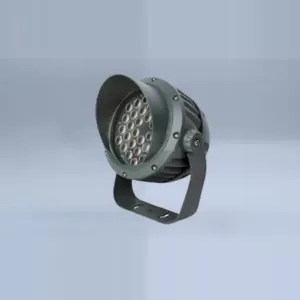
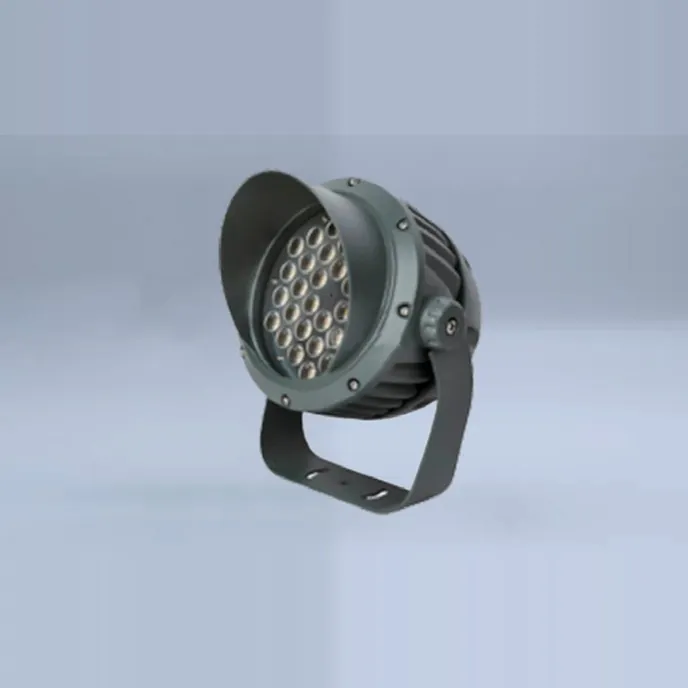
A central system lets you use proper landscape fixtures with good optics while avoiding a long trench back to the building. For trees and facades, our LED landscape spotlight and floodlight range starts at 30 W with 15° to 120° optics, which suits larger estates; for small home systems, 3–5 W fixtures are more usual.
Checking a kit
If you buy a ready-made solar landscape kit, do the sum yourself:
- Add up the fixture watts and multiply by the hours.
- Divide the battery Wh by that figure: it should cover at least two nights.
- Multiply the panel watts by your worst-month sun hours and 0.72. The result should be at least the nightly energy.
Many kits pass in summer and fall short in winter. Our article on solar street light battery specifications explains how to read battery ratings, and outdoor solar lights that work in winter covers cold weather.
For landscape contractors
For hotel gardens, campuses and public parks, send us the fixture list, the hours and the site location. We will check the panel and battery against PVGIS data for the site, and tell you which areas are better left on mains.
Sources
Frequently asked questions
What size solar panel do I need for landscape lighting?
Work out the watt-hours per night, then divide by the sun hours of your worst month and a system efficiency of about 0.72 for an MPPT controller. Ten 3 W lights for 5 hours need about 50–80 W of panel in sunny climates and about 180 W in a London December.
Can I connect solar to my existing landscape transformer?
Not directly. A landscape transformer turns mains into 12 V AC. A solar system gives 12 V DC from a charge controller and battery. You replace the transformer with the controller's load output and check that every fixture accepts DC.
What battery is best for solar landscape lights?
Lithium iron phosphate (LiFePO4) at 12.8 V is the usual choice: it tolerates deep discharge and many cycles. Lead-acid works but needs about twice the capacity for the same usable energy.
How many nights of storage do I need?
Two nights is a reasonable start for decorative lighting. For safety lighting on paths or steps, three or more.