How Long Do Emergency Lights Last? Battery Run Time, Battery Life and Fitting Life
Emergency lights have three lifetimes: the run time on battery (90 minutes or 3 hours), the battery's life in years, and the fitting's life. How to size, check and extend each one.
Key points
- Run time on battery is set by code: 90 minutes under NFPA 101 in the US; at least 1 hour, and often 3 hours, under EN 1838 and BS 5266-1 in Europe and the UK.
- A 3 W exit sign running at full power for 90 minutes takes about 5.3 Wh from its battery with an 85% efficient driver; allowing for a battery at 80% of its new capacity, it needs about 6.6 Wh when new.
- A 10 W twin-head light for 2 hours, like our explosion-proof BG-FBYJ10A, needs about 29 Wh by the same sum.
- The battery usually wears out long before the LEDs: heat and constant charging are its main enemies, so check the duration every year.
- Long-lasting emergency lights come from margin: a battery sized above the minimum, a cool mounting position, and a full-duration test once a year.
“How long do emergency lights last?” has three answers, and buyers often mix them up. There is the run time: how long the light stays on when the power fails. There is the battery life: how many years the battery keeps delivering that run time. And there is the fitting life: how long the LEDs, driver and housing last. This article covers all three and shows how to size the battery for each.
1. Run time on battery
The run time is set by the building code where the light is installed:
| Region | Standard | Minimum duration |
|---|---|---|
| United States | NFPA 101 Life Safety Code, 7.9 | 1.5 hours |
| Europe | EN 1838 and EN 50172 | 1 hour |
| United Kingdom | BS 5266-1 | 1 hour; 3 hours where people sleep or may return soon after an evacuation |
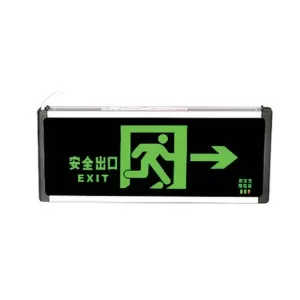
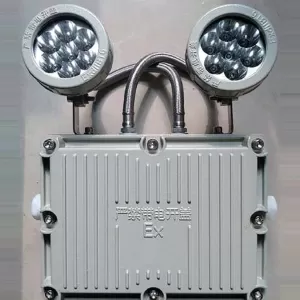
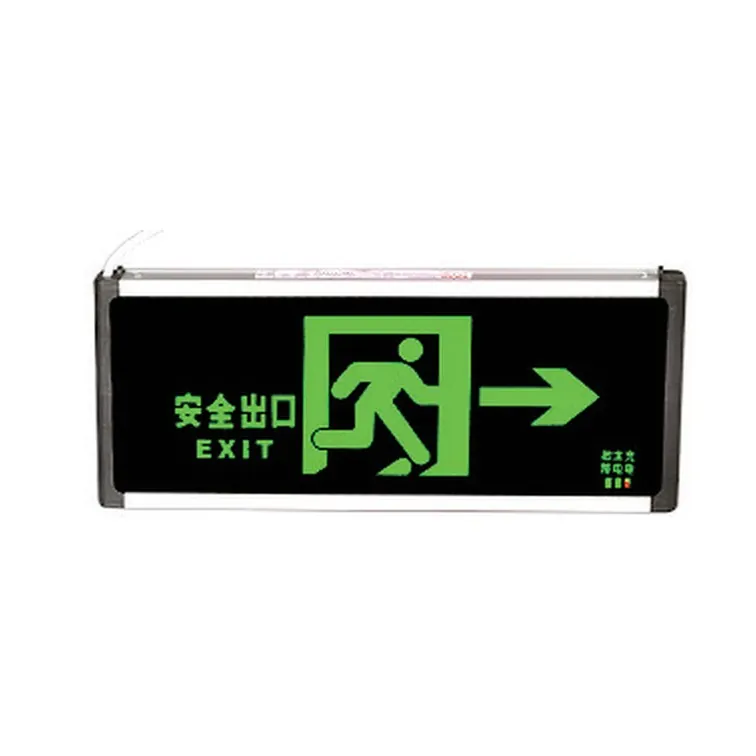
Many specifiers choose 3 hours anyway, because it gives margin and covers the longer UK requirement. Our LED emergency exit sign BG-XFYJ is rated for at least 90 minutes; our explosion-proof emergency light BG-FBYJ10A for 2 hours.
Sizing the battery for the run time
The battery has to hold enough energy for the full duration at the end of its life, not just when new. The sum:
Battery energy (Wh) = emergency watts × hours ÷ driver efficiency ÷ end-of-life factor
We used 85% for the driver efficiency and 80% for the end-of-life factor (the battery is considered worn out when it holds 80% of its new capacity). Both are assumptions for illustration; a maker’s data sheet gives the real figures for a product.
| Light | Emergency watts | Duration | Energy at the LEDs | Battery needed when new |
|---|---|---|---|---|
| Exit sign, BG-XFYJ03A | 3 W | 1.5 h | 4.5 Wh | about 6.6 Wh |
| Exit sign, BG-XFYJ05A | 5 W | 1.5 h | 7.5 Wh | about 11 Wh |
| Twin-head, BG-FBYJ10A | 10 W | 2 h | 20 Wh | about 29 Wh |
| Same exit sign for 3 hours | 3 W | 3 h | 9 Wh | about 13 Wh |
The table assumes the light runs at its full rated power on battery. Many emergency drivers deliberately run the LEDs at a lower power in emergency mode to stretch the battery; in that case the emergency watts on the data sheet are what matter. Doubling the duration doubles the battery, which is why a 3-hour unit is larger, heavier and more expensive than a 1-hour unit with the same light output.
2. Battery life in years
The battery is the part that wears out. Three things decide how long it lasts:
- Chemistry. Nickel-cadmium (NiCd) tolerates heat and constant charging well; nickel-metal hydride (NiMH) is lighter but more sensitive to heat; lithium iron phosphate (LiFePO4) is used in newer units and handles many cycles. Each maker states a design life for its pack.
- Temperature. Heat is the biggest enemy. A unit in a hot ceiling void, above a heater, or in a plant room ages its battery far faster than one on a cool corridor wall. Our BG-FBYJ10A is rated for −30 °C to +50 °C ambient, but even within the rating, cooler is better for the battery.
- Charging. Emergency batteries sit on charge for years. A good charger keeps them topped up without overcharging.
The practical answer is that the battery’s life is whatever the annual test says it is. When a unit no longer reaches its full rated duration, replace the battery.
How to know a battery is failing
- It fails the annual full-duration test.
- The charge indicator is off or flickering while mains is present.
- The unit switches on in emergency mode but fades within minutes.
- The battery pack is swollen, leaking or discoloured.
Under NFPA 101, emergency lights get a 30-second functional test every month and a full 1.5-hour test every year. European and UK practice is similar: a short monthly test and an annual full-duration test. Our emergency light testing guide explains how to run and record them.
3. Fitting life
LED emergency fittings last much longer than their batteries. Our BG-XFYJ exit sign has a rated life of more than 80,000 hours, and the BG-FBYJ10A more than 50,000 hours. The electronics, seals and labels usually outlast several battery changes, provided the unit is not in a damp or corrosive place it was not designed for. In practice, fittings get replaced when a building is refitted, when regulations or sign symbols change, or when replacement batteries are no longer available.
What makes an emergency light “long lasting”
- A battery above the minimum. A unit that runs 3 hours when new still passes a 90-minute test long after a minimum-sized one has failed.
- A cool position. Keep units away from heaters, roof voids and hot lamps.
- The right protection. IP-rated units for damp areas; for car parks and outdoor walls, see our guide to wet location emergency lights.
- Replaceable batteries. Choose units where the battery can be changed without replacing the whole fitting.
- Recorded testing. An annual test log shows which units are ageing before they fail in a real power cut.
Hazardous areas
In refineries, chemical plants and paint shops, emergency lights must also be explosion-protected. The battery is inside the protected enclosure, and replacing it must follow the maker’s instructions so the protection is not compromised. Our explosion-proof emergency exit lights article covers the markings and layout.
For contractors and facility managers
When you compare quotations, ask for the emergency watts, the rated duration, the battery chemistry and capacity, the recharge time and the battery’s design life. Those five figures tell you more about how long the light will last than the price. Send us your floor plans and the duration your code requires, and we will propose exit signs and emergency lights for each area.
Sources
Frequently asked questions
How long do emergency lights stay on during a power cut?
As long as their rated duration: 90 minutes is the US requirement under NFPA 101, and 1 or 3 hours is common in Europe and the UK. A new battery often runs a little longer; an old one may fall short.
How long does an emergency light battery last in years?
It depends on the chemistry and temperature. Many makers state a design life of around four years for nickel-cadmium packs in normal room temperatures; heat shortens it. The annual full-duration test tells you when a battery is failing.
How long does it take to recharge an emergency light?
Most are designed to recharge within 24 hours after a full discharge. Our BG-XFYJ exit sign is rated at 24 hours or less.
Why does my emergency light only last a few minutes?
Usually a worn battery, a battery that was never connected after installation, or a unit that has been without mains power and fully discharged for a long time. Replace the battery and retest for the full duration.