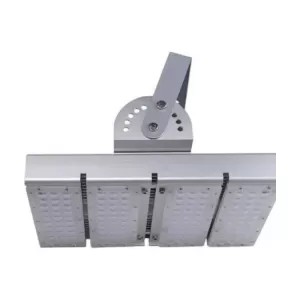
Used Stadium and Baseball Field Lights for Sale: What to Check, and What They Cost to Run
Buying used metal halide or LED stadium lights for a baseball or football field? What to inspect, the hidden costs, and a worked energy comparison with new LED from our retrofit calculator.
Key points
- A used field lighting set is cheap to buy, but a metal halide set keeps costing: 48 fittings of 1500 W draw about 79 kW with ballast losses.
- In our retrofit calculator, 48 × 1500 W metal halide used 800 hours a year consume 63,360 kWh; 48 × 1000 W LED use 38,400 kWh, a saving of $3,744 a year at $0.15 per kWh.
- At 1,500 hours a year, the same swap saves 46,800 kWh, or $7,020 a year; with 800 W LED where the design allows, the saving at 800 hours rises to $4,896.
- Divide the price difference between a used set and a new LED set by the yearly saving to get the payback in years.
- Used poles are the riskiest part: they need a structural check for your wind zone and foundations designed for the new site.
When a school, club or stadium upgrades to LED, its old metal halide floodlights, crossarms and sometimes poles come up for sale. For a small baseball or softball field, a used set can look like a bargain. It may be, but the purchase price is the smaller part of the cost of field lighting. This guide covers what to inspect, and works through the running cost against new LED with our LED retrofit savings calculator.
What is usually on offer
- Metal halide floodlights, often 1000 W or 1500 W, with remote ballast boxes. These are the most common, because they are what clubs are replacing.
- Early LED sports lights, taken down after a few years when a venue upgraded again or needed broadcast-level lighting.
- Crossarms, ballast enclosures and cabling.
- Steel or concrete poles, occasionally, when a field is closed.
The running cost: worked example
We took a typical community baseball field with 48 floodlights of 1500 W metal halide. With a ballast loss of 10%, each fitting draws about 1,650 W, so the field draws about 79 kW when lit.
For the usage we assumed 4 hours a night on 200 nights, 800 hours a year, and an electricity price of $0.15 per kWh. For the LED, we used 48 fittings of 1000 W, which is a common starting point for replacing 1500 W metal halide; the right figure comes from a photometric design for the field.
| 48 × 1500 W metal halide (used) | 48 × 1000 W LED (new) | |
|---|---|---|
| Power drawn | 79.2 kW | 48 kW |
| Energy at 800 h/year | 63,360 kWh | 38,400 kWh |
| Energy at 1,500 h/year | 118,800 kWh | 72,000 kWh |
| Cost at 800 h, $0.15/kWh | $9,504 | $5,760 |
| Cost at 1,500 h, $0.15/kWh | $17,820 | $10,800 |
The calculator gives a saving of 24,960 kWh and $3,744 a year at 800 hours, and 46,800 kWh and $7,020 a year at 1,500 hours. Where a design shows that 800 W LED fittings meet the light level, the saving at 800 hours rises to 32,640 kWh, or $4,896 a year.
Demand charges, which many utilities add for a high peak load, make the gap wider: the metal halide set draws 31 kW more every time the field is lit.
Payback: a simple test
You do not need our prices to make the decision. Get a price for the used set (including transport, refurbishment and new lamps) and a quotation for a new LED set, then:
Payback in years = (new LED price − used set price) ÷ yearly saving
At $3,744 a year, every $10,000 of price difference takes about 2.7 years to recover; at $7,020 a year, about 1.4 years. LED fittings rated for 50,000 hours or more last many seasons at 800 hours a year, so a payback of a few years is usually worth it.
The costs that come with used metal halide
- Lamps. Used lamps are near the end of their life, and metal halide lamps lose much of their output as they age. Budget for a full set of new lamps at purchase. Check the lamp maker’s life and lumen maintenance figures for the exact type.
- Ballasts and capacitors. Old ballasts and capacitors fail with age; a failed capacitor can stop a fitting starting.
- Warm-up and restrike. Metal halide needs several minutes to reach full output, and after a power dip it must cool before it restrikes, which can leave a game in the dark for 10–15 minutes.
- Re-aiming. Each floodlight has an aiming angle for the original field. On a new field, every fitting needs a new aiming plan.
Checking used LED sports lights
Used LED fittings avoid the lamp problems, but check:
- Running hours and the age of the drivers, which usually fail before the LEDs
- Water inside the lens or signs of seal damage
- Whether the optics suit your field size and pole positions
- Supply voltage and whether spares are still available
- That all fittings are the same model and colour temperature
Poles: the risky part
Poles are designed for a wind speed, a height, a head load and a foundation. Moving them to a new site changes all four. Before buying used poles:
- Have an engineer check them against the wind code for your site.
- Inspect welds, base plates and the inside of the pole for corrosion.
- Design new foundations for the soil on your site; old anchor bolts usually cannot be reused.
- Check the crossarm loads with the fittings you will actually mount.
Our article on stadium lighting requirements explains light levels and uniformity by class of play, and the baseball field lighting guide gives light levels and pole layouts.
A middle path: old poles, new LED heads
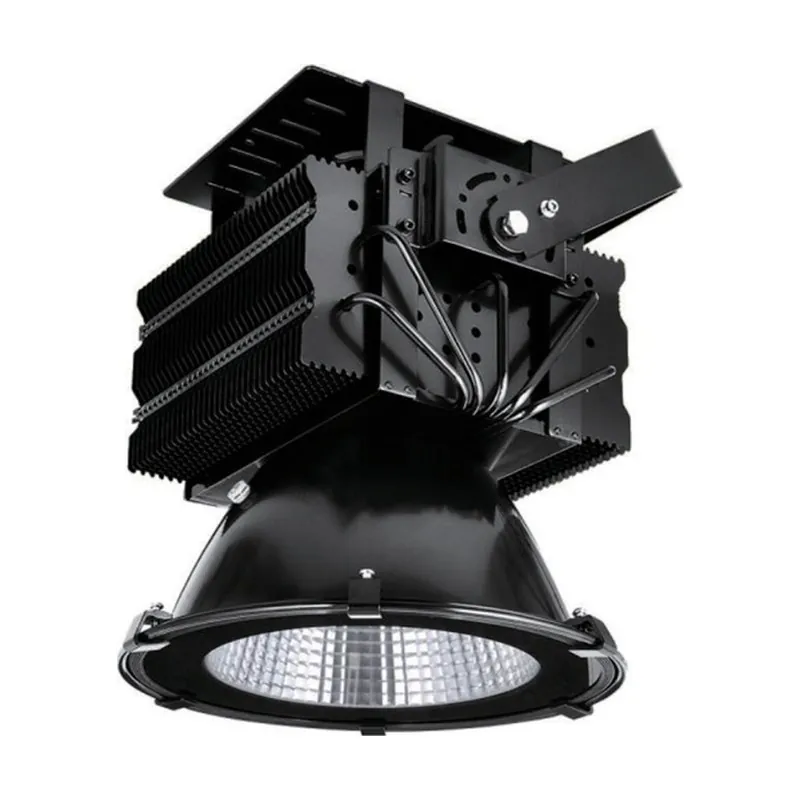
If the poles at your own field are sound, the best value is often to keep them and replace only the heads. LED floodlights are generally lighter and present less wind area than the fittings and ballast boxes they replace. Our heat-pipe LED stadium floodlights are made from 200 W to 1500 W, with 25°, 40°, 60° and 90° reflectors and an IP67 housing, which covers most baseball, football and cricket mast layouts. For smaller fields and training areas, our modular LED sports floodlight runs from 50 W to 300 W.
Checklist before you buy used
- Count the fittings and note the lamp and ballast types.
- Ask for the original lighting design, if it exists.
- Inspect glass, seals, brackets and wiring.
- Price new lamps, ballasts and refurbishment.
- Run your hours and electricity price through the retrofit calculator.
- Get one quotation for new LED and compare the payback.
For clubs and contractors
Send us the field dimensions, the pole positions and heights, and the light level you need. We will propose LED floodlights for your existing poles where possible, and give you the watts and fitting count you need for the comparison above.
Sources
Frequently asked questions
Are used baseball field lights worth buying?
Sometimes, for a field used a few nights a year where the budget is very tight. For regular use, the extra electricity and lamp changes of metal halide often cost more within a few seasons than the price gap to new LED.
What should I check on used stadium lights?
The age and hours of lamps and ballasts or LED drivers, cracked glass and seals, corrosion on brackets, whether the aiming record survives, whether the voltage matches your supply, and the condition of the poles and crossarms.
Can I reuse old poles with new LED floodlights?
Often, if the poles are sound. LED floodlights are usually lighter and smaller in wind area than metal halide fittings, but the crossarm and mounting still need checking by an engineer.
How many hours a year are field lights used?
A community baseball field may use its lights about 4 hours on 200 nights, or 800 hours. A busy multi-use field can reach 1,500 hours or more.