
Solar Street Lights in the USA: Sun Hours, Codes, Buy American and Project Tips
Solar street lights in the United States: sun hours by region, winter sizing in the north, light levels and dark-sky rules, wind and snow loads, listings, and project planning.
Key points
- Sun hours vary widely across the US: the Southwest has some of the best solar resource in the world, while the Northeast and Pacific Northwest have short, cloudy winters.
- Northern projects must be sized for December, which often needs two to three times the panel of a design for Arizona.
- Many cities and counties have dark-sky or light trespass rules that set colour temperature and shielding; check before specifying.
- Federal and state funded projects may have domestic content or listing requirements; confirm them at the start.
Solar street lighting in the United States covers everything from rural driveways and private roads to municipal pathways, parks, campuses and parking lots. The opportunity is large where trenching is expensive or the grid is far away. The challenges are winter in the north, dark-sky rules and procurement requirements.
Sun resource by region
Solar resource in the US is strongest in the Southwest and weakest in the cloudy, northern regions in winter. As a rough guide:
- Southwest (Arizona, New Mexico, Nevada, southern California): excellent all year
- South and Southeast (Texas, Florida, the Gulf): good, with summer storms and hurricane risk
- Midwest and Plains: good in summer, much lower in winter, with snow
- Northeast and Great Lakes: short, cloudy winters
- Pacific Northwest: long grey winters, the most demanding for solar
The design rule is the same everywhere: size for the worst month. NREL’s solar data gives monthly values for any location.
Winter sizing in the north
A light that runs well in Phoenix may fail in Seattle or Boston in December. Northern designs need:
- Larger panels, often two to three times those of a southwestern design
- Larger batteries for several cloudy days
- Steep panel tilt, often 50–60°, to catch the low sun and shed snow
- LiFePO4 batteries with low-temperature charge protection
- Dimming and motion sensing to stretch energy through long nights
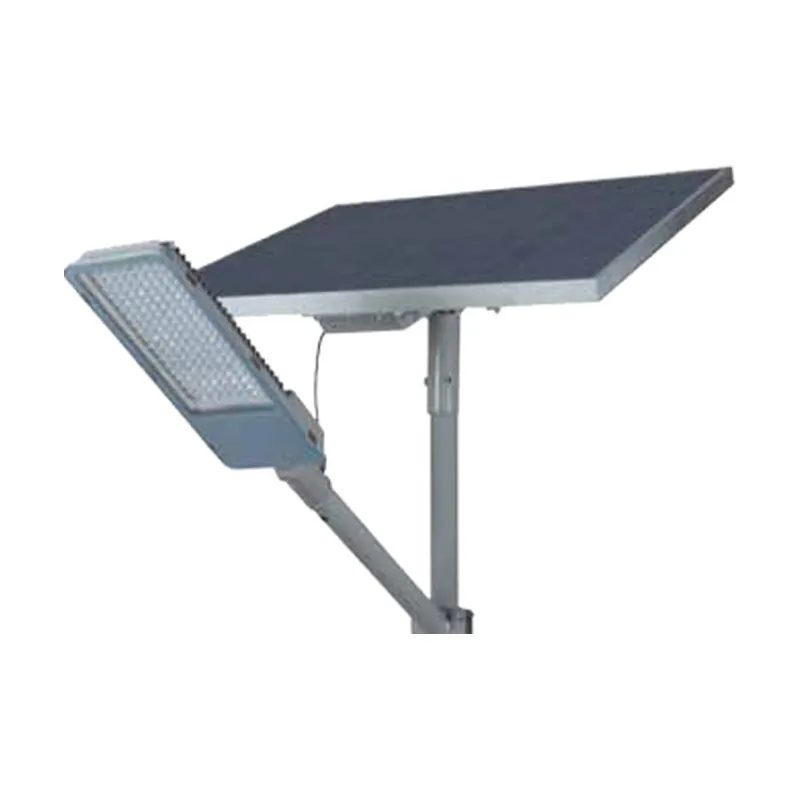
Our article on solar street lights in all weather explains how each weather condition affects design. Split systems like our split solar street light allow larger panels and batteries than all-in-one designs.
Light levels and road classes
Many US agencies follow IES recommendations for roadway and pedestrian lighting, with local codes setting the final values. Solar is most common on:
- Local and residential streets
- Paths, trails and parks
- Parking lots and campuses
- Rural and private roads
Main arterial roads with high light levels are usually better served by grid lighting.
Dark-sky and light trespass rules
Many cities, counties and states have lighting ordinances that limit light pollution. Common requirements include:
- Fully shielded or full cut-off luminaires
- Colour temperature of 3000K or lower
- Limits on light crossing property lines
- Curfews or dimming late at night
Solar lights with programmable dimming fit these rules well. Check local ordinances early; they affect optics and colour temperature choice.
Wind, snow and hurricanes
US projects must meet local structural codes. Poles and foundations are designed for the site’s design wind speed, which is high along hurricane coasts. Panels add wind area, so solar poles are heavier than grid poles of the same height. Snow load on panels also matters in the north. See our solar light pole guide.
Listings and procurement
Municipal, state and federally funded projects often specify:
- Luminaire listing by a recognised testing laboratory
- Performance data such as photometric files and lumen maintenance
- Domestic content or “Buy America”-type requirements for some funding programmes
- Warranty and service terms
These requirements vary between agencies and programmes. Confirm them before selecting products, because they can rule out otherwise suitable lights. For private projects, requirements are usually set by the owner, insurer and local building authority.
Typical applications
Parks and trails. 15–40 W all-in-one lights on 4–6 m poles, warm white, dimming after park hours.
Parking lots. 40–100 W on 6–9 m poles; see solar parking lot lighting.
Private and rural roads. 30–60 W at 6–8 m, sized for winter autonomy.
Campuses and HOAs. Decorative poles with solar heads, consistent style across the site.
Maintenance
Plan for panel cleaning in dusty regions, snow clearing where needed, battery replacement after about 5–8 years and an inspection after major storms. Remote monitoring helps large networks; see smart streetlights.
Cost comparison with grid lighting
Solar avoids trenching, wiring and electricity bills. Where trenching costs are high, across existing paving or long distances, solar is often cheaper over the life of the project. Where power is next to the pole, grid LED is usually cheaper. Our solar vs grid cost calculator compares both with your own costs.
Mixed solar and grid sites
Many US campuses, parks and developments combine both: grid lighting near buildings where power is easy to reach, and solar lights on distant paths, trails and parking areas. Using the same pole style and colour temperature across both keeps the site looking consistent. Planning both at the master-plan stage avoids later trenching across finished landscapes.
Questions to ask before choosing solar
Before committing, check whether trees will shade panels as they grow, whether vandalism is a risk, who will clean panels and replace batteries, and whether the light level required can be met with the energy available in the worst month. Honest answers to these questions decide whether solar is the right choice for each part of a site.
Hurricane regions
Along the Gulf and Atlantic coasts, poles, brackets and panels must survive hurricane winds. Specify the design wind speed from the local code, bolt panels through their frames and inspect after major storms.
Working with us
We manufacture solar and LED street lights and supply importers, distributors and contractors. For US projects, send us the location, road or site type, the light levels and any listing or procurement requirements. We will propose configurations sized for your worst month and tell you which requirements our products can meet.
Sources
Frequently asked questions
Do solar street lights work in northern US states?
Yes, if they are sized for winter. December sun hours in the northern states can be a third or less of summer. Larger panels, larger batteries, steep panel tilt to shed snow, low-temperature battery protection and dimming make year-round operation possible.
What light level do US streets need?
It depends on the road class and pedestrian activity. Many US agencies follow IES RP-8 recommendations, with low levels for local residential streets and higher levels for collectors and major roads. Local codes and agencies set the final values.
Do solar street lights need UL listing in the US?
Many buyers, especially municipalities and commercial projects, require luminaires to be listed by a recognised testing laboratory. Requirements vary, so check the specification and local authority before choosing products.