
Solar Street Lights in the UK: Do They Work in British Winters?
Do solar street lights work in the UK? Winter sun hours, sizing panels and batteries for December, where solar makes sense, light levels, dark skies and what to check before buying.
Key points
- UK winters are the hardest case for solar lighting: December can have well under one peak sun hour a day in the north, and nights of 16 hours or more.
- Solar street lights can work in the UK if they are sized for December, use large panels and batteries, and dim heavily late at night.
- Solar suits paths, car parks, rural lanes, farms and sites far from power more than main roads.
- Hybrid designs, larger panels on separate brackets and motion-based dimming help lights survive the darkest weeks.
The UK is a demanding place for solar lighting. Winter days are short, the sun is low and cloud is frequent. Yet solar lights are increasingly used on paths, car parks, farms and rural roads where running cables is expensive or disruptive. The key is designing for December, not June.
The UK winter problem
Two facts make the UK hard for solar:
- Little energy in winter. In December, average solar energy in much of the UK is well under one peak sun hour a day, lower in Scotland and the north.
- Long nights. In mid-winter, nights last 16 hours or more in the south and longer further north.
A light that would run happily on a 40 Wp panel in southern Europe may need several times the panel area in the UK in winter. Lights sold for sunnier markets often work well in summer and fail in November.
How UK designs make it work
Larger panels. Panels much larger than the luminaire would suggest, often mounted on a separate bracket, tilted steeply (around 60° or more) to catch the low winter sun and shed rain and snow.
Larger batteries. Enough for several dull days, using LiFePO4 cells with protection for cold charging.
Strong dimming. Full light in the busy evening hours, then low levels with motion sensing until morning. On paths and cycleways, motion-based lighting is common.
Efficient LEDs. High efficacy means less energy for the same light.
Hybrid supplies where suitable. On windy coastal and upland sites, wind-solar hybrids can add winter energy; see wind-solar hybrid street lights.
For how weather affects each part of a system, see solar street lights in all weather.
Where solar makes sense in the UK
- Footpaths and cycleways through parks and countryside
- Car parks at schools, sports clubs, village halls and businesses
- Farms and rural properties with long drives and yards
- Private estates and holiday parks
- Construction sites and temporary roads
- Bus stops and shelters far from power
Main roads and town centres are usually lit from the grid, where power is already available and light levels are higher.
Light levels and standards
UK road lighting follows BS 5489-1 together with BS EN 13201 lighting classes. Paths and residential areas often use the lower P classes, which are more achievable with solar. See road lighting classes for how classes are chosen.
Dark skies and wildlife
Many UK councils, national parks and dark-sky reserves encourage warm colour temperatures (often 2700–3000K), fully shielded fittings and part-night lighting. Solar lights with programmable profiles fit these policies well, and lower light levels late at night also reduce the energy that panels must collect.
Planning a UK project
- Get monthly solar data for the site from PVGIS
- Decide the lighting class or light level and the hours of operation
- Set a dimming and motion profile for the winter months
- Size panel and battery for December with several nights of autonomy
- Check shading from trees and buildings in winter, when the sun is lowest
- Design poles for local wind speeds, especially on coasts and hills
- Plan maintenance: panel cleaning, leaf removal and battery checks
Our solar street light calculator checks the energy balance with your own sun hours.
Products for UK conditions
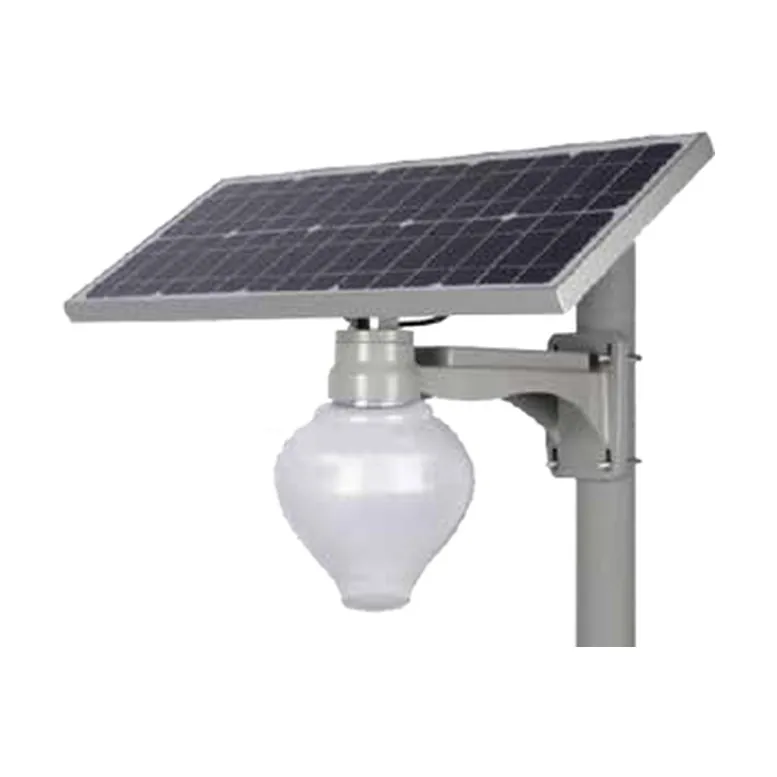
All-in-one lights with small built-in panels are rarely enough for UK winters at street-light outputs. Split designs with separate, larger panels, such as our split solar street light, give the flexibility needed. For paths with low light requirements, smaller lights with generous panels and motion sensing can work well.
Common questions
Will lights work after a week of grey weather in December? Only if the battery and profile are designed for it. A good UK design dims further after several dull days to keep the path lit at a lower level rather than going dark.
Do panels work under snow? No; steep tilt helps snow slide off, and panels should be cleared if snow persists.
How long do batteries last? LiFePO4 batteries typically last about 5–8 years, longer in mild climates like the UK than in hot ones.
Lessons from UK installations
UK sites that work well share a few habits. They choose panels sized for winter even though it looks generous in summer. They set profiles that light the evening rush hours well and dim to low levels after about 10 pm. They plan for leaves and moss on panels, which are common under British trees. And they treat the first winter as a test, adjusting profiles if some lights run low. Sites that skip these steps are the ones that report lights going dark before Christmas.
Maintenance in the UK climate
Autumn leaves, moss and bird droppings are the main enemies of panels in the UK. Clean panels in late autumn before the darkest months, trim nearby trees, and check batteries and controllers once a year. A short visit in October prevents most winter outages.
Working with us
For UK projects, send us the site location, the paths or roads to be lit, the hours of light needed and any council or dark-sky requirements. We will check December solar data and propose a configuration, or tell you honestly if grid lighting would be the better choice.
Sources
Frequently asked questions
Do solar street lights work in the UK?
Yes, if they are designed for UK winters. Lights sized for sunny climates often fail in December. UK designs need much larger panels and batteries, steep panel tilt, and profiles that dim strongly after the evening hours.
How much sun does the UK get in winter?
Very little: in December, many parts of the UK receive under one peak sun hour a day on average, with the north and west lowest. Summer can exceed five peak sun hours. Monthly data for any location is available from PVGIS.
Where are solar street lights used in the UK?
Mostly on paths, cycleways, car parks, farms, rural lanes, private estates, schools and construction sites, where running cables is expensive. Main roads are usually lit from the grid.