
Energy Efficient Street Lights: Where the Savings Come From and How to Maximise Them
What makes street lights energy efficient: LED efficacy, optics that put light on the road, dimming and smart control, right-sized wattage, solar power and maintenance, with typical savings.
Key points
- Replacing sodium or mercury lamps with LED typically cuts street lighting energy by 50–70%.
- Further savings come from good optics, right-sized wattage, dimming at night and smart control, often another 20–40%.
- Solar street lights remove grid energy entirely where trenching is costly or the grid is unreliable.
- Efficiency is measured as light delivered to the road per watt, not just lumens per watt at the fixture.
Street lighting is often one of the largest electricity costs for a city or town, sometimes a third or more of municipal power use. Making it efficient saves money every night for decades. This guide explains where the savings come from and how to get the most of them.
1. The light source: LED
The biggest single step is changing from older lamps to LED.
| Light source | Typical system efficacy |
|---|---|
| Mercury vapour | 30–50 lm/W |
| High pressure sodium (with ballast and luminaire losses) | 50–90 lm/W |
| Metal halide | 50–80 lm/W |
| Modern LED street light | 130–170 lm/W |
Replacing a 150 W HPS lantern, which draws around 170 W with its ballast, with a 60–80 W LED of suitable optics is a typical result. Our HPS to LED conversion wattage chart gives common equivalents.
2. Optics that put light on the road
A lamp in a reflector spreads light in all directions; much of it goes behind the pole, into gardens and into the sky. LED street lights use lenses designed for road geometry, putting a much larger share of the light on the carriageway and footways. This “utilisation” can matter as much as efficacy. A light with slightly lower lm/W but a better-matched optic can meet the road class at lower wattage.
3. Right-sized wattage
Many old installations were over-lit, or lit to a higher class than the road needs. When converting, design to the correct lighting class from a standard such as EN 13201 or local equivalents, rather than matching old wattages. Our guide to road lighting classes explains how classes are chosen, and how many watts an LED street light needs shows typical wattages by road.
4. Dimming
Traffic falls sharply after late evening. Dimming to 50% or less between midnight and early morning saves substantial energy with little effect on safety on many roads. Methods include:
- Fixed schedules in the driver (for example full until 22:00, 50% until 05:00)
- Photocell and timer combinations
- Constant light output (CLO) to avoid over-lighting when the LEDs are new
- Motion-based dimming on quiet roads and paths
See LED street light dimming controls for the options.
5. Smart control
Networked controls let a city dim by road, by hour and by event, detect failures automatically and measure energy per light. They also reduce maintenance trips. Typical savings from smart control on top of LED are 10–30%, plus maintenance savings. See smart streetlights.
6. Solar street lights
Where trenching and cabling would be costly, or the grid is unreliable, solar street lights use no grid energy at all. They are increasingly used on rural roads, estates, paths and car parks. Correct sizing for the worst month is essential. See advantages and disadvantages of solar street lights and our all-in-one solar street light.
7. Maintenance and lifetime
Efficiency also means keeping the light output you paid for. Dirty lenses, failed drivers and dark lights waste the investment. LED street lights with good thermal design keep most of their output for 50,000–100,000 hours, which cuts relamping costs compared with HPS lamps replaced every few years. Quality drivers and surge protection keep failures low.
8. Colour temperature
Warmer LEDs of 3000 K are slightly less efficient than 4000 K, typically by 5–10%, but are often preferred for residential roads for comfort and lower light pollution. The efficiency gap has narrowed, and the right choice depends on the location.
Typical combined savings
| Measure | Typical energy saving |
|---|---|
| HPS to LED | 50–70% |
| Right-sizing to road class | 10–20% further |
| Night dimming | 20–40% further |
| Smart control (CLO, fault detection) | 5–15% further |
Combined, many cities report total savings of 60–80% compared with their old sodium lighting. Results depend on the starting point and how far each measure is taken.
Estimating your savings
To estimate savings, you need the number of lights, existing wattage including ballast losses, proposed LED wattage, burning hours (about 4,000–4,300 hours a year for dusk-to-dawn) and the electricity tariff. Our LED retrofit savings calculator does this for you, and the solar vs grid cost calculator compares solar with grid LED over the life of the project.
Financing efficiency projects
Because savings are predictable, LED street lighting projects are often financed by energy performance contracts, municipal loans or green funds, with repayment from the energy saved. A clear baseline and audit of existing lights is the starting point.
Pitfalls
- Choosing the cheapest light with poor optics, then needing more lights to meet the class
- Ignoring driver quality and surge protection, leading to early failures
- Over-lighting because the new light is “free” in energy
- Forgetting maintenance budgets
Measuring results after a project
Savings should be checked, not assumed. Before the project, record the number of lights, lamp types, wattage including ballast losses and the electricity bills for at least a year. After installation, compare metered consumption over the same months. Where lights are unmetered and billed on an inventory, update the inventory with the new wattages and dimming profiles, because many utilities bill on declared loads. Smart control systems make this easier by reporting energy per light. Publishing the results also helps: residents are more supportive of lighting changes when they can see the money saved and the reduced carbon emissions, and the figures support funding applications for the next phase.
Our street lights
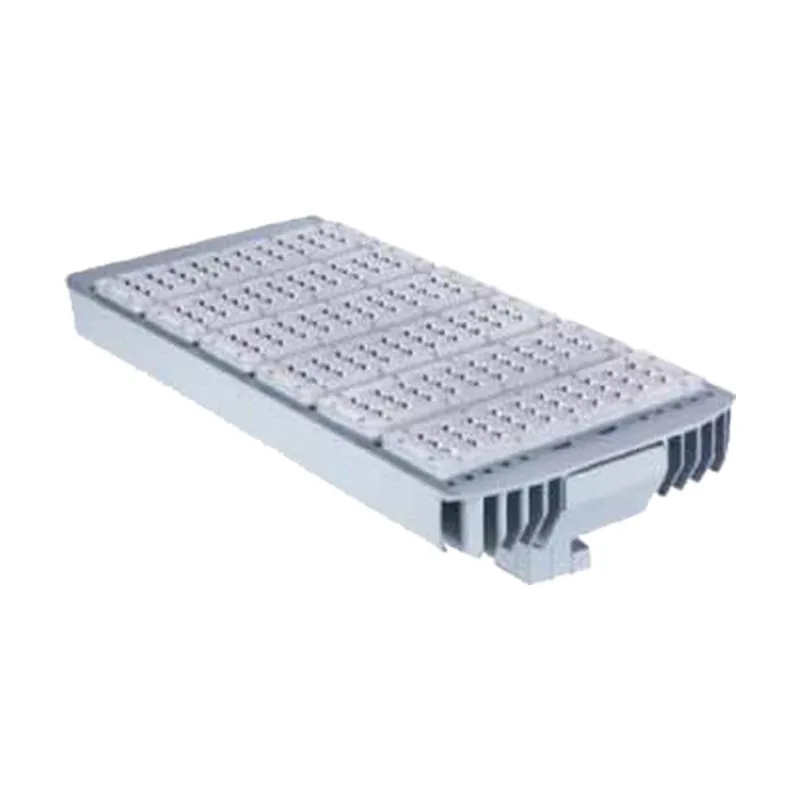
We manufacture modular LED street lights, compact and slim models, and solar street lights, with dimming and smart-control options. Send us your road list with existing lamp types, pole heights and spacing, and we will propose an efficient replacement with IES files and a savings estimate.
Sources
Frequently asked questions
What are the most energy efficient street lights?
LED street lights with high system efficacy (about 130–170 lm/W), road-specific optics and dimming control are the most efficient grid-powered option. Solar LED street lights use no grid energy at all.
How much energy do LED street lights save?
Compared with high pressure sodium, LED usually saves 50–70% for the same road lighting class. Adding dimming and smart control often saves a further 20–40%.
Are LED street lights better for the environment?
Yes, in most cases. They use less energy, last longer, contain no mercury, and with good optics and warmer colour temperatures they cause less light pollution.