
Broken Street Light: Why Street Lights Fail, How to Report One and How Councils Fix Them
Why street lights break, how to report a broken street light, who is responsible, how long repairs take, and how LED and smart controls reduce faults.
Key points
- Common faults are lights out at night, lights on during the day, lights cycling on and off, damaged lanterns and leaning or damaged poles.
- Most faults come from failed lamps or drivers, photocells, cable faults, water ingress or vehicle impacts.
- Report broken street lights to the local council, highway authority or utility, with the pole number and location.
- LED lanterns and smart controls reduce faults and let the owner see failures without waiting for reports.
A dark stretch of street, a light flickering on and off, or one burning all day: broken street lights are a common nuisance and a real safety issue. This guide explains why street lights fail, how to report them and how modern lighting reduces faults.
Common faults
Light out at night. The most common fault. Causes: failed lamp or LED driver, failed photocell, blown fuse, cable fault or loss of supply.
Light on during the day (“day-burner”). Usually a failed photocell or controller, or a relay stuck closed. Wastes energy and indicates a fault.
Light cycling on and off. Classic end-of-life behaviour for high pressure sodium lamps, which overheat and restart. LED lights may cycle due to driver protection, loose connections or a photocell seeing its own light reflected.
Dim or flickering light. Failing driver, lamp, or poor connection.
Several lights out together. A cable fault, a tripped feeder or a failed supply point affecting a whole circuit.
Physical damage. Lanterns hit by vehicles or vandalised, poles leaning, missing access doors, exposed wires. These can be dangerous and should be reported urgently.
Why street lights fail
- Lamp life: sodium lamps typically need replacing every few years
- Drivers and ballasts: electronic parts age with heat; poor-quality drivers fail early
- Photocells: exposed to sun and weather, they degrade
- Water: failed seals let water into lanterns and connections
- Surges and lightning: damage drivers and controls
- Cable faults: digging, ageing insulation and rodents damage underground cables
- Impacts and vandalism
- Corrosion: of poles, brackets and terminals
How to report a broken street light
- Find the pole number. Most street lights have a small plate or sticker with a number.
- Note the location. Street name, nearest house number or landmark.
- Describe the fault. Out, on in the day, flickering, damaged.
- Contact the owner. In many countries this is the local council or municipality; on main roads, a highway authority; in some places, the electricity utility or a private estate.
- Report dangerous situations by phone. Exposed wires, a pole that may fall or a lantern hanging loose need urgent attention.
Many councils have online reporting forms and apps with maps.
Who is responsible?
- Public roads: local council or municipality, or a contractor working for them
- Main roads and highways: national or regional highway authority
- Utility-owned lights: in some countries, the electricity company owns and maintains street lights
- Private roads, estates and car parks: the owner, management company or residents’ association
How long repairs take
Typical targets for routine faults range from a few days to a few weeks, depending on the owner and the fault. Dangerous faults are usually attended within hours. Cable faults take longer because they need excavation and sometimes supply company work.
How LED reduces faults
LED street lights have no lamp to fail every few years. Good LED lanterns last 50,000–100,000 hours, so most of the routine “light out” faults from failed lamps disappear. Failures shift to drivers, surge damage and water, which quality lanterns control with good drivers, surge protection and sealed housings. See the HPS to LED conversion chart when planning a conversion, and LED streetlight components for what is inside.
How smart controls help
With smart street lighting, each light reports its status. The owner sees failures, day-burners and power anomalies on a map, often before anyone reports them, and crews can fix several faults in one trip. Smart nodes also allow dimming and accurate energy metering. See smart streetlights.
Solar street lights and faults
Solar street lights fail differently: tired batteries, dirty or shaded panels, and controller settings. Our guide to solar street lights not working explains diagnosis.
For estate and car park owners
Private roads and car parks need a maintenance plan:
- Night inspections every month or two
- Records of each light and fault
- A small stock of spare drivers and photocells
- Annual checks of poles and access doors
- A contractor on call for urgent faults
See parking lot light repair for car park lighting and light pole maintenance for structures.
When repair is not worth it
If a scheme still uses sodium lamps and faults are frequent, converting to LED is usually more economical than continuing to repair. Energy savings of 50–70% and fewer callouts often pay for the conversion within a few years. Our LED retrofit savings calculator estimates the savings.
What residents can expect after reporting
After a report, the owner usually logs the fault, checks whether other lights on the same circuit are affected, and sends a crew. Simple faults such as a failed photocell or driver are often fixed in a single visit. If the light is fed from an underground cable that has failed, the repair may need excavation, traffic management and sometimes the electricity supplier, which takes longer. Many councils send a reference number so residents can follow progress. If a light stays out for weeks with no response, contacting the council again with the reference number, or asking a local councillor, usually moves it forward.
Safety while a light is out
A dark section of street increases risks for pedestrians and cyclists. While waiting for a repair, residents can use porch or garden lights, and walkers can choose lit routes. If a damaged pole or lantern looks unsafe, keep clear and report it by phone rather than online, so it is treated as urgent.
Design choices that prevent faults
Many faults trace back to choices made when lights were installed: cheap drivers, no surge protection, poor seals and lanterns that are hard to service. When councils replace lights, specifying quality drivers, surge protection suited to the local lightning risk, IP66 optical compartments and tool-free access pays back over the life of the scheme in fewer callouts.
Our work
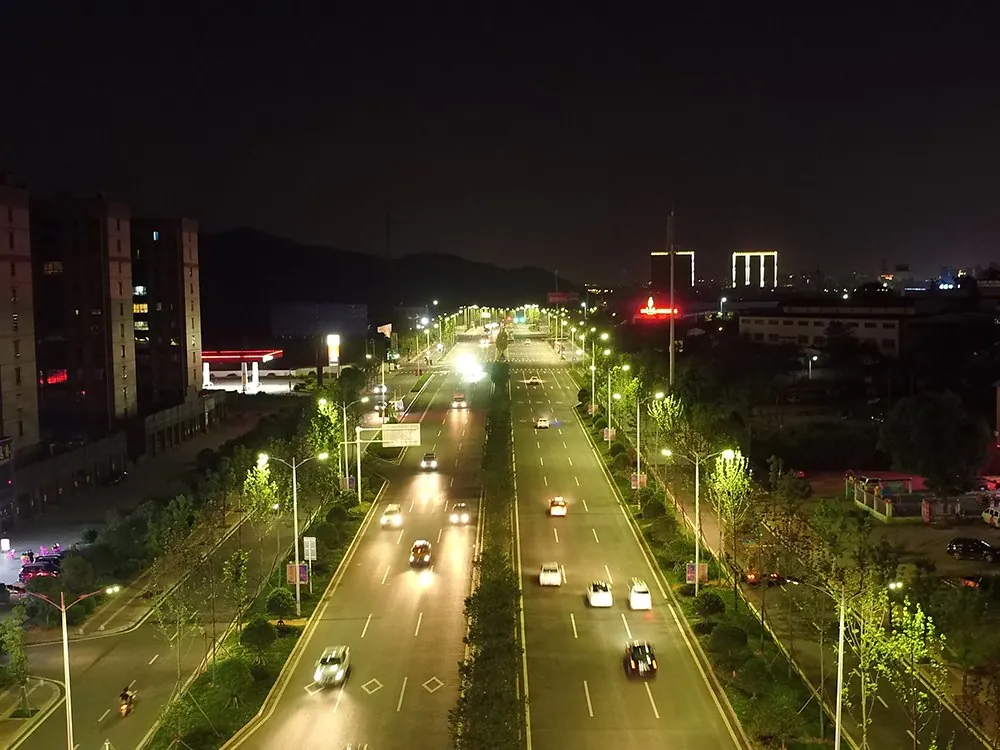
We have supplied LED road lighting for city projects such as Furong Avenue. If you manage street lights and face frequent faults, send us the lantern types, quantities and fault records, and we will suggest LED replacements and control options.
Sources
Frequently asked questions
How do I report a broken street light?
Contact the owner, usually the local council, highway authority or electricity utility. Many have online forms or apps. Give the pole number (often on a small plate on the pole), the street name and a description of the fault.
Why is a street light on during the day?
Usually a faulty or dirty photocell, a stuck relay or a controller fault. Sometimes lights are switched on deliberately during daytime testing.
Why does a street light keep turning on and off?
Older sodium lamps cycle on and off at the end of their life. LED lights can cycle because of driver faults, loose connections or photocells seeing reflected light.