
Solar Street Lights for Highways: Where They Work, Sizing and Safety Considerations
Can solar street lights light highways? Where solar suits highways (junctions, lay-bys, rural sections, signs), sizing for high output, split systems, pole safety, maintenance and hybrid options.
Key points
- Continuous lighting of busy highways needs high output for many hours, which makes solar large and costly; grid LED is usually better there.
- Solar suits highway junctions, lay-bys, bus stops, rural sections, toll approaches, signs and roads where the grid is far away.
- Highway solar usually means split systems with large panels and batteries on 8–12 m poles, sized for the worst month.
- Pole safety, theft protection and maintenance access matter as much as energy sizing.
Solar street lights are now common on village roads and estates. Highway authorities ask whether they can light highways too. The answer depends on which part of the highway and how much light is needed. This guide explains where solar works on highways and how to design it.
The challenge
Highways need:
- High light output, often 100–250 W of LED per pole on wide carriageways
- Long burning hours, dusk to dawn
- High reliability, because failures are hard to fix under traffic
- Safe structures beside fast traffic
Solar can provide high output, but panels and batteries grow large and expensive as output and hours rise. On busy, wide highways where the grid is already available, grid LED with dimming is usually the more economical choice.
Where solar makes sense on highways
- Rural highway sections far from the grid
- Junctions and intersections in remote areas
- Lay-bys, rest areas and bus stops
- Toll plaza approaches and service roads
- Bridges and underpasses where trenching is difficult
- Signs, beacons and warning lights
- Temporary lighting at work zones
- Regions with unreliable grids
Sizing highway solar lights
A highway solar light is a large off-grid system. Typical parameters:
| Item | Typical range |
|---|---|
| Pole height | 8–12 m |
| Real LED power | 60–120 W |
| Panel | 200–400 Wp or more |
| Battery (LiFePO4) | 1–3 kWh usable |
| Autonomy | 2–3 nights |
| Controller | MPPT with dimming profiles |
The exact numbers depend on the road’s lighting class, width, pole spacing and the site’s worst-month sun. Use a lighting calculation with the IES file to set LED power, then size the energy system. Our solar street light calculator does the energy side.
Split systems
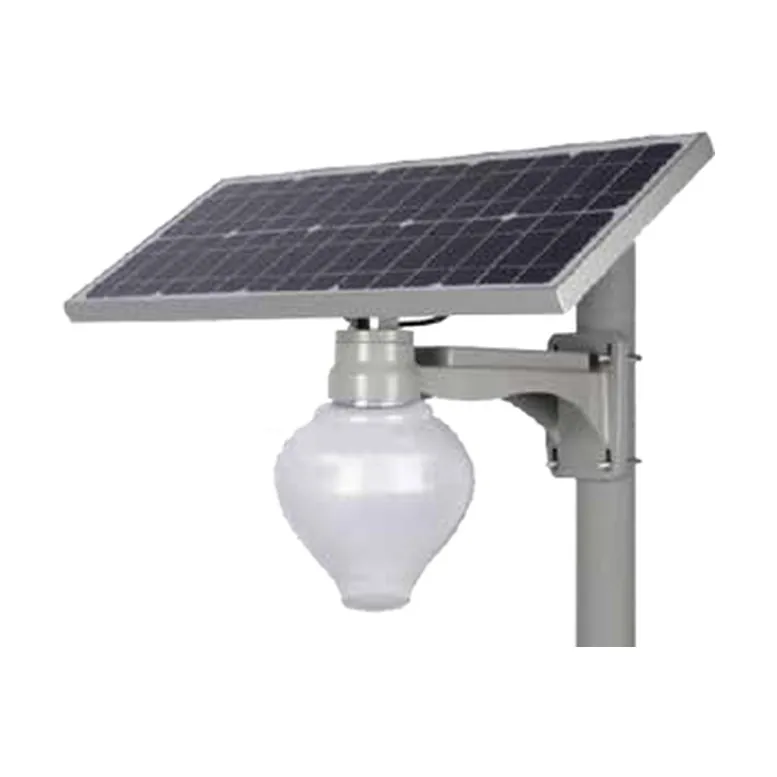
All-in-one lights rarely have enough panel and battery for highway output. Highway solar typically uses split systems: a large panel on top of the pole, a battery in a box on the pole or buried, and a separate LED luminaire with road optics. Our split solar street light SL4830G follows this design. See all-in-one vs split.
Dimming profiles
Traffic falls in the middle of the night, and dimming saves a large share of energy. A typical profile: 100% for the first hours after dusk, 50–70% in the middle of the night, and back up before dawn. Some authorities use motion or traffic-sensing to brighten when vehicles approach on quiet rural roads.
Pole safety
Solar poles carry heavy panels and batteries, which increase weight and wind area. Beside highways:
- Place poles behind barriers or outside the clear zone where possible
- Use poles designed for the wind load of the panel
- Consider passive safety or breakaway designs where required; see breakaway light pole bases
- Secure panels and batteries with anti-theft fixings
See also our highway light pole guide.
Maintenance under traffic
Maintenance on highways needs lane closures, so solar systems must be reliable and easy to service:
- LiFePO4 batteries with long life
- Controllers with remote monitoring, so faults are known before crews go out
- Panels tilted to self-clean in rain, with cleaning planned in dusty regions
- Easy access to battery boxes
Hybrid options
Where winter sun is weak but wind is strong, wind-solar hybrid lights can add energy. Where the grid is available but unreliable, grid-solar hybrid lights use solar first and grid as backup. See wind or solar energy: which is better.
Cost comparison
For highway sections far from the grid, solar avoids long cable runs, transformers and connection fees. For sections where the grid is already beside the road, grid LED is usually cheaper. The solar vs grid cost calculator compares the two for your project.
Typical project steps
- Define the road class, width and which sections need lighting
- Run a lighting calculation with candidate luminaires
- Size panels and batteries for the worst month at the site
- Design poles and foundations for the combined load and wind
- Plan safety (barriers, set-back or passive safety poles)
- Pilot a section, then roll out
Learning from pilots
A pilot section of a few hundred metres, monitored through a full year, answers most questions before a large rollout: actual winter performance, battery temperatures in summer, dust on panels, theft, and how drivers and road users respond. Remote monitoring makes pilots more useful, because battery state, energy harvested and light output can be logged every night. Many authorities that started with a small pilot have adjusted panel size, dimming profile or pole design before scaling up, avoiding costly corrections later.
Specifying for tenders
Tenders for highway solar lighting should specify real performance, not label wattage: luminaire photometry and lumens, real LED power, panel Wp, battery chemistry and usable Wh, autonomy at a defined profile in the worst month, operating temperature range, pole wind design and monitoring requirements. This allows fair comparison and avoids undersized systems winning on price.
Combining solar with grid
On many routes, the best answer is mixed: grid LED on stretches where cables already exist and solar on remote junctions and lay-bys. Matching luminaire style and colour temperature keeps the route consistent for drivers.
Our role
We supply split and all-in-one solar street lights and grid LED road lights, and can propose a mixed design: grid LED where cables exist, solar where they do not. See also off-grid solar powered street lights. Send us the road details and location, and we will propose a design with the numbers behind it.
Sources
Frequently asked questions
Can solar street lights be used on highways?
Yes, in suitable places: rural sections, junctions, lay-bys, bus stops and signs, especially where the grid is far away. Continuous lighting of busy, wide highways is usually more economical with grid LED.
What size solar street light is needed for a highway?
Highway solar lights are typically split systems with 60–120 W of real LED power on 8–12 m poles, with panels and batteries sized for the worst month and 2–3 nights of autonomy. A lighting calculation sets the exact power.
Are solar street lights safe on highways?
They can be, if poles are protected by barriers, set back from the carriageway or use passive safety designs, and if heavy panels and batteries are securely mounted.