Solar Porch Lights and Front Door Lights: Will They Last All Night? A Battery Calculation
Why solar porch and front door lights often fade before morning, and our battery calculation for a 5 W solar wall light with three night profiles in Lagos, Durban, Cape Town and Kisumu winters.
Key points
- A porch is the hardest place for a solar light: the roof shades the panel, and people want light all night by the door.
- By our battery calculator, our SL3530J005 (6.8 Wp, 3.7 V 8 Ah) run at full 5 W for 3 hours then 30% for 9 hours uses about 31.7 Wh a night, roughly double what its panel collects on a June day in Lagos (about 16.4 Wh).
- A motion profile of half an hour at full power plus 11.5 hours at 15% uses about 12.4 Wh, which the panel replaces in Lagos, Durban and Kisumu in their weakest month, but not in a Cape Town June.
- Mount the panel in full sun, even if the lamp is under the porch roof, and choose a light with a motion-sensor mode.
A light by the front door is the first outdoor light most homeowners want, and solar seems the easy option: no cable, no electrician. Yet solar porch lights draw more complaints than any other solar product. They start bright, fade by midnight, and in winter barely light at all. The reason is simple arithmetic, and the same arithmetic shows how to choose and set up one that works.
Why porches are hard for solar
Three things work against a solar light by the door:
- Shade. The porch roof, the eaves, or the house itself shade the panel for much of the day. A front door facing away from the equator may get no direct sun at all in winter.
- Long nights. Most people want the door lit from dusk to dawn, which is 12 hours or more in winter.
- High brightness. Lights are often sold with a “full brightness” mode that empties a small battery in a few hours.
Our calculation: one light, three night profiles
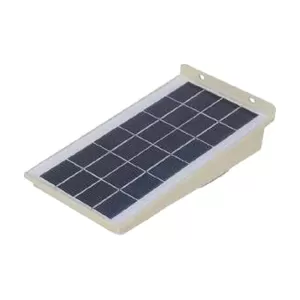
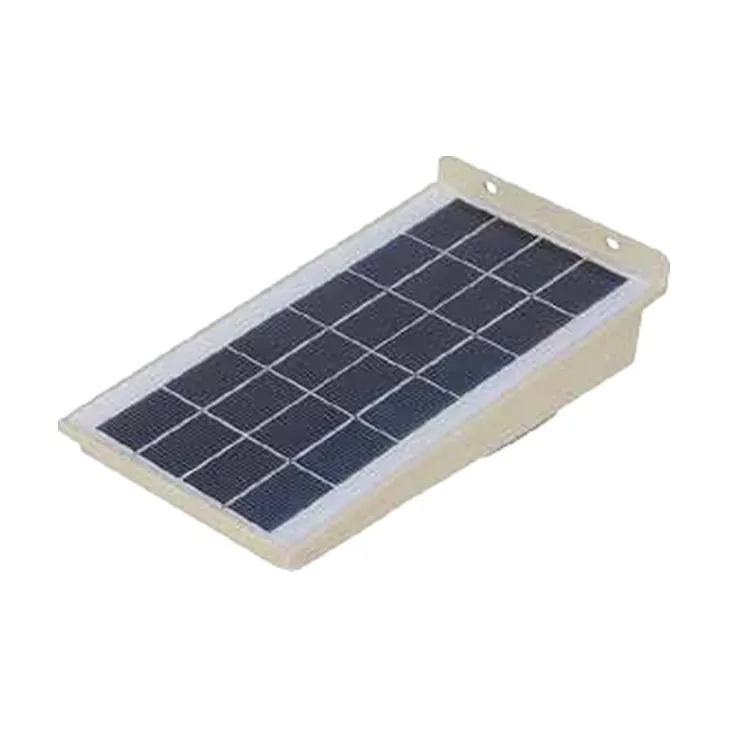
We used our battery autonomy calculator with the data of our SL3530J005 solar wall light: 5 W LED, 6.8 Wp panel, 3.7 V 8 Ah lithium battery (29.6 Wh, about 26.6 Wh usable at 90% depth of discharge), simple charging with an overall efficiency of 0.6, and a 90% efficient driver.
The sun hours are the weakest month from PVGIS: Lagos June 4.03, Durban June 3.31, Cape Town June 2.4 and Kisumu June 5.55. The calculation assumes the panel faces the sun in the open.
Energy used per night:
| Profile | What it means | Energy per night |
|---|---|---|
| A: bright evening | Full 5 W for 3 h, then 30% for 9 h | 31.7 Wh |
| B: motion, moderate | Full power 1 h in total (motion bursts), 20% for 11 h | 17.8 Wh |
| C: motion, low | Full power 0.5 h in total, 15% for 11.5 h | 12.4 Wh |
Energy collected on a sunny day in the weakest month, and the daily balance:
| City (month) | Collected | Profile A | Profile B | Profile C |
|---|---|---|---|---|
| Kisumu (June) | 22.6 Wh | −9.0 Wh | +4.9 Wh | +10.3 Wh |
| Lagos (June) | 16.4 Wh | −15.2 Wh | −1.3 Wh | +4.1 Wh |
| Durban (June) | 13.5 Wh | −18.2 Wh | −4.3 Wh | +1.1 Wh |
| Cape Town (June) | 9.8 Wh | −21.9 Wh | −8.0 Wh | −2.6 Wh |
A negative balance means the battery runs down a little more every night until the light goes out early. The conclusions:
- Profile A fails everywhere. No small wall light can run bright for three hours and then stay at 30% all night on one winter day of sun.
- Profile B works in Kisumu, where the weakest month is still sunny, and comes close in Lagos.
- Profile C works in Lagos, Durban and Kisumu, with spare energy for dull days. From a full battery it gives about 2.5–3 nights of reserve.
- In a Cape Town June even the lowest profile runs short. There, either accept a shorter night in mid-winter, add a larger panel, or use a mains light.
Choosing a solar porch light
From the numbers, a good porch light has:
- A separate panel on a cable, so the lamp can sit under the porch while the panel sits in the sun. If the panel is built into the lamp, the lamp must go where the sun is.
- A motion-sensor mode with a dim background. It gives light all night and full brightness when someone arrives.
- Stated panel watts and battery watt-hours. Multiply the panel watts by your winter sun hours and by 0.6; compare with the profile energy above.
- A battery of at least two nights’ use at the chosen profile.
- Warm colour (around 3000 K) for a front door; it is kinder to the eye and to neighbours.
- IP65 or better if the light is exposed to rain.
Installing for winter
- Put the panel where it gets direct sun from mid-morning to mid-afternoon in winter, not just in summer. Trees lose leaves, but the sun also sits lower.
- Tilt it towards the equator; a steeper tilt helps in winter and sheds dust and rain.
- Keep the lamp away from other lights. A street light or another porch light can make the sensor think it is still day.
- Clean the panel every few weeks.
- If the light has an off switch, use it during long absences in winter so the battery stays healthy. Our article on the solar light on/off switch explains the settings.
When it goes out too early
Work through the causes in this order: shade on the panel, dirt, brightness mode, then the battery. Batteries lose capacity after a few years; replacing them with the same chemistry and voltage often restores the runtime. Our guide to solar lights that stay on all night covers the troubleshooting steps in more depth, and our article on solar motion detector lights explains sensor settings.
Front door, gate or garage?
The same light and calculation apply to a gate post, a garage door or a side passage. The difference is shade: gates and garage walls are often in sun, porches seldom are. If a light must be under a roof, the separate panel is not optional.
For retailers and installers
Customers judge a solar porch light by whether it is still on at 4 a.m. in winter. Stock models with a separate panel and a motion mode, show the panel and battery figures on the shelf, and set the light to its low motion profile before handing it over. For estate or hospitality projects, send us the location and the hours you need, and we will check the profile with the calculator before you order.
Sources
Frequently asked questions
Do solar porch lights stay on all night?
Only if the energy used each night is less than the panel collects on a winter day. A low background level with a motion-sensor boost usually lasts all night; full brightness for twelve hours does not on a small wall light.
Where should I put the solar panel for a porch light?
In direct sun for most of the day, which usually means on the roof edge or a wall outside the porch, connected to the lamp by its cable. A panel under the porch roof is shaded and will not charge properly.
Why does my solar front door light go off at midnight?
The battery runs empty. The panel is shaded, dirty, or too small for the brightness setting, or the battery has lost capacity. Switch to a lower or motion mode and check the panel's position first.
Are solar porch lights bright enough?
For marking a door and lighting a key in a lock, yes. A 5 W light at about 100 lm/W gives roughly 500 lumens at full power; at a 15% background level it gives about 75 lumens, enough to see the step.