Solar Lights for Indoor Use: Bulbs, Pendants and Night Lights That Work Without Electricity
How indoor solar lights, solar bulbs and pendant lights work with a panel outside, and our calculation of the panel and battery a 1, 3 or 5 W indoor light needs in the weakest month.
Key points
- An indoor solar light is a lamp inside with its panel outside, joined by a cable. A panel behind a window or under a roof collects far less than its rating, so put it outdoors in full sun.
- By our solar calculator, a 3 W indoor light used 5 hours a night needs about 16.7 Wh a night, a 37 Wh battery for two nights and a 7.5 Wp panel in a Manila December (PVGIS: 3.7 sun hours) or 8.5 Wp in a Lahore January (3.28).
- At about 90 lm/W, 3 W gives roughly 270 lumens: enough for a table, a corridor or a small room, not for a whole living room.
- For homes without grid power, check panel watts, battery watt-hours and cable length, not the 'equivalent' wattage on the box.
Search for indoor solar lights and you will find solar bulbs with a dangling panel, pendant lights for sheds and chicken coops, solar chandeliers for gazebos, and plug-free night lights. They are bought by households without reliable grid power, by owners of cabins and outbuildings, and by people who want a light that keeps working during power cuts. All of them work the same way, and all of them succeed or fail on the same numbers.
How an indoor solar light works
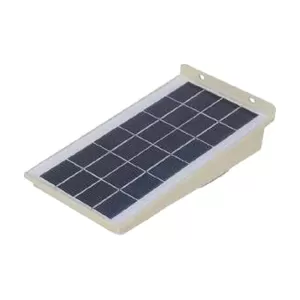
An indoor solar light is a normal LED lamp with its own battery, charged by a panel that sits outside. A thin cable, usually 3–5 m long, runs from the panel through a wall, window frame or roof to the lamp or to a small battery box. At night the lamp runs from the battery, switched by a pull cord, a wall switch or a remote control.
The forms you see on sale are variations of this:
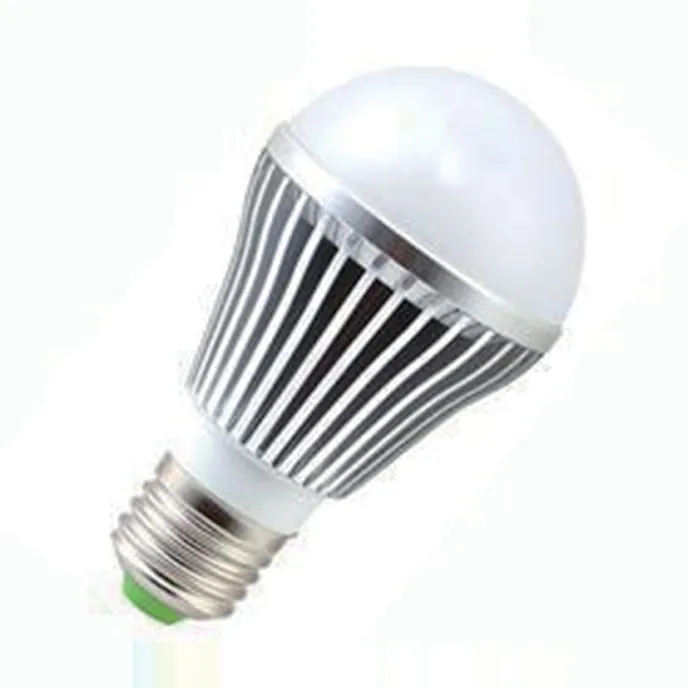
- Solar bulbs with a standard-looking bulb, a hook or socket, and a panel on a cable. Some carry the battery inside the bulb; better ones put it in a separate box.
- Pendant and chandelier lights for sheds, gazebos and porches, often with several heads on one panel.
- Solar night lights with a very small LED that glows all night at a fraction of a watt.
- Portable lanterns that you carry outside to charge and bring in at night.
Why the panel must go outside
The most common complaint is a light that barely charges. The reason is nearly always the panel position. A panel behind a window loses part of the light to reflection from the glass, and the window only sees the sun for part of the day. A panel under a veranda or translucent roof is shaded most of the time. Our calculation below assumes the panel faces the sun in the open, as the sun-hour data does. If you must use a window, choose a much larger panel and expect less.
Sizing: how much panel and battery
We ran three indoor lamps through our solar street light calculator, the same formulas we use for street lights: 5 hours of light a night, a 90% efficient driver, a 3.2 V LiFePO4 battery, simple PWM charging (overall efficiency 0.6) and two nights of reserve.
Sun hours are the weakest month from PVGIS: 3.7 hours in December for Manila and 3.28 hours in January for Lahore.
| Lamp | Light (at 90 lm/W) | Energy per night | Battery for 2 nights | Panel, Manila December | Panel, Lahore January |
|---|---|---|---|---|---|
| 1 W | about 90 lm | 5.6 Wh | 12.3 Wh (3.9 Ah at 3.2 V) | 2.5 Wp | 2.8 Wp |
| 3 W | about 270 lm | 16.7 Wh | 37 Wh (11.6 Ah) | 7.5 Wp | 8.5 Wp |
| 5 W | about 450 lm | 27.8 Wh | 61.7 Wh (19.3 Ah) | 12.5 Wp | 14.1 Wp |
The lamp powers are example inputs. In practice:
- A night light of 1 W or less runs on a panel of about 3 Wp.
- A 3 W lamp lights a table, kitchen corner or corridor and needs a panel of 7.5–8.5 Wp in these climates.
- A 5 W lamp lights a small room, but the panel grows to 12–14 Wp and the battery to over 60 Wh.
Two or three lamps on one panel and battery are cheaper than the same number of separate kits, because one controller and one larger battery replace several small ones.
Reading the box: what the numbers mean
Indoor solar lights are often sold with “equivalent” wattages or lumen claims that the panel cannot support. Check:
- Panel watts. A 1 W panel cannot power a 5 W bulb for 5 hours, whatever the box says. Multiply panel watts by your winter sun hours and by 0.6: that is roughly the watt-hours the lamp gets each day.
- Battery in watt-hours. Multiply volts by amp-hours. A 3.7 V, 2,000 mAh cell holds 7.4 Wh.
- Cable length. It decides where the panel can go. 5 m is a sensible minimum for a house.
- Brightness settings. A low setting doubles the runtime on dull days.
- Charging by USB. Useful as a back-up during long rainy spells.
Our SL3530J005 solar wall light is an outdoor fitting, but its label shows what honest figures look like: a 6.8 Wp panel and a 3.7 V 8 Ah battery (29.6 Wh). That pairing would cover the 3 W indoor lamp above on two evenings out of a full battery.
Where indoor solar lights make sense
- Homes off the grid or with unreliable supply. A small lamp per room for evenings is the first step up from kerosene and candles, with no fuel cost and no smoke.
- Sheds, garages, barns and chicken coops where running a mains cable is expensive.
- Gazebos and outdoor kitchens where a pendant or chandelier gives a finished look.
- Back-up during power cuts. A lamp that charges every day is ready when the grid fails. For plug-in back-up bulbs that charge from the mains instead, see our guide to emergency light bulbs for home.
Installation tips
- Find a spot for the panel that gets direct sun from mid-morning to mid-afternoon all year. In the southern hemisphere face it north; in the northern hemisphere, south; near the equator, nearly flat with a small tilt so rain runs off.
- Pass the cable through a drilled hole sloping downwards to the outside, and seal it, so water cannot run in.
- Mount the battery box indoors, away from cooking heat.
- Charge for a full sunny day before the first use.
- Wipe the panel every few weeks; dust can cut its output noticeably.
Battery care
Most indoor kits now use lithium cells. Keep them out of direct heat, do not leave them flat for weeks, and replace them with the same type and voltage. Our guide to rechargeable batteries for solar lights explains the differences between NiMH, lithium-ion and LiFePO4.
For retailers and project buyers
Indoor solar lights sell well in markets with patchy grid power and in hardware stores serving rural customers. Stock products with stated panel watts and battery watt-hours, a long cable and a low setting, and train staff to ask where the panel will go. For larger projects, such as lighting for a school, clinic or village, ask us for a system sized with the calculator above using your own location’s sun hours. Our guide on how to sell solar lights covers what buyers ask in store.
Sources
Frequently asked questions
Do solar lights work indoors?
The lamp works indoors, but the panel must be outside in direct sun. A panel on a windowsill collects only a fraction of its rating because the glass reflects part of the light and the sun reaches it for only part of the day.
How does a solar light bulb work without electricity?
The bulb contains or connects to a rechargeable battery. A panel outside charges the battery during the day through a cable, and the bulb runs from the battery at night. It does not need any connection to the grid.
How long will an indoor solar light stay on?
It depends on the battery watt-hours. A light drawing 3 W from a 37 Wh battery can run about 10–11 hours from full allowing for driver losses, or two 5-hour evenings.
Can a solar light replace my ceiling light?
For one small room, yes, with a light of a few watts and a panel sized for your weakest month. For several rooms, a small solar home system with one larger panel and battery is usually cheaper than several separate lights.