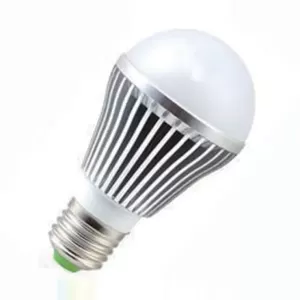
Emergency Light Bulbs for Home: How Rechargeable Bulbs Work and How Long They Last
How rechargeable emergency LED bulbs keep a home lit in a power cut, a runtime table from battery Wh and emergency watts, and what retailers should check before stocking them.
Key points
- An emergency bulb has a small battery inside. It charges while the mains is on and keeps the LED lit when the supply fails, as long as the wall switch stays on.
- Runtime = battery Wh × converter efficiency ÷ emergency watts. One 3.7 V 2,000 mAh cell (7.4 Wh) runs a 3 W emergency output for about 2 hours; two cells, about 4 hours.
- Most emergency bulbs give less light on battery than on mains. Check the emergency lumens and hours, not only the mains wattage.
- For two- to four-hour power cuts, a bulb with about 15 Wh of battery at a 2–3 W emergency output covers a typical evening block in one room.
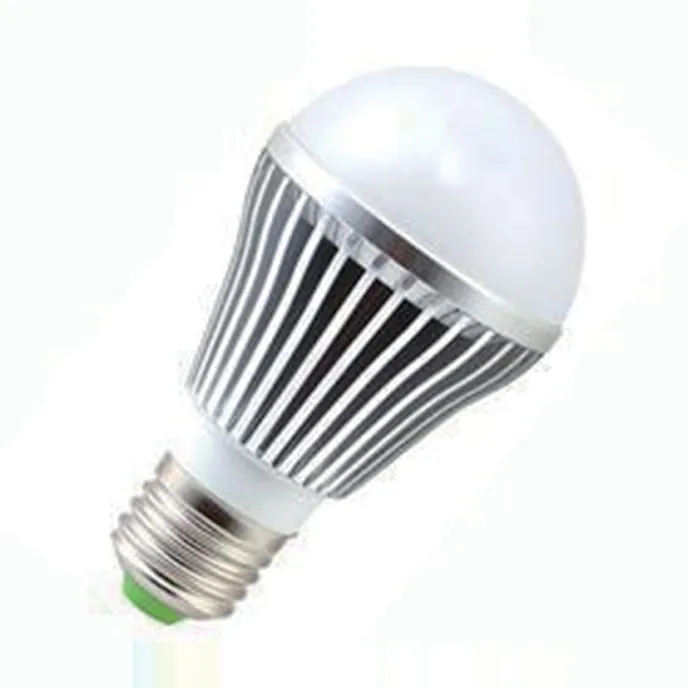
In countries with regular power cuts, the emergency light bulb has become a common household item. It looks like a normal LED bulb and screws into a normal lamp holder, but it keeps glowing when the electricity goes off. Home owners buy them for kitchens and living rooms; shops and wholesalers stock them in large numbers. This guide explains how they work, how to work out how long they will last, and what to check before buying or stocking them.
How an emergency bulb works
Inside the bulb are four parts:
- An LED driver that runs the LEDs from the mains, like any LED bulb.
- A rechargeable battery, usually one or two lithium-ion cells, sometimes nickel-metal hydride in cheaper models.
- A charging circuit that tops up the battery while the mains is on.
- A detection circuit that notices the supply has failed and switches the LEDs to battery power.
The important practical detail: the bulb only knows the power has failed if its circuit is closed. The wall switch must be on. If someone switches the light off before the power cut, many emergency bulbs stay dark. Some have a touch or hand-held mode that lets you light them when removed from the holder and used like a torch.
How long will it last? A runtime table
The battery energy and the emergency output decide the runtime:
Runtime (h) = battery Wh × converter efficiency ÷ emergency watts
Battery Wh is the cell voltage times capacity: a 3.7 V, 2,000 mAh lithium cell holds 3.7 × 2 = 7.4 Wh. With a converter efficiency of 85%:
| Battery | 2 W emergency output | 3 W emergency output | 5 W emergency output |
|---|---|---|---|
| 1 cell, 7.4 Wh | about 3.1 h | about 2.1 h | about 1.3 h |
| 2 cells, 14.8 Wh | about 6.3 h | about 4.2 h | about 2.5 h |
| 1 cell, 9.6 Wh (2,600 mAh) | about 4.1 h | about 2.7 h | about 1.6 h |
These are new-battery figures at room temperature. Lithium cells lose capacity over hundreds of cycles, and every power cut is a cycle, so runtime after a year or two of daily load-shedding will be shorter. A bulb that only just covers the cut when new will fall short later.
Light on battery is usually lower
Most emergency bulbs reduce their output on battery to stretch the runtime. A bulb sold as “9 W” may run at 2 or 3 W in emergency mode. For comparison, our BG-QPVAJ LED bulb, a standard mains bulb with no battery, gives about 810 lumens at 9 W (90 lm/W). At the same efficacy, a 3 W emergency mode gives roughly 270 lumens: enough to move around a room, cook simply or help children with homework, but clearly dimmer than normal.
So when comparing products, ask for three figures: the mains wattage and lumens, the emergency wattage or lumens, and the emergency duration at that output.
Matching the bulb to the power cuts
Power cuts come in different patterns:
- Scheduled load-shedding in blocks of a few hours, often in the evening. A bulb with about 15 Wh of battery at a 2–3 W emergency output covers a typical block in one room.
- Short, frequent interruptions. Almost any emergency bulb copes; the quick switchover matters more than capacity.
- Long outages of a day or more. Emergency bulbs cannot recharge without mains. Solar lanterns or a solar powered wall light with its own panel are a better choice.
Charging time matters too: if the mains only returns for a few hours between cuts, the battery may never refill. Check the stated charging time against the gaps between outages.
What retailers and wholesalers should check
For buyers stocking emergency bulbs for resale, the risks are returns and safety:
- Cell quality and certification. Ask for the battery cell maker and test reports to IEC 62133-2 or the local equivalent. Unbranded cells are the main source of short runtimes and swelling.
- Lamp safety. The bulb as a whole should meet IEC 62560 or your country’s lamp safety rules.
- Honest labelling. Mains wattage, emergency wattage and duration, battery capacity in mAh and voltage.
- Heat. Batteries age fast in heat. A bulb in an enclosed shade or a hot kitchen will lose capacity sooner.
- Cap type. E27 and B22 dominate; check what your market uses.
- Warranty terms that match the expected battery life.
Our own range of bulbs is mains-only; we include the BG-QPVAJ here as a reference for normal output. Buyers sourcing lighting for shops, homes and small businesses can see our wider commercial lighting range.
Emergency bulbs versus other options
| Option | Strengths | Limits |
|---|---|---|
| Emergency bulb | Fits existing holders, no wiring, cheap | Small battery, switch must stay on, lower output on battery |
| Wall-mounted rechargeable emergency light | Larger battery, often two heads | Needs a socket or wiring, separate fitting |
| Solar lantern or solar wall light | Recharges without mains | Needs sunlight; output limited by panel size |
| Inverter or UPS feeding normal lights | Normal light level | Higher cost, installation needed |
For buildings where emergency lighting is a legal requirement, such as shops, offices and apartment stairs, an emergency bulb is not a substitute for proper emergency fittings and exit signs. See our guide to emergency light types.
Care and battery life
- Use the light normally. Regular charge and discharge keeps lithium cells healthy; a bulb left unused for months may be flat when needed.
- Avoid enclosed hot fittings where possible.
- Replace bulbs that no longer last through a typical cut. Most cannot have their battery replaced.
- Dispose of them as batteries, not household waste, where local rules require.
The same battery principles apply to all small rechargeable lights; our article on rechargeable batteries for solar lights explains cell types and ageing in more detail.
Summary
An emergency bulb is a simple, useful product, but its runtime is set by a small battery. Work out battery Wh, divide by the emergency watts, allow for converter losses and ageing, and compare the result with the length of your power cuts. For retailers, insist on cell test reports and honest emergency figures on the box: those two points prevent most complaints.
Sources
Frequently asked questions
How does an emergency light bulb work?
It contains an LED driver, a small rechargeable battery and a circuit that detects when the mains fails. With the wall switch on, the battery charges during normal use; when the power goes off, the bulb switches to battery and keeps shining at a reduced output.
Does the switch have to stay on for an emergency bulb to work?
For most designs, yes. The bulb needs the switch closed to sense the mains failure and to complete its circuit. If the switch is off when the power fails, many bulbs stay dark; some can be lit by hand or have a separate touch function.
How long does an emergency bulb last in a power cut?
It depends on the battery and the emergency output. As a guide, a 7.4 Wh battery runs a 3 W output for about 2 hours, and a 14.8 Wh battery for about 4 hours. Product claims should state both the battery capacity and the emergency wattage.
How long does an emergency bulb take to recharge?
Usually several hours of normal use with the switch on. The exact time depends on the charging current and battery size; check the datasheet, and expect longer charging for bulbs with larger batteries.