
How to Sell Solar Lights: Distribution Channels, Margins and Sourcing for Importers
A guide for importers selling solar lights: channels from retail to tenders, choosing a range, certifications, pricing, samples, after-sales and working with a factory.
Key points
- Solar lights sell through five main channels: retail and e-commerce, electrical wholesalers, installers and contractors, project developers, and government or donor tenders. Each needs a different range and price structure.
- Decorative garden lights compete on price and packaging; street and flood lights compete on real specifications, warranty and after-sales.
- Certifications and documents differ by market: check what your customs, retailers and tender authorities require before ordering stock.
- A short, well-documented range with spare parts sells better than a long catalogue of look-alike products.
Solar lights look like an easy product to sell: they need no wiring, they cut electricity bills, and demand grows wherever grids are weak or power is expensive. In practice, distributors who succeed choose their channel first and their products second. This guide covers what we see from the factory side when working with importers across Africa, South and Southeast Asia, the Middle East and Latin America.
The five channels
| Channel | Who buys | What sells | What matters |
|---|---|---|---|
| Retail and e-commerce | Homeowners | Garden, wall, security and small flood lights | Price, packaging, reviews |
| Electrical wholesalers | Electricians, small contractors | Wall, flood, small street lights | Availability, margin, returns |
| Installers and contractors | Estates, farms, businesses | Street and flood lights, poles | Specifications, support, delivery |
| Project developers | Housing, resorts, industrial parks | Complete systems with poles | Design, references, warranty |
| Government and donor tenders | Municipalities, ministries, NGOs | Street lights to a specification | Compliance, documents, bonds |
Most distributors start in one or two channels. Retail and tenders need very different businesses: one is about marketing and stock, the other about paperwork and project management.
Choosing a range
For retail and wholesale
– A few garden and path lights, a wall light, a security light and two or three flood light sizes
– Clear real figures on the box: panel watts, battery Wh, real LED watts
– Packaging and instructions in the local language
For projects and tenders
– All-in-one solar street lights in three or four sizes, for example 15, 30, 45 and 60 W
– One or two split systems for higher poles and main roads
– Poles, arms and anchor bolts
– Solar flood lights for yards, signs and security
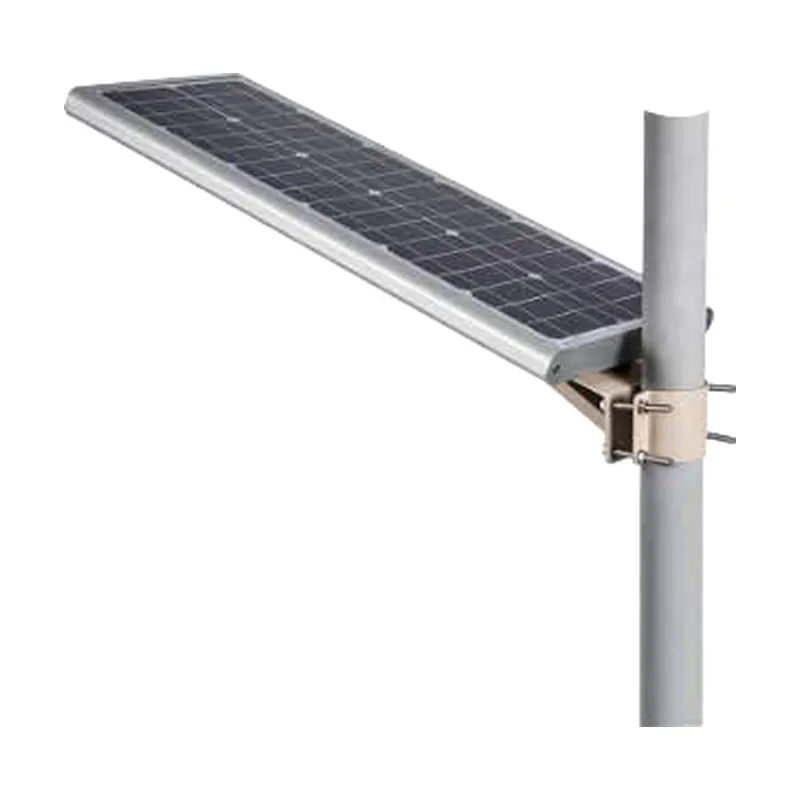
Our all-in-one solar street lights cover 15–60 W on 3–8 m poles; the split solar street light covers higher poles and larger panels; solar flood lights and the solar wall light cover yards and buildings.
Specifications beat “watts on the box”
The solar lighting market is crowded with lights labelled 300 W, 500 W or 1000 W that contain small panels and batteries. Distributors who sell on real specifications build trust and repeat business:
- Real LED power and lumens
- Panel Wp and type
- Battery chemistry, voltage, Ah and Wh
- Autonomy (nights without sun)
- Controller type and modes
- IP rating, surge protection, warranty
For tenders, a clear specification protects you from competitors who cut corners. Our solar street light specification template can be adapted for local buyers.
Certifications and documents
Requirements differ by country and by channel:
- Customs: product category, sometimes conformity certificates (for example in parts of Africa and the Middle East)
- Retail: safety marks and labelling required by the market
- Tenders: test reports, certificates and factory documents named in the tender
- Donor-funded programmes: sometimes specific quality standards for off-grid products
Check requirements before ordering. Ask the supplier which certificates each product has, and get copies; do not rely on marks printed on packaging alone.
Pricing and margins
Think in landed cost: product price plus freight, insurance, duties, taxes, port charges and inland transport. Then add your margin and the channel’s margin:
| Channel | Typical structure |
|---|---|
| Retail | Importer → retailer → consumer; retailer margin is large |
| Wholesale | Importer → wholesaler → electrician |
| Projects | Importer as contractor or supplier; margin includes design and support |
| Tenders | Fixed price per specification; bid bonds and payment terms matter |
Freight is a big share of the cost for poles and large lights. Mixing light heads with poles in full containers, or sourcing poles locally, often reduces landed cost. Our solar street light price guide shows what drives the price of each component.
Samples and testing
Before stocking:
- Order samples of each model
- Measure real panel output and battery capacity, or have a local lab do it
- Run them on site for a few weeks, including cloudy days
- Check packaging survives local transport
- Keep a reference sample of each batch to compare later deliveries
After-sales and spare parts
Solar lights fail in predictable ways: batteries wear, controllers die after surges, panels get dirty or stolen. Plan for it:
- Agree warranty terms in writing: what is covered, for how long, how claims are handled
- Order spare batteries, controllers and LED drivers with the first shipment
- Train installers in basic diagnosis
- Keep records of which batches went to which projects
Our guide to why solar street lights stop working lists the usual faults and fixes, useful for training installers.
Building references
Projects buy from suppliers with references. Start with:
- Small estates, schools, clinics, farms and churches
- A demonstration street in a visible place
- Photos and data from installed lights after one year
Working with a factory
| Point | Ask about |
|---|---|
| Specifications | Real test data, component brands |
| Customisation | Logo, packaging, colour, controller settings |
| Minimum order | Per model and per customisation |
| Lead time | Standard and peak season |
| Quality control | Pre-shipment inspection, burn-in tests |
| Documents | Certificates, test reports, packing lists for customs |
| Support | Design help for projects, tender documents |
We work with distributors and contractors on project products: street lights, flood lights, high mast, poles and solar systems. Where a product is outside our own lines, we supply it through partner factories so a distributor can consolidate an order.
A simple start plan
- Choose one channel and one region
- Pick five to eight products that fit that channel
- Test samples and check documents
- Agree warranty and spare parts
- Win three to five small projects and document them
- Expand the range and channels from there
If you are setting up solar lighting distribution, send us your market, channel and the products you are considering. We will suggest a starting range and the documents it needs.
Sources
Frequently asked questions
Is selling solar lights profitable?
It can be, especially in markets with weak grids, high electricity prices or public lighting programmes. Margins are thin on commodity garden lights and better on project products such as solar street lights, where specification, installation support and warranty add value.
How do I start a solar light distribution business?
Pick one or two channels, choose a focused range that suits them, get samples tested, check the certifications your market requires, agree warranty and spare parts terms with your supplier, then build references with a few small projects before larger tenders.
What solar lights sell best?
In retail, garden and security lights. In projects, all-in-one solar street lights of 20–60 W for estates, villages and car parks, and solar flood lights for yards and signs. Demand depends heavily on the local grid and on public programmes.