How Long Do LED Street Lights Last? Rated Hours in Years, What Fails First and How to Extend It
LED street light lifespan in real years: 30,000 to 100,000 rated hours at dusk-to-dawn use, what L70 and L80 mean, why drivers and surges fail before LEDs, and what to specify.
Key points
- Street lights run about 4,000–4,400 hours a year, so 50,000 rated hours is about 11 years and 80,000 hours about 18 years of dusk-to-dawn use.
- Rated life usually means L70 or L80: the point where light output has fallen to 70% or 80% of new, not the point where the light goes out.
- In practice the driver, surge damage and water ingress end more street lights than worn-out LEDs do.
- Running cooler, a surge protector, a quality driver and a sealed IP66–IP67 housing extend real life more than a bigger number on the datasheet.
LED street lights are sold on long life: 50,000, 80,000 or even 100,000 hours. Those numbers sound like forever, but they mean something specific, and they are not the same as how long a light will actually stay on a pole. This guide turns rated hours into years, explains what the ratings measure, and looks at what really ends a street light’s life.
From hours to years
A street light that runs dusk to dawn is on for about 11–12 hours a night on average over a year, roughly 4,000–4,400 hours. At 4,380 hours a year:
| Rated hours | Years of dusk-to-dawn use |
|---|---|
| 30,000 | about 6.8 |
| 50,000 | about 11.4 |
| 80,000 | about 18.3 |
| 100,000 | about 22.8 |
Lights with a part-night switch-off or deep dimming run fewer full-power hours and last longer.
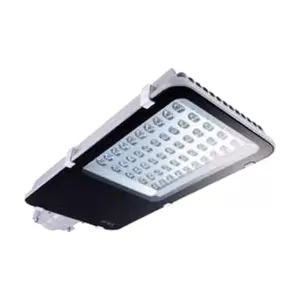
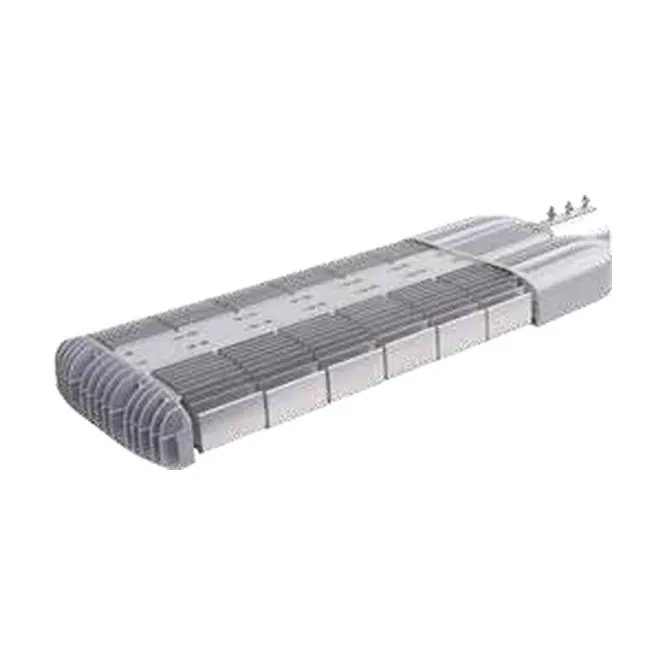
Two of our own street lights show the range. The LDZ30J compact street light, a low-cost head for lanes and compounds, is rated at more than 30,000 hours: about seven years all night. The LDM30C modular street light, made for city roads and highways, is rated at more than 80,000 hours: about 18 years.
What “rated life” actually measures
LED life ratings are usually lumen maintenance, written L70 or L80:
- L70: the hours after which light output is projected to fall to 70% of new.
- L80: the same, to 80%. An L80 figure is stricter than an L70 figure for the same number of hours.
They are projected from LED package tests (LM-80) using a standard method (TM-21), which limits how far a test can be extrapolated. Our LM-80 and TM-21 guide explains the rules.
Two points follow:
- At the end of the rated life the light is still on, just dimmer. A good design allows for this with the maintenance factor, so the road still meets its lighting class at the end.
- The rating describes the LEDs only. It says nothing about the driver, seals, surge protection or housing, which is where most real failures happen.
What really ends a street light’s life
Across the industry, the usual causes are, roughly in order:
1. Driver failure. The driver’s electrolytic capacitors dry out faster when hot; as a rule of thumb, their life roughly halves for every 10 °C rise. A driver crammed into a hot, sealed housing in a tropical climate may fail in a few years, while the LEDs are still fine.
2. Surges. Lightning nearby and switching on long cable runs send voltage spikes into the driver. Without proper protection, one storm can take out a whole street. See surge protection for LED street lights.
3. Water ingress. Poor seals, cracked glass, or cable glands that were not tightened let water in. Condensation then corrodes the board and driver. IP66 or IP67 housings, sealed glands and a breather where needed prevent it.
4. Heat. LEDs and drivers run hotter in undersized heat sinks, high ambient temperatures or when lights are mounted in enclosed lanterns. Heat speeds up every other failure.
5. Mechanical damage. Vibration on bridges and highways, impacts, and corrosion of fixings in coastal or industrial air.
How to get the full life
- Choose a quality driver with a stated life and temperature rating, and ask for the driver brand or model.
- Insist on surge protection: 10 kV/10 kA is common for street lights, more in lightning-prone areas.
- Specify IP66–IP67 and check the gland and seal design.
- Keep it cool: adequate heat sink area, and do not overdrive the LEDs to reach a high lumen figure.
- Use dimming: running at 50% for half the night lowers temperatures and stretches life.
- Design for replacement: a separate driver compartment with plug connectors makes a five-minute repair possible instead of replacing the whole head.
- Check supply voltage: very high or unstable voltage shortens driver life. Our power factor guide covers related driver specifications.
Warranty vs life
A warranty is a commercial promise, usually 2–5 years for street lights. Life is an engineering estimate. A light with a five-year warranty can easily run for fifteen years, and a light with a long rated life can fail in two if its driver is poor. When comparing offers, look at what the warranty covers (driver, LEDs, housing), who pays for removal and reinstallation, and whether spare drivers will be available.
Solar street lights have different limits, mainly the battery; see how long solar street lights last.
Budgeting for the long term
For a 20-year budget on a good LED street light:
- the luminaire itself, with LEDs that will still meet the design at the end;
- one driver replacement per light in that period, as a sensible allowance;
- cleaning of the glass every few years in dusty or polluted areas;
- surge protector replacement after major storms.
That is still far less maintenance than sodium lamps, which needed relamping every three to five years.
Summary
LED street lights typically last 10–20 years at dusk-to-dawn use for good fittings, and around 7 years for budget ones. The rated hours describe how slowly the LEDs dim, not when the light stops. Drivers, surges and water end most lights early, so spend the specification effort there: quality driver, surge protection, good sealing, sensible temperatures and a design that lets the driver be replaced.
Sources
Frequently asked questions
How many years does an LED street light last?
Typically 10–20 years of dusk-to-dawn use for good luminaires rated 50,000–80,000 hours, and around 7 years for budget fittings rated 30,000 hours. The driver may need replacing once within that time.
What does L70 mean on a street light?
The number of hours after which the LEDs are projected to give 70% of their initial light. An L70 of 100,000 hours does not mean the light works for 100,000 hours; other parts may fail earlier, and the light is dimmer by then.
What usually fails first in an LED street light?
The driver, most often. Its electrolytic capacitors age with heat, and surges from lightning or switching can destroy it. Water getting into a poorly sealed housing is the next most common cause.
Can you replace the driver in an LED street light?
In most good street lights, yes. The driver sits in a separate compartment with plug connectors. Ask for this feature, and for the driver model, so spares can be bought later.