Gas Station Canopy Fascia Lighting: LED Strip Layout, 12 V Power Supplies and Cable Sizes
How to light a gas station canopy fascia with LED strips: metres and watts for a 24 × 12 m canopy, why 12 V needs 120 A, power supply grouping, cable sizes and voltage drop.
Key points
- A 24 × 12 m canopy has 72 m of fascia; at 20 W per metre that is 1,440 W of strips, which at 12 V DC means 120 A.
- Never feed a whole canopy from one power supply: split it into runs of about 10–12 m, each with its own supply close to the run.
- Voltage drop is the main design problem at 12 V: 20 A over a 10 m cable of 2.5 mm² loses 2.75 V, almost a quarter of the supply.
- Feed long runs from the middle rather than the end, so each half carries half the current.
The coloured band around a gas station canopy is one of the most visible parts of the brand. At night it is what drivers see from far down the road. Most new canopies, and many refurbishments, use LED strips behind coloured acrylic for this. The strips themselves are simple. The power design is not, because low-voltage strips draw high currents. This guide works through the layout and wiring of a typical canopy.
What a fascia strip is
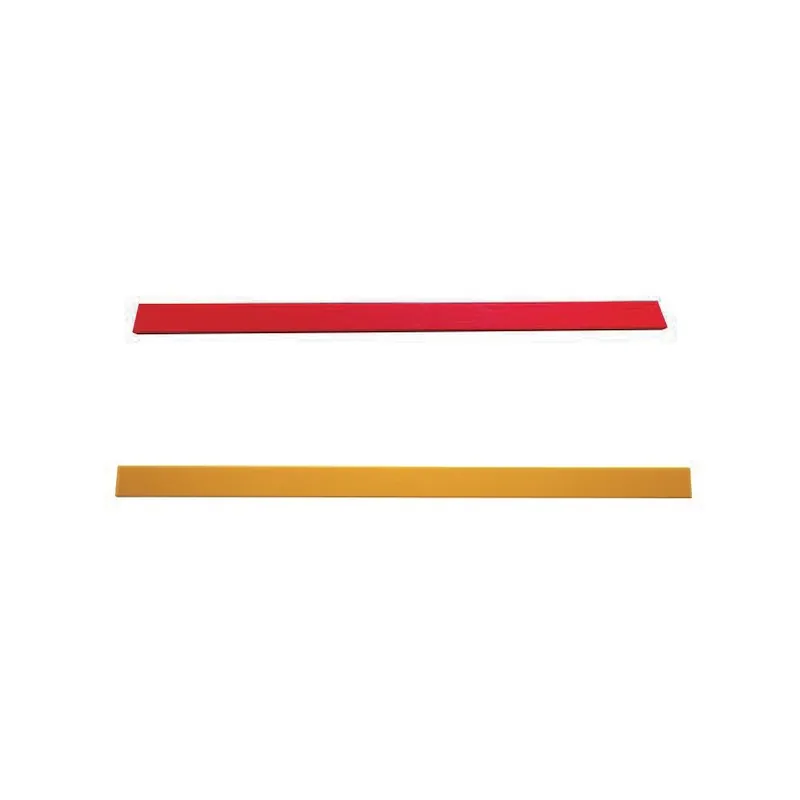
A fascia strip is a length of LED board in an aluminium channel, covered by a coloured acrylic diffuser, mounted along the edge of the canopy. Our BG-TXC20 canopy LED strip is a typical example:
| Item | Value |
|---|---|
| Length | 1,000 mm |
| Power | 20 W |
| Supply | DC 12 V |
| Colours | Red or yellow, 4 mm hot-formed acrylic |
| Beam | 120° |
| Efficacy | 90 lm/W |
| Protection | IP65 |
| Operating temperature | −30 °C to +50 °C |
| Built-in protection | Short circuit, over-current, over-voltage, over-temperature |
The 12 V supply is safe to touch, which is why it is used on canopies that people can reach from ladders and lifts. The price of low voltage is high current.
Step 1: Measure the fascia
Take a common canopy of 24 × 12 m:
- Perimeter: 2 × (24 + 12) = 72 m
- If all four sides are lit: 72 strips of 1 m
- If the back faces a wall and is not lit: 24 + 12 + 12 = 48 m
Leave allowance for corners. Strips are usually butted at corners with a mitre or a corner piece, and a corner may need a shorter strip or a gap.
Step 2: Work out the load and current
At 20 W per metre:
| Fascia lit | Strips | Load | Current at 12 V |
|---|---|---|---|
| 48 m (three sides) | 48 | 960 W | 80 A |
| 72 m (four sides) | 72 | 1,440 W | 120 A |
120 A is more than the current of a large domestic electric cooker, carried at 12 V. No single cable or supply should carry that around a canopy.
Step 3: Split into runs with their own supplies
The practical solution is many short runs, each fed by its own 12 V supply mounted inside the canopy close to the run:
| Run length | Load | Current | Suggested supply (≤ 80% load) |
|---|---|---|---|
| 6 m | 120 W | 10 A | 150 W |
| 12 m | 240 W | 20 A | 300 W |
For the 72 m canopy, six runs of 12 m with six 300 W supplies give 1,800 W of supply capacity for 1,440 W of strips, about 80% loading. Keeping supplies below full load helps them run cooler and last longer in a hot canopy void.
Mains cable (230 V or 120 V) runs to each supply. The 12 V cable from each supply to its strips stays short.
Step 4: Size the 12 V cables
Voltage drop in a two-wire DC cable is current × cable resistance there and back. For copper, resistance is about 0.0172 Ω for 1 m of 1 mm² conductor. Results for typical cases:
| Cable | Length (one way) | Current | Drop | Drop as % of 12 V |
|---|---|---|---|---|
| 2.5 mm² | 10 m | 20 A | 2.75 V | 23% |
| 4 mm² | 10 m | 20 A | 1.72 V | 14% |
| 6 mm² | 10 m | 20 A | 1.15 V | 10% |
| 4 mm² | 3 m | 25 A | 0.65 V | 5% |
| 6 mm² | 3 m | 25 A | 0.43 V | 4% |
The lesson is clear: a long 12 V cable at 20 A loses too much, even in 6 mm². Put the supply within about 3 m of the run, and you can stay within about 5% with 4 mm². This is why we recommend one supply per run rather than a central supply room.
Step 5: Feed from the middle
The connectors between strips also carry current. In a 12 m run fed from one end, the first joint carries the full 20 A and the last one almost nothing, and the far end of the run sees the most drop. Feeding the run from the middle splits it into two 6 m halves of 10 A each, halving the current at the busiest joint and evening out the brightness. If the brand colour must look identical all round the canopy, middle feeding is worth the extra cable.
Mounting and sealing
- Channel fixing: fix the aluminium channel to the canopy fascia frame at the intervals the installation sheet gives, so wind and thermal movement do not open the joints.
- Drainage: canopies collect rain at the edge. Make sure water drains away from the strip and that cable entries face down.
- Connections: use sealed connectors or junction boxes rated IP66 or better inside the canopy; damp in a canopy void is constant.
- Supplies: mount supplies where they can be reached for replacement, not sealed behind fixed panels.
- Heat: a canopy void under a sunlit roof gets very hot. Choose supplies rated for the temperature and give them air.
Colour and brand matching
Fascia colour is usually set by the brand guideline. Red and yellow acrylic covers give the two most common forecourt colours. Ask for a sample under night conditions before ordering a whole network, because the same acrylic looks different when lit from behind by different LEDs.
The rest of the canopy
The fascia is decoration and signage; it does not light the forecourt. Light on the pumps and driveway comes from recessed or surface-mounted canopy fixtures under the deck. Our guide to LED canopy lights for gas stations covers light levels and fixture choice for the forecourt. Areas around dispensers are hazardous zones; anything mounted inside them must be certified for the zone, as explained in explosion proof lighting ratings. The fascia itself is usually outside these zones, but the site classification drawing decides.
Controls
Fascia lighting usually runs from dusk to closing, or all night for 24-hour stations. Switch the mains side of the supplies with a photocell and timer, not the 12 V side, which would need much larger contacts. Our guide to photocells for outdoor lights explains how to choose one.
Common mistakes
| Mistake | Result |
|---|---|
| One large supply for the whole canopy | Huge currents, thick cables, dim far ends |
| Long 12 V cables to the runs | Large voltage drop, uneven brightness |
| Feeding long runs from one end | Hot first connector, dim last strips |
| Supplies at 100% load in a hot void | Early failures |
| Unsealed joints in the canopy | Corrosion and short circuits after the first wet season |
Ordering
Send us the canopy dimensions, which sides are lit, the colour and the supply voltage available. We will list the strips, corner pieces and power supplies for each run.
Sources
Frequently asked questions
How many LED strips does a gas station canopy need?
One metre of strip for every metre of fascia you want lit. A 24 × 12 m canopy lit on all four sides has 72 m of fascia, so 72 one-metre strips; if only the two long sides and the front are lit, 48 m.
What power supply do canopy LED strips need?
At 20 W per metre and 12 V DC, every metre draws about 1.7 A. Group the strips into runs of 10–12 m and give each run its own 12 V supply, loaded to no more than about 80% of its rating, for example a 300 W supply for a 12 m (240 W) run.
Why are the far ends of my canopy strip dimmer?
Voltage drop. At 12 V, the current is high, so the resistance of the cable and of the strip connectors lowers the voltage along the run. Use shorter runs, thicker feed cables, power supplies close to the strips, or feed each run from the middle.
Do canopy fascia lights need to be explosion proof?
Usually not, because the fascia is above and outside the hazardous zones around the dispensers. But the classification drawing for the site decides; anything mounted inside a zone must be certified for it.