250 W HPS Flood Light: LED Replacement Wattage, Lumens and Energy Savings
What LED wattage replaces a 250 W high pressure sodium flood light, why the lamp lumens mislead, and the energy saving on 20 floods worked out in our retrofit calculator.
Key points
- A 250 W HPS flood light draws about 290 W with its ballast, and its lamp gives roughly 27,000–28,000 lm, of which a typical floodlight body delivers perhaps 65–75% to the target.
- A 150 W LED floodlight at 110 lm/W (about 16,500 lm, all directed) is the usual like-for-like replacement; 100–120 W often suffices where the old floods over-lit the area.
- In our retrofit calculator, swapping 20 floods of 250 W HPS for 150 W LED at 12 hours a night saves about 12,000 kWh a year (48%); with 100 W LED the saving rises to about 16,400 kWh (65%).
- LED also removes the orange light and the slow warm-up: full output and true colour at switch-on, which matters for CCTV and security.
The 250 W high pressure sodium (HPS) floodlight has lit yards, car parks, depots and building fronts for decades. When these fittings fail or energy costs rise, the question is always the same: what LED wattage gives the same light? This guide answers it, explains why comparing lamp lumens misleads, and works out the saving for a typical site in our retrofit calculator.
What a 250 W HPS flood actually uses
The lamp is rated at 250 W, but the magnetic ballast adds losses, typically 10–20%. With 15% the system draws about 290 W at the wall. That is the figure to compare against an LED floodlight, whose rated power already includes its driver.
Why lamp lumens mislead
A standard 250 W HPS lamp produces roughly 27,000–28,000 lm when new, an impressive figure next to an LED data sheet. But:
- the lamp emits light in all directions, and the floodlight’s reflector captures and redirects only part of it; 65–75% reaching the target area is typical for a decent floodlight body;
- HPS lumens fall over the lamp’s life, often to around 80–90% before replacement;
- HPS light is yellow-orange with very low colour rendering (around Ra 20–25), so it looks dimmer to the eye at night than its lux reading suggests.
An LED floodlight’s lumens are measured from the complete fitting, already directed by its lens. So 16,500 lm from an LED flood is comparable to about 18,000–20,000 lm leaving an HPS floodlight, and often looks brighter. Our HPS to LED conversion wattage chart gives the same comparison across other sizes.
Choosing the LED wattage
| Situation | LED wattage | Why |
|---|---|---|
| Area just adequately lit today | 150 W | Like-for-like light at about half the energy |
| Area clearly over-lit, or new floods aimed better | 100–120 W | Less light, still meeting the need |
| Light level must rise | 200 W | More light than before, still less energy |
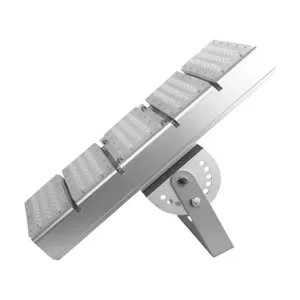
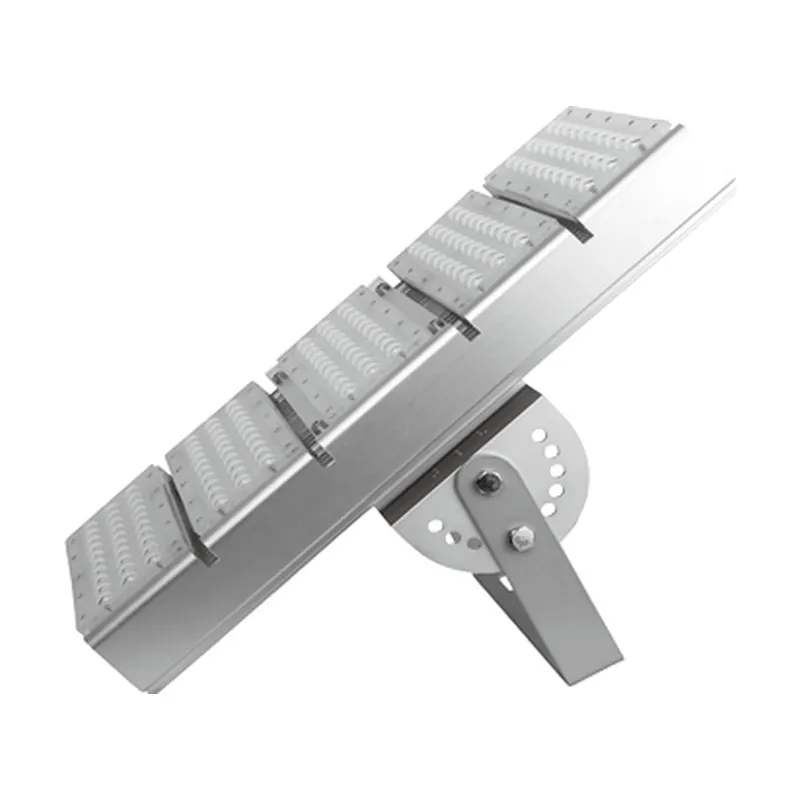
Our TLM30C modular flood light comes in 50 W steps from 50 to 300 W at more than 110 lm/W, so a 150 W module gives about 16,500 lm. Its 140° × 80° optic spreads light along a yard or façade; other lenses are available for longer throws.
If you have a light meter, measure the current level on the ground at night before choosing. Many old HPS installations were designed with large margins, and the lamps have since aged, so the real level may differ from both the original design and your memory of it.
The energy saving: a worked example
A depot yard with 20 floods of 250 W HPS (ballast loss 15%), running 12 hours a night, every night, at an electricity price of 0.15 per kWh. In our LED retrofit savings calculator (open the example):
| HPS 250 W | LED 150 W | LED 100 W | |
|---|---|---|---|
| System power per flood | 287.5 W | 150 W | 100 W |
| Hours per year | 4,380 | 4,380 | 4,380 |
| Energy per year (20 floods) | 25,185 kWh | 13,140 kWh | 8,760 kWh |
| Saving | — | 12,045 kWh (48%) | 16,425 kWh (65%) |
| Energy cost saving at 0.15 | — | about 1,810 per year | about 2,460 per year |
Lower maintenance adds to this: HPS lamps are usually replaced every few years and ballasts fail, while an LED floodlight is rated for more than 80,000 hours. The calculator lets you enter your own maintenance costs and the price you are quoted for the new fittings to find the payback; we do not assume a price here. The CO₂ saving, at 0.5 kg per kWh, is about 6 t a year with 150 W LED.
Other gains beyond energy
- Instant start: HPS takes several minutes to reach full output and longer to restrike after a power dip. LED is at full output immediately, which suits motion-sensor and security use.
- White light: 4000–5000 K at Ra 70 or more lets CCTV record true colours and people recognise vehicles and faces.
- Dimming: LED drivers can dim after midnight or on motion; HPS dims poorly.
- Better control: lenses put light where it is needed, reducing spill onto neighbours.
Retrofit lamp or new floodlight?
LED “corn” lamps that screw into the old socket exist. They need the ballast removed or bypassed, and the old reflector was shaped for a small arc tube, not a cylinder of LEDs, so light control suffers. The old housing may also trap heat. For floods that are already old, a complete new floodlight usually gives better light, longer life and fewer callbacks. Our replacing HPS lights with LED article discusses both routes.
Installation points
- Check the bracket and mounting: an LED flood is usually lighter, but its fixing pattern may differ.
- Remove the ballast and ignitor from the circuit; never feed an LED driver through them.
- Add surge protection on exposed sites; see surge protection for LED street lights, which applies equally to floodlights.
- Re-aim the new floods; the beam is different from the old one.
Ordering
Send the number of HPS floods, their mounting height, what they light and, if possible, a photo or measured lux level. We will suggest a wattage and optic, and run the saving with your own electricity price and hours.
Sources
Frequently asked questions
What LED wattage replaces a 250 W HPS flood light?
Usually 100–150 W of LED. A 150 W LED flood at 110 lm/W gives about 16,500 lm aimed at the target, comparable to what a 250 W HPS floodlight delivers after its reflector losses.
How many lumens does a 250 W HPS lamp produce?
Roughly 27,000–28,000 lumens initially for a standard lamp, falling over its life. Only part of that leaves a floodlight body in the useful direction.
How much energy does replacing a 250 W HPS flood save?
With a 150 W LED, about 600 kWh per floodlight per year at 12 hours a night, because the HPS draws about 290 W including its ballast. With a 100 W LED, about 820 kWh.
Can I keep the old HPS fixture and fit an LED lamp?
Retrofit LED lamps exist, but the ballast must be bypassed and the fixture's heat and optics were designed for HPS. Replacing the whole floodlight usually gives better light control and life.