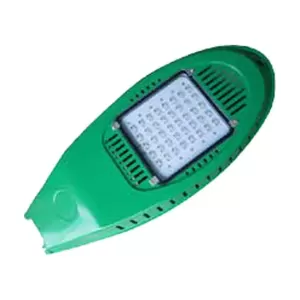
Decorative Solar Street Lights: Styles, Where the Panel Goes, and How to Size Them
How to make decorative street lights solar without spoiling the design: lantern, orchid and post-top styles, panel placement, and a 30 W light sized with PVGIS data.
Key points
- Decorative heads are usually split systems: a DC LED luminaire on the arm and a separate panel and battery, because a styled head cannot hide a large panel.
- A 30 W decorative light, 5 hours full and 7 hours at 30%, needs about 237 Wh a night and a 789 Wh LiFePO4 battery for 3 days, in our calculator.
- With PVGIS worst-month sun, that light needs a 100 W panel in Manila or Lagos, but a 150 W panel in Hanoi, where January gives only 2.4 peak sun hours.
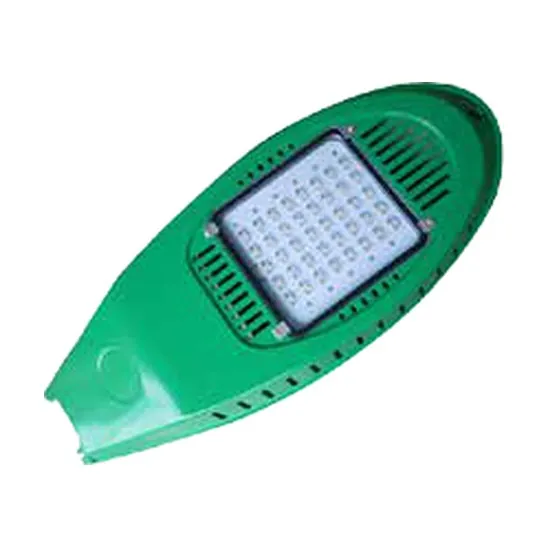
- Our LDL30G orchid street light is available in DC 12/24 V for solar systems, 20–80 W, IP65, for 4–10 m poles.
Town squares, heritage streets, hotel driveways, residential estates and parks often need street lights that look good in daylight as well as at night: lanterns, orchid or flower shapes, post-top globes and curved arms. When there is no grid supply, or trenching would damage paving, the same lights can be solar powered. The challenge is that a decorative head cannot hide a big solar panel. This guide covers the styles, where to put the panel and battery, and how to size the system with real sun data.
Styles that work with solar
| Style | Typical height | Typical power | Notes for solar |
|---|---|---|---|
| Lantern / heritage | 3–5 m | 10–40 W | Panel on a bracket above or beside; battery in base or buried |
| Orchid / flower head | 4–10 m | 20–80 W | DC version of the head; panel on top of pole |
| Post-top globe or cylinder | 3–4 m | 10–30 W | Small panel often integrated in the cap, low power |
| Curved or swan-neck arm | 6–10 m | 30–80 W | Panel above the arm junction, tilted |
| Double-arm decorative | 8–10 m | 2 × 30–60 W | Larger panel or two panels; one battery or two |
The integrated “all-in-one” solar lights, where panel, battery and LED share one housing, are efficient and quick to install, but their shape is set by the panel. For a decorative look, the usual approach is a split system: a DC LED head chosen for its design, plus a panel and battery sized for the energy. Our general guide to decorative and colour-changing solar lights covers the small garden and patio products; this guide is about street-scale lights.
Our decorative head for solar
Our LDL30G orchid street light is supplied in an AC version and a DC 12/24 V version for solar systems. Key data:
- 20, 30, 40, 50, 60, 70 and 80 W
- above 100 lm/W, 3000–6000 K, Ra 70/80/90
- 140° × 80° light distribution
- IP65, ADC12 die-cast aluminium, tempered glass and PMMA lens
- −30 °C to +50 °C
- for 4–10 m poles, single or double arm
Sizing a 30 W decorative solar light
We sized a 30 W head on a 5 m pole for a residential street or park road, with a common profile: 5 hours at full power, then 7 hours at 30%. In our solar street light calculator with a 90% driver, LiFePO4 at 12.8 V, MPPT control and 3 days of autonomy:
- energy per night: 237 Wh
- battery: 789 Wh, about 62 Ah at 12.8 V
The panel depends on the worst month at the site. We took worst-month peak sun hours from PVGIS:
| City | Worst month | Peak sun hours | Panel needed | Module to fit |
|---|---|---|---|---|
| Lagos | June | 4.03 | 82 W | 100 W |
| Manila | December | 3.70 | 89 W | 100 W |
| Hanoi | January | 2.40 (15° tilt) | 137 W | 150 W |
Northern Vietnam’s winter is a good example of why the worst month matters: Hanoi’s January gives less than half of Ho Chi Minh City’s sun in the same month. A design that works in Saigon would run short every winter in Hanoi.
Checking recovery after cloudy days
Autonomy covers a run of dull days, but the battery then has to refill. We ran a 60 Ah, 12.8 V battery with a 100 W panel and Manila’s December sun through our battery autonomy calculator. It lasts about 3.5 days of poor weather, but the daily surplus on sunny days is small, about 30 Wh, so full recovery takes many days. If the site has long rainy spells, a 120–150 W panel is worth the extra cost.
Where to put the panel and battery
- Panel on top of the pole, on a tilted bracket facing the equator. This is the simplest and keeps the panel out of reach. Choose a bracket and frame finish that matches the pole.
- Panel on a side bracket when the pole top carries a decorative finial or when the head itself is a post-top.
- Battery in a box on the pole, inside a wide base, or buried in a sealed box beside the foundation. Buried batteries stay cooler, which helps their life in hot climates, but need a good drainage design.
- Cable runs inside the pole. Plan the cable entry and the door position before ordering poles.
Design points for heritage and public spaces
- Colour temperature. Warm white (3000 K) suits heritage streets and parks; 4000 K suits roads with more traffic.
- Light distribution. Decorative optics can spread light widely. If the road has to meet an EN 13201 class, ask for the photometric file and check spacing with our pole height and spacing calculator.
- Glare. Clear globes and lanterns can glare. Use frosted diffusers or LED heads with internal optics.
- Pole finish. Powder-coated colours (black, dark green, bronze) on galvanised steel or cast aluminium; see our guide to the Victorian street lamp style for heritage details.
Common mistakes
- Choosing an all-in-one light for its price and expecting it to look decorative. The panel decides the shape.
- Sizing for the average month. The light fails every winter or rainy season.
- Putting the panel in the shade of the head or the trees. Even part shade cuts output sharply.
- Forgetting the battery’s temperature. A battery in a dark metal box in full sun runs hot and ages faster.
Ordering
Send the site location, pole height and spacing, the head style, colour temperature and the profile you need. We will size the panel and battery with our calculators and PVGIS data for your location, and return a matched set of heads, poles, panels, batteries and brackets. For estates and gated communities, see also residential solar street lights.
Sources
Frequently asked questions
Can decorative street lights be solar powered?
Yes. Most decorative solar street lights use a DC version of the decorative head on the arm, with the solar panel on top of the pole or on a side bracket and the battery in a box or buried at the base.
Where does the solar panel go on a decorative pole?
Usually on a tilted bracket at the top of the pole, above the luminaire, facing the equator. On heritage-style poles the panel can be mounted on a separate bracket or a nearby roof, with the cable run down the pole.
What size solar panel does a 30 W decorative street light need?
With a 5-hour full and 7-hour 30% profile, about 237 Wh a night. In our calculator that needs a 100 W panel with Manila's or Lagos's worst-month sun, and a 150 W panel in Hanoi in January.
Are decorative solar street lights as bright as standard ones?
At the same wattage and efficacy, yes. Our LDL30G is rated above 100 lm/W. Decorative optics sometimes spread light more widely, so check the light distribution if the road needs a specific class.