Retrofitting Streetlight Controllers: Individual Light Control on Existing Poles, Step by Step
How to add individual streetlight controllers to existing lights: NEMA and Zhaga sockets, driver dimming, networks, commissioning, and the energy a dimming profile saves on 1,000 lights.
Key points
- An individual streetlight controller (a node) sits on each light, switches and dims it, meters its energy and reports faults to central software.
- The easiest retrofit is a light that already has a 7-pin NEMA socket (ANSI C136.41) or a Zhaga Book 18 socket and a dimmable driver: the node twists in where the photocell was.
- A light with only a 3-pin photocell socket can be switched and metered, but dimming needs the driver's dimming wires brought to a 5- or 7-pin socket, or a new driver.
- In our retrofit calculator, 1,000 lights of 250 W sodium replaced by 100 W LED use 438,000 kWh a year; with a profile of full power for 5 hours and 50% for 7, that falls to about 310,000 kWh.
- Survey first: socket type, driver interface, pole numbering and network coverage decide the cost more than the node itself.
Many cities have already converted their street lights to LED and now want the next step: control of each light. Others are planning both at once. Either way, most of the lights are already on poles, so the question is how to add controllers to what is there. This guide walks through the retrofit: what a controller does, what the existing lights need, how the network and commissioning work, and how much energy a dimming profile saves.
What an individual controller does
An individual light controller, often called a node, mounts on each luminaire. It typically:
- Switches the light at dusk and dawn, using a built-in light sensor, an astronomical clock, or commands from the software.
- Dims the light to a schedule or on demand, through the driver’s dimming input.
- Meters the energy each light uses.
- Reports faults: lamp failure, driver faults, power outages, abnormal current.
- Communicates with central software through a network.
The software groups lights, sets dimming profiles, shows faults on a map and produces energy reports. Our overview of smart street light control systems covers the software side and the business case for a whole network.
Step 1: survey the existing lights
What is already on the pole decides how simple the retrofit is. For a sample of lights of each type, record:
- The socket on top of the luminaire.
– 3-pin NEMA twist-lock (ANSI C136.10): carries power in, power out and neutral. A node can switch the light and meter it, but cannot dim it.
– 5- or 7-pin NEMA twist-lock (ANSI C136.41): the extra pins carry a 0–10 V dimming signal (5-pin) plus two spare pins (7-pin). A node can switch, meter and dim.
– Zhaga Book 18 socket: a smaller socket on the top and/or bottom of the luminaire, designed for nodes and sensors, normally paired with a D4i driver that reports data to the node.
– No socket: the light was switched by a circuit photocell or timer. - The driver. Is it dimmable, and how: 0–10 V, DALI or D4i? The driver label or the luminaire data sheet tells you.
- The supply. Are the lights on an all-night circuit, or switched at a cabinet? Nodes need permanent power to work, so a switched circuit must be changed to unswitched at the cabinet.
- The location and ID of each pole, ideally with GPS coordinates.
Step 2: choose the retrofit path for each type
| What you found | Retrofit |
|---|---|
| 7-pin NEMA or Zhaga socket, dimmable driver | Plug in the node. Minutes per light. |
| 3-pin socket, dimmable driver | Replace the socket with a 7-pin socket and wire the driver’s dimming leads to it, or use a switching-only node. |
| 3-pin socket, non-dimmable driver | Switching and metering only, or replace the driver. |
| No socket | Fit a socket and wiring, or install an in-luminaire controller; often only worth it with a luminaire change. |
| Sodium or metal halide lamps | Convert to LED first, or at the same time. |
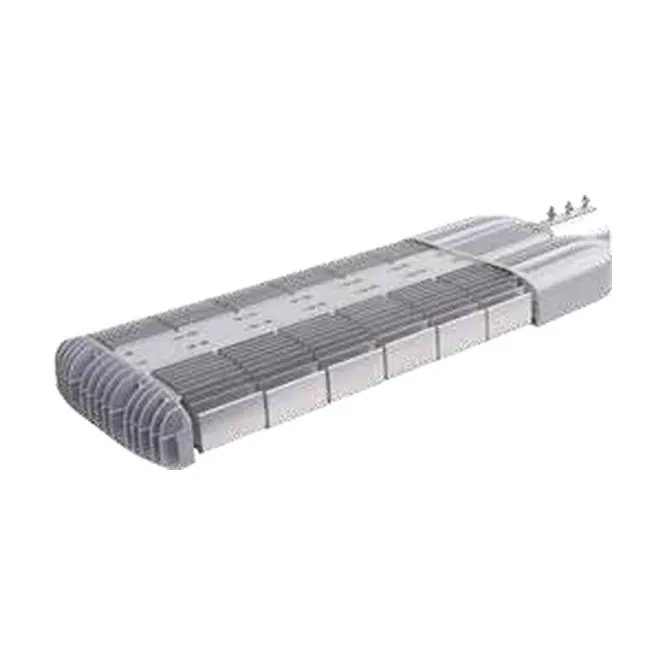
Where a large share of the lights needs new sockets and drivers, it may cost little more to replace the whole luminaire with an LED unit that comes with the socket fitted. Our modular LED street lights LDM30C cover 30 to 350 W at more than 110 lm/W, IP67, for 4 to 15 m poles. Tell us the socket and dimming interface your controller uses, and we will confirm the driver and socket option with the quotation.
Step 3: choose the network
Nodes talk to the software through one of a few network types:
- RF mesh: nodes relay messages to each other and to gateways in cabinets. Suits dense urban networks.
- LoRaWAN: long-range, low-data radio to gateways; one gateway covers a wide area.
- Cellular (NB-IoT or LTE-M): each node has a SIM and talks to the mobile network directly. No gateways, but a data contract per node.
The choice depends on coverage, existing city networks and the software platform. Check that the nodes and software follow open standards (for example TALQ for the software interface) so you are not tied to one supplier for the life of the network.
Step 4: install and commission
- Switch the circuit to permanent power at the cabinet.
- Fit nodes pole by pole, replacing photocells. On 7-pin and Zhaga sockets this is a twist-in job from a lift.
- Record each node’s ID against the pole number and location; many installers scan a QR code and log GPS on a phone.
- Commission in the software: check each node reports, set groups (main road, side streets, parks) and load the dimming profiles.
- Test a group: switch, dim, and check that energy readings make sense.
Poor records at this stage are the most common problem. A node reporting a fault is only useful if the maintenance team knows which pole it is on.
Step 5: set dimming profiles
Dimming is where most of the energy saving comes from after the LED conversion itself. A common starting profile:
- Full power from dusk until late evening, when traffic and pedestrians are highest.
- Reduced level, for example 50%, through the middle of the night.
- Full power again before dawn on busy commuter routes, if needed.
The level must still meet the road’s lighting class at the lower traffic volume. Our article on LED street light dimming controls covers profiles and the standards behind them.
The energy numbers
We used our LED retrofit savings calculator for a network of 1,000 lights, 12 hours a night, at $0.12 per kWh:
| Stage | Average watts per light | kWh a year | Cost a year |
|---|---|---|---|
| 250 W sodium (about 288 W with ballast) | 288 W | 1,259,250 | $151,110 |
| 100 W LED, full power all night | 100 W | 438,000 | $52,560 |
| 100 W LED, 100% for 5 h and 50% for 7 h | about 70.8 W | about 310,000 | about $37,230 |
The LED conversion saves about 821,000 kWh a year. The dimming profile saves another 128,000 kWh a year, about 29% of the LED energy, or roughly $15,000 at our tariff. Open the example and enter your own lights, hours, profile and tariff. Our HPS to LED conversion chart gives typical LED wattages for other sodium lamps.
For lights that are already LED, the dimming saving is the same 29% of their energy with this profile; the node also pays its way through fault reports that replace night patrols, and metering that replaces estimated bills where the utility accepts it.
A large retrofit in practice
On the Tanzhou Avenue expressway in Xiangtan, the main road and service roads along a 13 km section were converted to LED using our luminaires in 2020 (see the Tanzhou Avenue project). Retrofits of that kind keep the existing poles and cables where they are sound, which is also what makes adding controllers later practical: the work is at the luminaire, not in the ground.
For cities and contractors
Send us the luminaire types on your network, the socket and driver on each, the controller system you plan to use and the lighting classes of the roads. We will tell you which lights can take a plug-in node, which need a socket or driver change, and where a new LED luminaire with the socket fitted is the simpler route.
Sources
Frequently asked questions
What is individual streetlight control?
Each light has its own controller that can switch it, dim it, measure its energy and report faults, all managed from central software. It replaces the photocell or timer that switched whole circuits.
Can I add smart controllers to existing street lights?
Yes. Lights with a 7-pin NEMA or Zhaga socket and a dimmable driver take a plug-in node. Lights with a 3-pin socket can take a switching node; for dimming, the driver needs a dimming input wired to a 5- or 7-pin socket.
How much energy does dimming street lights save?
It depends on the profile. Running at 50% for 7 of 12 hours cuts the energy of a LED light by about 29%. Deeper or longer dimming saves more where traffic allows.
Do streetlight controllers work with sodium lamps?
Switching and metering yes; dimming sodium lamps needs special ballasts and is rarely worth it. Most cities convert to LED first or at the same time as adding controllers.