
Lamp Post Top Replacement: New Lanterns, Globes and LED Heads for Old Posts
How to replace the top of a lamp post: measuring the fitter, choosing lanterns, acorn and globe tops, converting old lamps to LED, and replacement globes for antique street lights.
Key points
- Most lamp post tops slip over the top of the post; measure the post's outer diameter (often 3 in / 76 mm for home posts, 60–90 mm for public posts) before ordering.
- Replacing only the top keeps the post, base and wiring, and is far cheaper than a new lamp post.
- LED lanterns and LED retrofit modules inside old lanterns cut energy by 60–80% compared with incandescent, mercury or sodium lamps.
- For antique and acorn globes, choose UV-stable acrylic or polycarbonate replacements and LED sources with shielding to avoid glare.
A lamp post that has stood for decades often has a perfectly good post and a tired top: cracked globe, yellowed panels, rusty lantern or a lamp that costs too much to run. Replacing just the top restores the look and, with LED, slashes running costs.
When to replace the top, not the post
Replace only the top when:
- The post is straight and sound, with little corrosion at the base
- The wiring inside is in good condition
- You like the post style or it is part of a heritage street
Replace the whole lamp post when the post is badly corroded, damaged by vehicles, or when you need a different height.
Measuring the fitter
The fitter is where the top slips over the post. Measure:
- Outer diameter of the post top (for example 3 in / 76 mm, or 60 mm and 76 mm for many public posts)
- Length of the tenon if there is one
- Number and position of set screws
Replacement tops list the fitter size; some include adaptors for several sizes.
Choosing a style
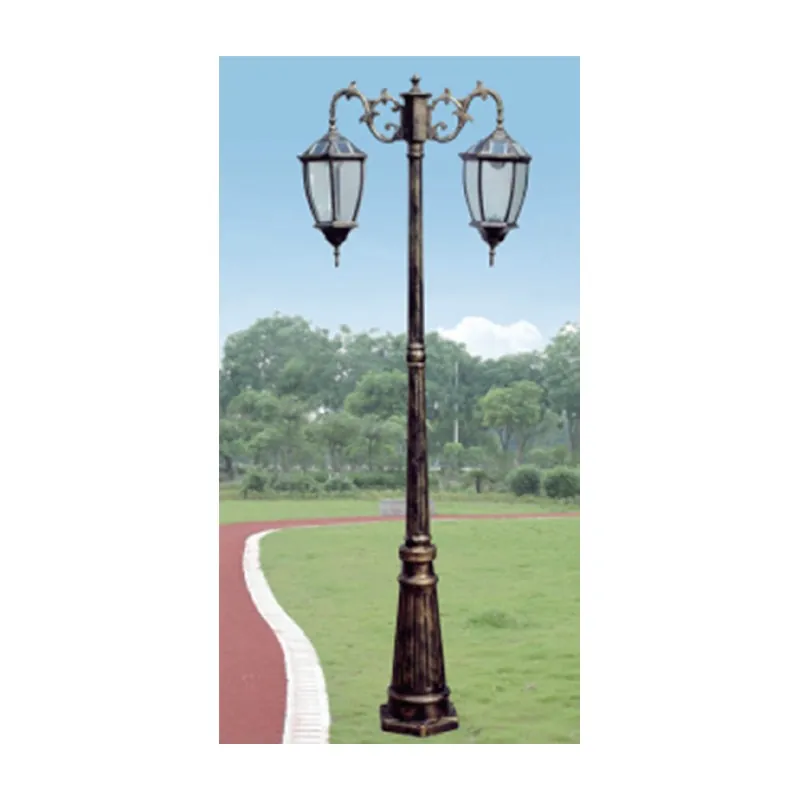
Coach lanterns with four or six panels suit traditional houses and streets.
Acorn globes are the classic park and street shape; modern versions use LED modules and prismatic globes that put light down rather than into the sky.
Round globes look simple but glare easily; frosted or opal globes and lower-output LED help.
Modern tops (discs, cylinders, cubes) suit contemporary homes and campuses.
Our garden and post-top lights come in modern, classical and European designs, 20–80 W, which can replace old heads on public and estate posts.
Converting old lamp posts to LED
There are three ways to bring LED to an old post:
- New LED head: the simplest and most efficient; replaces lantern and lamp together
- LED retrofit module inside the existing lantern: keeps the heritage look
- LED lamp in the old socket: a corn-style LED lamp replaces an incandescent, mercury or sodium lamp; check heat and ballast bypass (see corn cob LED bulbs)
Energy savings are large: a 100 W incandescent replaced by a 10–15 W LED, or a 150 W metal halide by a 40 W LED.
Antique street light globes
Heritage districts often need replacement globes that match old designs:
- Material: UV-stable acrylic or polycarbonate; polycarbonate resists breakage, acrylic stays clearer
- Finish: clear, frosted, prismatic or opal
- Base: match the neck diameter and fixing (screw, clamp or gallery)
- Shielding: internal reflectors or top caps reduce light pollution
With LED inside, globes run much cooler and last longer.
Wiring and safety
- Switch off and isolate the circuit
- Check voltage: household posts may be mains or low voltage; public posts may differ
- Connect live, neutral and earth correctly
- Seal the connection against water
- Use a photocell or timer for automatic switching
Work on public street lights must be done by the owner or authorised contractors.
Light quality and neighbours
LED heads can be much brighter than the old lamps. To keep the street comfortable:
- Choose 2700–3000K warm white for homes and heritage streets
- Use frosted or prismatic diffusers
- Pick a wattage that suits the height, often 10–20 W for home posts and 20–40 W for park posts
- Add dimming after midnight on public schemes
Our guide to lamp post street lights covers heights, spacing and styles for streets and parks.
Solar replacement tops
Solar lamp post tops include a panel and battery in the head. They avoid rewiring dead circuits, but need direct sun and look different because of the panel. Check panel size and battery capacity; a small panel cannot run a bright light all night. See solar lights that stay on all night.
Cost comparison
Replacing tops typically costs a fraction of new posts, because there is no excavation, foundation or new cable. For estates and towns with dozens of old posts, a phased top replacement programme spreads cost and keeps the streetscape consistent.
Estates and towns: a phased programme
Where a housing estate or town centre has dozens or hundreds of old posts, replacing tops in phases keeps cost manageable. Start with a pilot street, collect resident feedback on brightness and appearance, then roll out by area. Keep a record of each post, its fitter size, the new head and the installation date. Order a small stock of spare heads from the same batch, so future replacements match in colour and style.
Matching new and old
If only some posts are being converted, match colour temperature with the remaining old lamps as closely as possible, or convert whole streets at once. A street with a mix of orange sodium and white LED heads looks patchy. Many owners choose 3000K LED, which sits between the warm look of old lamps and modern white light.
Checking the post itself
Before buying new tops, check each post: rust at the base, loose base bolts, cracked bases on cast iron posts and damaged access doors. A new head on a weak post is a poor investment, and a falling post is a hazard. Replace or repair weak posts during the same programme.
Ordering
Send photos of the existing posts and tops, the post diameter and height, the number of posts and whether you want a heritage or modern look. We will suggest replacement heads or LED conversion options.
Sources
Frequently asked questions
How do I replace the top of a lamp post?
Switch off the power, remove the old head by loosening the set screws at the fitter, disconnect the wires, then connect the new head and fix it over the post with its set screws. Check the fitter diameter and the voltage before buying the new top.
What size lamp post top do I need?
Measure the outer diameter of the post top. Many residential posts are 3 in (about 76 mm); public and commercial posts are often 60–90 mm or have a tenon. Replacement tops list the fitter size they accept.
Can I replace an old street light globe?
Yes. Acorn, round and coach-lantern globes are available in clear, frosted and prismatic acrylic or polycarbonate. Match the base diameter and fixing method, and consider an LED source inside to cut energy and heat.