How to Turn On Soccer and Baseball Field Lights: Switches, Timers and What Happens Inside
How sports field lights are switched on: key switches, contactors, timers, apps and booking systems, why metal halide takes 15 minutes and LED is instant, and the current and cost of a 24–32 kW field.
Key points
- Field lights are not switched directly: a key switch, push button, timer, app or booking system energises contactors in a control cabinet, which switch each pole's circuit.
- Metal halide floodlights take several minutes to reach full brightness and, if switched off hot, often 10–20 minutes before they restrike; LED floodlights reach full light in about a second.
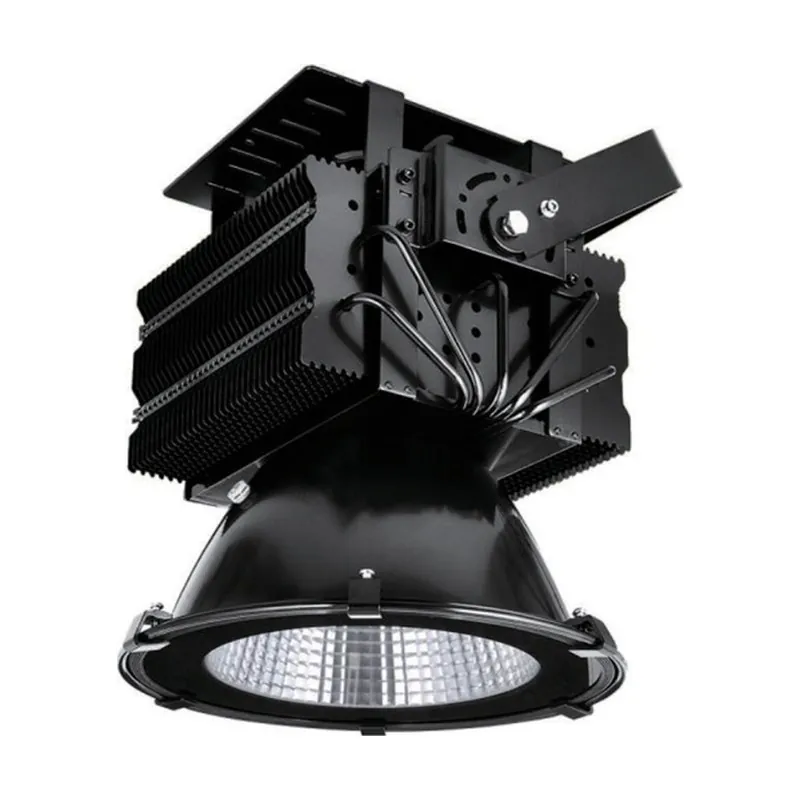
- A club soccer field of 24–32 LED floodlights of 1,000 W draws 24–32 kW: about 36–48 A per phase at 400 V, or 6–8 A per phase on each of six poles.
- At an example $0.15/kWh, a two-hour session on a 24 kW field costs about $7 in electricity; that figure is the basis for pay-to-play and booking systems.
- Staggering poles by a second or two at switch-on, and zoning the field, reduce inrush trips and let half the field be lit for training.
Field lights look as if they should have a big switch on the pole. They do not. Behind every lit soccer pitch or baseball diamond is a control cabinet with breakers, contactors and some kind of switching device, and the way it is set up decides who can turn the lights on, how quickly they come up, and how much the club pays.
What is in the control cabinet
A typical field has a lockable cabinet near the clubhouse, dugout or pitch entrance. Inside:
- Main breaker and surge protection for the supply to the field.
- A breaker per pole (or per pair of poles), sized for the floodlights on it.
- Contactors: heavy-duty relays that switch each pole’s circuit. They let a small control signal switch tens of amps.
- The control device: key switch, push buttons, a time switch, a lighting controller, or a remote module.
- Indicator lamps or a display showing which zones are on.
The contactors are what actually turn the lights on. Everything else decides when they close.
Ways to switch the lights
| Method | How it works | Where it fits |
|---|---|---|
| Key switch | Coach or groundskeeper turns a key at the cabinet | Club fields with a few trusted users |
| Push button with timer | Lights run for a set period, say 60–90 minutes, then off | Public parks, school fields |
| Astronomical time switch | Switches at set times relative to sunset | Fixed training schedules |
| Booking system | Lights come on for booked slots, by code or card | Community fields, pay-to-play |
| App or remote control | Phone or web control over a mobile network | Multi-site operators, leagues |
| Building management system | Part of a wider site control | Universities, sports complexes |
Many fields combine two: a timer for routine sessions and a key switch to override it for a match running late.
Zones: training versus matches
Most fields are wired in zones, so not every light has to be on:
- Full field, match level: all floodlights.
- Full field, training: every second floodlight on each pole, or a dimmed level on LED.
- Half field: only the poles on one half.
- Maintenance: one or two floodlights per pole for groundskeeping.
LED floodlights add dimming, so training can run at 50–75% without switching floodlights off and leaving dark patches. Our guide to soccer field lighting lists the light levels for training, club and higher levels of play.
Why the old lights took 15 minutes
Players who have used older fields know the routine: switch on, wait while the lamps glow orange and slowly brighten. Metal halide lamps need several minutes to reach full output after switch-on. Worse, if they are switched off hot, even for a moment, they will not restrike until they cool, often 10–20 minutes. A power dip during a match could stop play for a quarter of an hour.
LED floodlights come to full light in about a second and restart immediately after a power cut. That changes how fields are run:
- lights can be switched on exactly when needed, not 15 minutes early;
- lights can be switched off at half-time breaks or between sessions without penalty;
- a power cut costs seconds, not minutes;
- sensors and booking systems become practical, because there is no warm-up.
How much current the field draws
Our soccer field article estimates a 200 lux club pitch at 24–32 floodlights of 1,000 W, on four or six poles. With a 400 V three-phase supply and a power factor of 0.97 (our heat-pipe stadium floodlight is rated above 0.97):
| Field | Total load | Current per phase | Per pole, 6 poles | Per pole, 4 poles |
|---|---|---|---|---|
| 24 × 1,000 W | 24 kW | 35.7 A | 6.0 A | 8.9 A |
| 32 × 1,000 W | 32 kW | 47.6 A | 7.9 A | 11.9 A |
On a single-phase 230 V circuit, one 1,000 W floodlight draws about 4.5 A, which is why fields always use three-phase supplies and spread the floodlights across phases.
Switch-on surges
LED drivers take a short current spike when switched on, as their input capacitors charge. With 30 drivers switching at once, the spike can trip breakers or weld contactor contacts. Two simple measures:
- Stagger the poles by a second or two using time-delay relays or the lighting controller.
- Size contactors for capacitive (LED) loads, not just for the running current.
What a session costs
Energy is load × hours. At an example tariff of $0.15/kWh:
| Field | Per hour | Two-hour session | 3 hours a night, 300 nights |
|---|---|---|---|
| 24 kW LED | 24 kWh, $3.60 | 48 kWh, $7.20 | 21,600 kWh, $3,240 |
| 32 kW LED | 32 kWh, $4.80 | 64 kWh, $9.60 | 28,800 kWh, $4,320 |
These numbers are why booking systems that only light the field when it is paid for pay back quickly, and why switching to half-field or dimmed training saves real money. A metal halide field giving the same light typically draws about 1.5 times as much; our LED retrofit savings calculator shows the difference for your field. The article on sports lighting cost covers the installation side.
Baseball and softball fields
Baseball fields work the same way, with more zones: infield, outfield, and sometimes separate bullpen and parking lights. Infield light levels are higher than outfield, so the infield poles often switch as a separate group. Our article on baseball field lighting gives levels and pole layouts.
Safety and access
- Keep the cabinet locked; only trained people should open it.
- Label every breaker and contactor with its pole and zone.
- Fit a clear “lights on” indicator visible from the pitch.
- Make sure there is a way to switch off quickly in an emergency.
- After storms, check the cabinet and pole bases for water before switching on.
Our article on commercial lighting control systems explains timers, sensors and networked controls in more detail.
For clubs and contractors
If you are planning new field lights or converting from metal halide, send us the pitch size, level of play and pole positions. We will estimate the floodlight count and wattage, give the load and current per pole for the electrician, and suggest zoning so training and matches each use only the light they need.
Sources
Frequently asked questions
How do you turn on baseball field lights?
At most fields, from a control cabinet near the dugout or clubhouse: a key switch or push buttons energise contactors for each pole or zone. Many fields also have a timer or a remote system so the lights switch on at booked times or from a phone app.
Why do field lights take so long to come on?
Older metal halide lamps need several minutes to warm up to full brightness, and if they have just been switched off they must cool before they will restrike. LED floodlights do not have this delay.
Can I turn on park sports field lights myself?
Public fields usually use a timer, a push button with an automatic shut-off, or a booking system with a code or app. Ask the park operator; the cabinet itself is locked for safety.
How much does it cost to run soccer field lights per hour?
A club-level field with 24–32 kW of LED uses 24–32 kWh per hour. At $0.15/kWh that is about $3.60–4.80 an hour; older metal halide fields with the same light use about 1.5 times as much.