
Foot-Candles to Lux: Conversion, Lumens and Recommended Light Levels
How to convert foot-candles to lux and back, how they relate to lumens, how to measure them with a light meter, and recommended foot-candle and lux levels for offices, warehouses, streets and sports.
Key points
- 1 foot-candle (fc) = 1 lumen per square foot = 10.764 lux; 1 lux = 0.0929 fc.
- For quick estimates, multiply foot-candles by 10 to get lux, or divide lux by 10 to get foot-candles.
- Lumens are the light a lamp emits; foot-candles and lux are the light arriving on a surface.
- Typical levels: offices 30–50 fc (300–500 lux), warehouses 10–30 fc (100–300 lux), car parks 0.5–2 fc (5–20 lux).
North American lighting uses foot-candles; most of the world uses lux. Both measure illuminance, the amount of light falling on a surface. Anyone comparing specifications, standards or datasheets across markets needs to move between them easily.
The conversion
| From | To | Multiply by |
|---|---|---|
| Foot-candles | Lux | 10.764 |
| Lux | Foot-candles | 0.0929 |
Quick rule: fc × 10 ≈ lux; lux ÷ 10 ≈ fc.
Conversion chart
| Foot-candles | Lux |
|---|---|
| 0.5 | 5.4 |
| 1 | 10.8 |
| 2 | 21.5 |
| 5 | 54 |
| 10 | 108 |
| 20 | 215 |
| 30 | 323 |
| 50 | 538 |
| 75 | 807 |
| 100 | 1,076 |
Lumens, lux and foot-candles
| Unit | Measures | Definition |
|---|---|---|
| Lumen (lm) | Light emitted by a source | Total visible light output |
| Lux (lx) | Light on a surface | 1 lumen per square metre |
| Foot-candle (fc) | Light on a surface | 1 lumen per square foot |
So 1,000 lumens spread evenly over 10 m² gives 100 lux; over 100 ft² it gives 10 fc. In real rooms, light is lost on walls and ceilings, so lamp lumens must be higher than the simple division suggests. For converting lamp lumens and watts, see our lumens to watts chart.
From foot-candles to lamp lumens
Lamp lumens needed ≈ target fc × area (ft²) ÷ (utilisation factor × maintenance factor)
Example: a 100 × 50 ft warehouse (5,000 ft²) at 20 fc, with a utilisation factor of 0.7 and maintenance factor 0.8:
20 × 5,000 ÷ 0.56 ≈ 178,600 lm, for example 9 high bays of about 20,000 lm (150 W at 130 lm/W).
Our high bay calculator works in metres and lux; convert by multiplying fc by 10.764 and feet by 0.3048.
Recommended levels
| Space | Foot-candles | Lux |
|---|---|---|
| Corridors, stairs | 5–10 | 50–100 |
| Warehouse, bulk storage | 10–20 | 100–200 |
| Warehouse, picking | 20–30 | 200–300 |
| Manufacturing, general | 30–50 | 300–500 |
| Fine assembly, inspection | 75–100+ | 750–1,000+ |
| Offices | 30–50 | 300–500 |
| Classrooms | 30–50 | 300–500 |
| Retail sales floor | 30–75 | 300–750 |
| Parking garages | 5–10 | 50–100 |
| Outdoor car parks | 0.5–2 | 5–20 |
| Residential streets | 0.4–1 | 4–10 |
| Recreational sports | 20–30 | 200–300 |
| Club and league sports | 30–50 | 300–500 |
Values vary between standards (IES, EN 12464-1, EN 13201, EN 12193); use the one your project follows.
How to measure foot-candles
- Use a light meter (illuminance meter) set to fc or lux
- Hold the sensor flat at the working plane: desk height (about 0.75–0.8 m) indoors, ground level outdoors
- Avoid shading the sensor with your body
- Measure on a grid, for example every 2–3 m indoors or along and across roads outdoors
- Average the readings and note the minimum for uniformity
Phone apps give rough guides only; calibrated meters are needed for commissioning reports.
Foot-candles in specifications
US specifications often give “maintained average foot-candles” and uniformity ratios such as “max/min 4:1”. European specifications give “maintained average lux” and uniformity “Uo = Emin / Eavg ≥ 0.4”. When comparing:
- Convert fc to lux
- Note that max/min and min/avg are different measures of uniformity
- Check whether values are initial or maintained
Vertical foot-candles
For sports with cameras, security and faces, vertical illuminance matters as well as horizontal. Sports and broadcast standards set vertical levels separately. In car parks and streets, vertical light helps people recognise faces.
Common mistakes
| Mistake | Effect |
|---|---|
| Confusing lumens with foot-candles | Large under- or over-lighting |
| Using fc numbers with lux standards | Levels out by a factor of 10 |
| Measuring at the wrong height | Misleading readings |
| Using initial readings for maintained targets | Over-optimistic results |
Practical examples
- An office at 40 fc ≈ 430 lux: around 12 panels of 36 W for 50 m² at 117 lm/W
- A warehouse aisle at 20 fc ≈ 215 lux: high bays of 100–150 W at 8–10 m
- A car park at 1 fc ≈ 11 lux: area lights of 100–150 W on 8–9 m poles
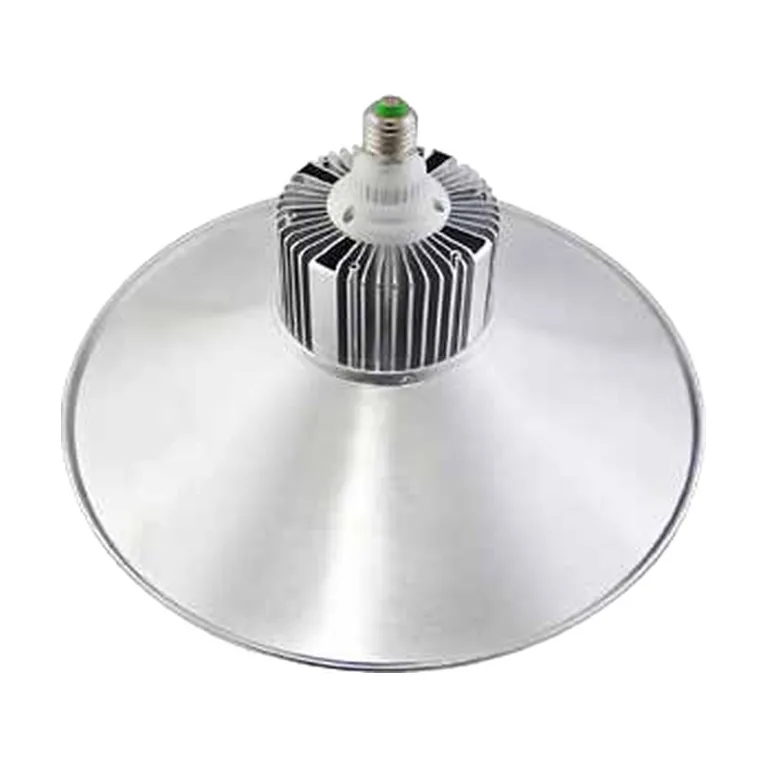
Our economy LED high bays and other fittings come with photometric files for exact calculations.
Initial vs maintained values
Light levels fall over time as lamps age and fittings collect dust. Standards usually give maintained values, the minimum average that must be reached at the end of the maintenance cycle. A new installation is therefore lit above the target, often by 20–40%. When you measure a new installation, compare readings with the design’s initial values, not the maintained target.
Uniformity in practice
Two spaces can have the same average foot-candles but feel very different. Even light, with no dark patches between fittings, is more comfortable and safer. Typical uniformity targets are a minimum of 40–70% of the average indoors, depending on the task, and lower outdoors. Closer spacing of smaller fittings improves uniformity more than raising wattage.
Daylight and foot-candles
Outdoor daylight ranges from about 1,000 fc on an overcast day to 10,000 fc in direct sun, which is why rooms near windows feel bright even with lights off. Daylight sensors can dim fittings near windows when daylight provides enough foot-candles, saving energy without changing the light level on desks.
Converting room sizes too
Remember to convert areas as well as light: 1 m² = 10.764 ft². A 1,000 ft² room is about 93 m².
Ordering
Send the area, the target in foot-candles or lux, and the standard your project follows. We will propose fittings and a layout that meets it.
Sources
Frequently asked questions
How do you convert foot-candles to lux?
Multiply by 10.764. For example, 50 foot-candles × 10.764 = 538 lux. For a quick estimate, multiply by 10.
How many foot-candles are in a lumen?
They measure different things. A lumen is light output; a foot-candle is light falling on a surface. One lumen spread evenly over one square foot gives one foot-candle.
How many foot-candles does an office need?
About 30–50 foot-candles (roughly 300–500 lux) on desks for general office work, more for detailed tasks and less for corridors.